In the structure of a centrifugal pump, the mechanical seal is a core component, directly related to the stable operation and service life of the equipment. The primary function of the mechanical seal is to prevent fluid leakage from the pump, ensuring its normal operation and working efficiency. However, in practical applications, the mechanical seal of centrifugal pumps is often affected by factors such as operating conditions, medium characteristics, and operational maintenance, leading to failures. This results in seal damage, pump leakage, and even equipment shutdown, adversely impacting production safety and environmental protection. Failure of the centrifugal pump mechanical seal not only affects the equipment's performance and safety but also leads to high maintenance costs, increasing production expenses for oilfield enterprises. Therefore, researching the causes and damage mechanisms of mechanical seal failures in centrifugal pumps, and subsequently proposing effective prevention and improvement measures, is of significant importance for reducing the failure rate of mechanical seals and extending their service life. Anhui Shengshi Datang will give you an overview.
1. Analysis of Centrifugal Pump Operating Principle
The operation of a centrifugal pump is based on Bernoulli's equation in fluid dynamics, which states that within a closed system, the energy of a fluid comprises kinetic energy, potential energy, and pressure energy, and these three forms of energy are converted within the pump. The core components of a centrifugal pump are the impeller and the pump casing. When the electric motor drives the pump shaft to rotate, the impeller rotates at high speed, causing the liquid inside the pump to also undergo rotational motion. Under the action of centrifugal force, the liquid is thrown from the center of the impeller towards its periphery, gaining an increase in both kinetic and pressure energy. This change in kinetic and pressure energy causes the liquid to flow out through the pump casing outlet. The pressure at the center of the impeller decreases, forming a low-pressure area, and liquid is continuously drawn into the pump under atmospheric pressure, thus forming a continuous liquid transport process. The operation of a centrifugal pump can be divided into three stages: liquid suction, acceleration, and discharge. In the suction stage, due to the low-pressure zone formed at the impeller center, external liquid flows into the pump under atmospheric pressure. In the acceleration stage, the liquid, acted upon by centrifugal force through the impeller, accelerates towards the pump casing. In the discharge stage, the high-speed liquid is gradually decelerated through the diffuser or volute, converting kinetic energy into pressure energy before being discharged from the pump.
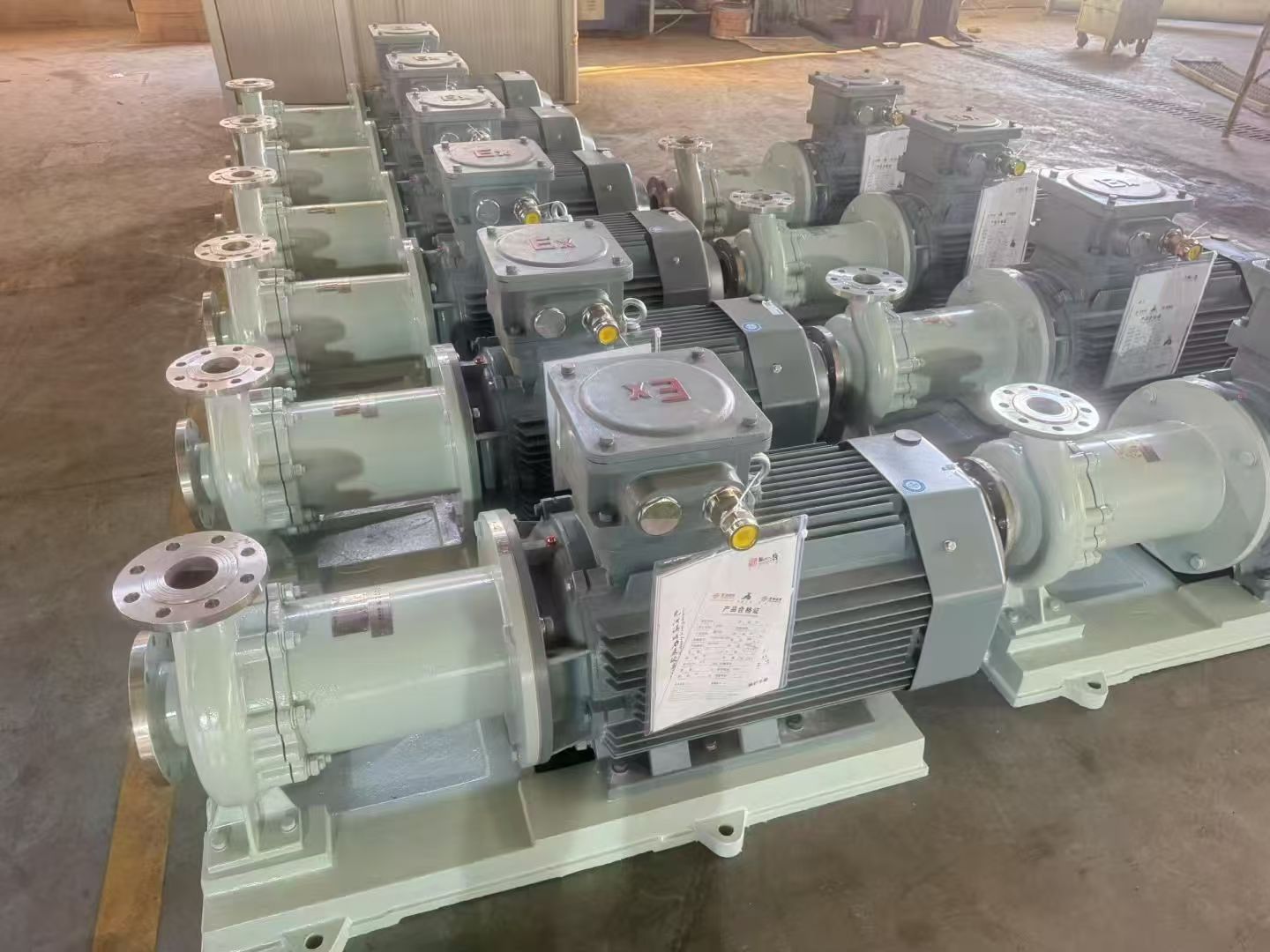
The main components of a centrifugal pump include the impeller, pump casing, pump shaft, mechanical seal, and bearings. The impeller, made of materials like cast iron, stainless steel, or plastic, is the core component. Its design directly determines the pump's flow rate and head. Parameters such as the impeller's shape, size, number of blades, and blade angle significantly affect liquid flow and pressure conversion efficiency. The pump casing, typically volute-shaped, contains the fluid. Its main functions are to collect liquid discharged from the impeller and guide it to the discharge outlet. The casing also facilitates energy conversion by gradually converting the liquid's kinetic energy into pressure energy through diffusion, thereby increasing the pump's head. The pump shaft, driven by the motor and connected to the impeller, transmits mechanical energy from the motor to the impeller, causing it to rotate. The pump shaft must possess high strength and stiffness to withstand centrifugal forces and the reaction forces of the liquid on the impeller. The mechanical seal prevents liquid leakage at the point where the pump shaft and casing interact. Its performance directly affects the pump's efficiency and safety. Bearings support and fix the pump shaft, reducing friction and vibration during rotation, ensuring stable pump operation.
2. Causes of Leakage in Centrifugal Pump Mechanical Seals
(1) Trial Run Leakage. The installation precision of the mechanical seal directly affects its sealing effectiveness. If the seal faces are not accurately aligned during installation or if the face gap is set improperly, leakage can occur during trial operation. The stationary and rotating rings should be flat and aligned during installation. Failure to meet this standard can result in poor contact between the sealing faces, creating gaps and allowing medium leakage. Similarly, improper tightening according to design requirements or vibration during installation can cause misalignment of the seal rings, compromising the seal. During the trial run phase, the seal faces may not be fully bedded-in. Under high-speed operation and friction, face wear can lead to leakage. This wear is common if the seal faces have not been pre-treated or run-in, as initial high surface roughness increases frictional heat, exacerbating wear. Face wear reduces the contact integrity of the sealing surfaces, leading to leakage. Additionally, excessively rapid temperature rise during trial runs can cause uneven thermal expansion of the faces, accelerating wear. Vibration generated during pump operation due to bearing wear, imbalance, or other mechanical issues can affect the mechanical seal, which is sensitive to vibration. Vibration causes uneven pressure distribution between the seal faces, potentially leading to misalignment of the rotating and stationary rings, seal failure, and leakage. Particularly during trial runs, excessive axial shaft movement or radial runout beyond standards can adversely affect the stability of the seal components.
(2) Static Test Leakage. In mechanical seals, auxiliary sealing elements are typically made of materials like rubber or PTFE. The elasticity and corrosion resistance of these materials significantly impact sealing performance. Improper material selection for auxiliary seals can lead to leakage during static pressure testing. If the seal material lacks corrosion resistance or temperature tolerance, it may deform under static test pressure or temperature, failing to provide an effective seal. Simultaneously, aging, hardening, or loss of elasticity due to temperature changes can prevent the seal faces from fitting tightly, causing leakage. During static testing, pressure within the seal chamber should not fluctuate significantly. Otherwise, uneven pressure on the seal faces may cause leakage. Static tests are usually conducted at slightly higher pressures than operating pressure to verify seal integrity. However, if the pressure is too high or applied unevenly, the seal components can be damaged, compromising the contact between the stationary and rotating rings and causing leakage. Especially during static tests, if the liquid temperature is high, thermal expansion within the seal chamber can cause pressure fluctuations, leading to inadequate sealing. The seal faces, often made of wear-resistant, high-strength materials like silicon carbide or ceramic, are critical. If subjected to excessive pressure during installation or static testing, minor deformation can occur, affecting the faces' ability to mate properly.
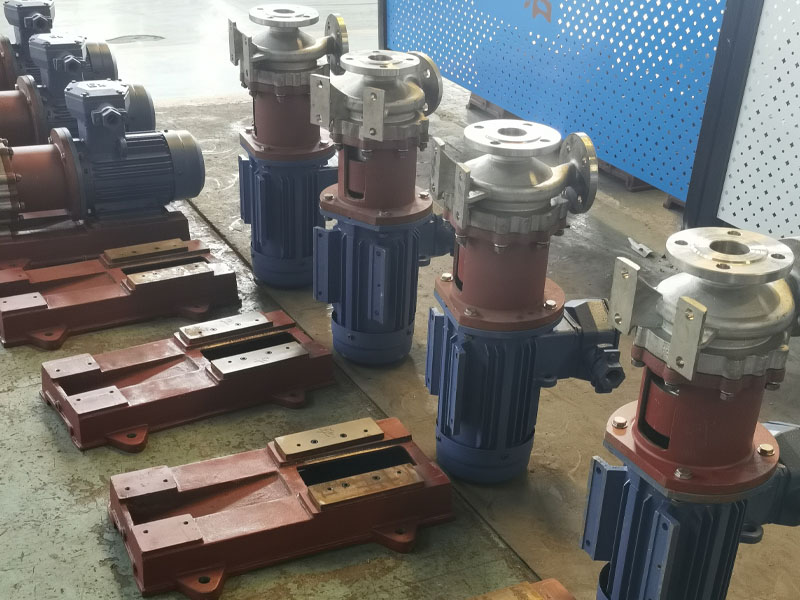
(3) Operational Leakage. The operating conditions of a centrifugal pump may change with its working state. Variations in fluid temperature, pressure, or flow rate can all affect seal performance. When operating conditions exceed the seal's design limits—such as excessively high temperature or pressure—the material properties of the seal components can degrade, leading to seal failure. Leakage is particularly likely during transient flow fluctuations or under highly variable load conditions. Mechanical seals often rely on the presence of a seal fluid for adequate lubrication and cooling. Insufficient seal fluid flow or excessively high temperature can cause the seal fluid to evaporate or vaporize, reducing sealing effectiveness. Furthermore, impurities or contaminants in the seal fluid can enter the seal chamber, impairing lubrication between the seal faces, accelerating wear, and causing leakage. The material selection and design of the mechanical seal are directly related to its performance. If the seal material has insufficient corrosion resistance, it may corrode when exposed to the pump fluid, leading to decreased sealing performance. Similarly, poor design can cause uneven force distribution on the seal faces or issues related to thermal expansion, resulting in seal failure. Therefore, appropriate material selection and sound design are crucial factors for ensuring the stability of the mechanical seal during normal operation.
(4) Cooling Water Quality. The role of cooling water is to ensure temperature control for the mechanical seal, preventing seal failure due to high temperatures. If the cooling water quality does not meet standards, it can lead to mechanical seal leakage. If the cooling water contains impurities, solid particles, oil contamination, or other pollutants, it can negatively impact the working environment of the mechanical seal. These impurities may enter the seal chamber, causing wear on the stationary and rotating rings, reducing the smoothness of the seal faces, and thus inducing leakage. Simultaneously, the presence of pollutants can obstruct the flow of cooling water, preventing it from effectively carrying away the heat generated at the seal faces, further exacerbating wear and temperature rise. The chemical composition of the cooling water can also affect the materials of the mechanical seal. Cooling water containing high concentrations of corrosive agents can accelerate the corrosion of seal materials, reducing their service life. If the materials used in the mechanical seal are not corrosion-resistant, prolonged exposure to such cooling water can lead to cracks, pitting, or spalling on the seal faces, ultimately causing leakage. The temperature of the cooling water is crucial for the performance of the mechanical seal. If the cooling water temperature is too high, it may cause softening or aging of the seal materials, reducing their elasticity and sealing effectiveness. As temperature increases, the seal components may not maintain the designed tight contact, leading to leakage.