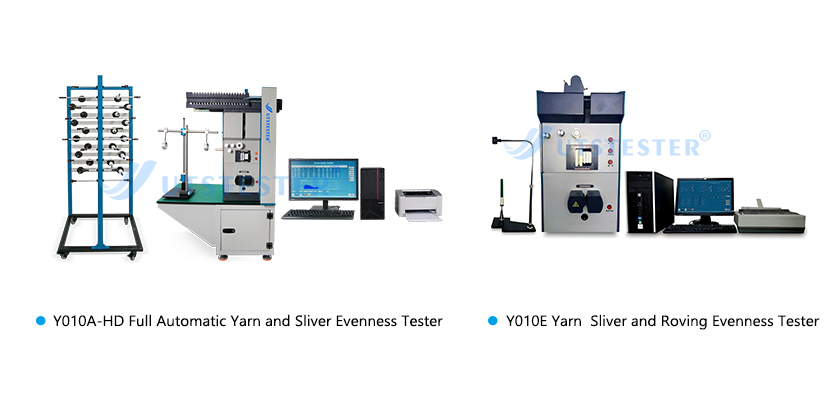
What is yarn evenness testing? How is yarn evenness testing performed?

1. What is yarn evenness testing?

Yarn evenness testing, in simple terms, is the measurement of the uniformity of yarn thickness along its length. As the basic raw material for textile products, the quality of yarn directly impacts the performance and appearance of subsequent textile products. Yarn evenness, as one of the key indicators of yarn quality, directly affects the quality of textile products.


2. The significance of yarn evenness testing

Conducting yarn evenness testing serves multiple important purposes. On one hand, it helps assess the quality level of yarn. Yarn with even thickness ensures clear fabric patterns, uniform color, and reduced defects during subsequent processing. For example, in weaving processes, uneven yarn may cause defects such as horizontal bands or clouding in the fabric, severely affecting its aesthetic appeal and practicality. On the other hand, testing can promptly identify issues in the spinning process, helping manufacturers adjust process parameters, optimize production workflows, improve production efficiency, and reduce production costs. For instance, if test results indicate that uneven yarn evenness is caused by a malfunction in the draw-off mechanism of the ring spinning machine, the company can target repairs or adjustments to the draw-off mechanism to improve yarn quality.


3. Yarn Evenness Testing Methods

In practice, there are several methods available for testing yarn evenness.

Among these, the traditional visual inspection method involves experienced inspectors directly observing the appearance of the yarn with the naked eye to assess its evenness. While this method is simple and straightforward, it is highly subjective, as different inspectors may have varying criteria for judgment, and it may be difficult to accurately detect subtle unevenness in the yarn.

The capacitive yarn evenness tester method utilizes the difference in dielectric constants between yarn and air. As yarn passes through capacitive plates, the capacitance value changes with yarn thickness. By detecting changes in capacitance, the method reflects yarn evenness. This method offers fast testing speed and high precision, accurately measuring unevenness in short yarn segments.

Another method is the photoelectric yarn evenness tester, which is based on the varying degrees of light obstruction by the yarn. It converts light signals into electrical signals through photoelectric conversion and then analyzes the yarn's evenness. This method is sensitive to changes in the yarn's surface morphology and can effectively detect defects such as yarn fuzz and details.


4. Yarn Evenness Testing Criteria  

In yarn evenness testing, there are a series of important criteria used to quantify the test results. The Average Deviation Coefficient (U%) is one of the commonly used criteria, reflecting the degree of deviation between the actual linear density of each segment of the yarn and the average linear density. The smaller the U% value, the more uniform the yarn evenness. The coefficient of variation (CV%) is also used to measure yarn unevenness, similar to the average deviation coefficient, but with a slightly different calculation method. A lower CV% value indicates better yarn quality. Additionally, there is the blackboard yarn evenness test, which involves winding the yarn around a blackboard and comparing it to a standard sample to evaluate the yarn's evenness grade, categorized into superior, first-class, second-class, etc. A higher grade indicates better yarn evenness.


In the entire textile industry, yarn evenness testing plays a crucial role. From spinning mills to weaving mills, and then to garment processing factories, each stage has strict requirements for yarn evenness. For spinning mills, good yarn evenness test results indicate that the yarn they produce is of high quality, capable of meeting the needs of downstream enterprises, thereby enhancing the company's market competitiveness. Weaving mills use yarn with uniform evenness to produce stable-quality, aesthetically pleasing fabrics, reducing defect rates and improving economic efficiency. Garment processing plants utilize high-quality yarn fabrics to create comfortable, stylish clothing products that appeal to consumers. In summary, yarn evenness testing runs throughout the entire textile supply chain, serving as a critical component in ensuring textile quality and promoting the healthy development of the textile industry.

Email: hello@utstesters.com

Direct: + 86 152 6060 5085

Tel: +86-596-7686689

Web: www.utstesters.com

Why Is Dyeing and Finishing Testing Crucial in Textile Production

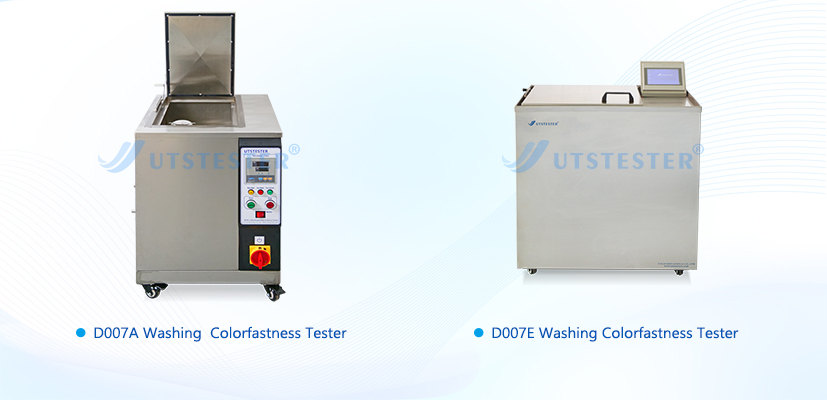
The most commonly tested properties include wash resistance, light resistance, abrasion resistance, sweat resistance, ironing resistance, and climate resistance. In practice, the specific testing items are determined based on the product's intended use and product standards. For example, knitted underwear is tested for sweat resistance, while outdoor textiles (such as sunshades, billboard fabrics, and canopy materials) are tested for climate resistance.


1.Sunlight Fastness

Textiles are typically exposed to light during use, and light energy can degrade dyes, leading to the well-known phenomenon of “fading,” causing colored textiles to change color—generally becoming lighter or darker—and in some cases, altering their color tone. Therefore, it is necessary to test for colorfastness. Sunlight fastness testing involves exposing test samples alongside blue wool standard fabrics of different fastness grades under specified conditions to sunlight. The test samples are then compared with the blue wool fabrics to evaluate their sunlight fastness. The higher the grade of the blue wool standard fabric, the more light-resistant it is.


2.Wash fastness

The sample is sewn together with a standard backing fabric, washed, rinsed, and dried under appropriate temperature, alkalinity, bleaching, and friction conditions to obtain test results in a short period of time. The friction is achieved through rolling and impact of stainless steel balls in a small bath ratio, and the results are rated using a gray card. Different testing methods have different temperature, alkalinity, bleaching, and friction conditions, as well as sample sizes. Specific selections should be made based on testing standards and customer requirements.


3. Rubbing color fastness

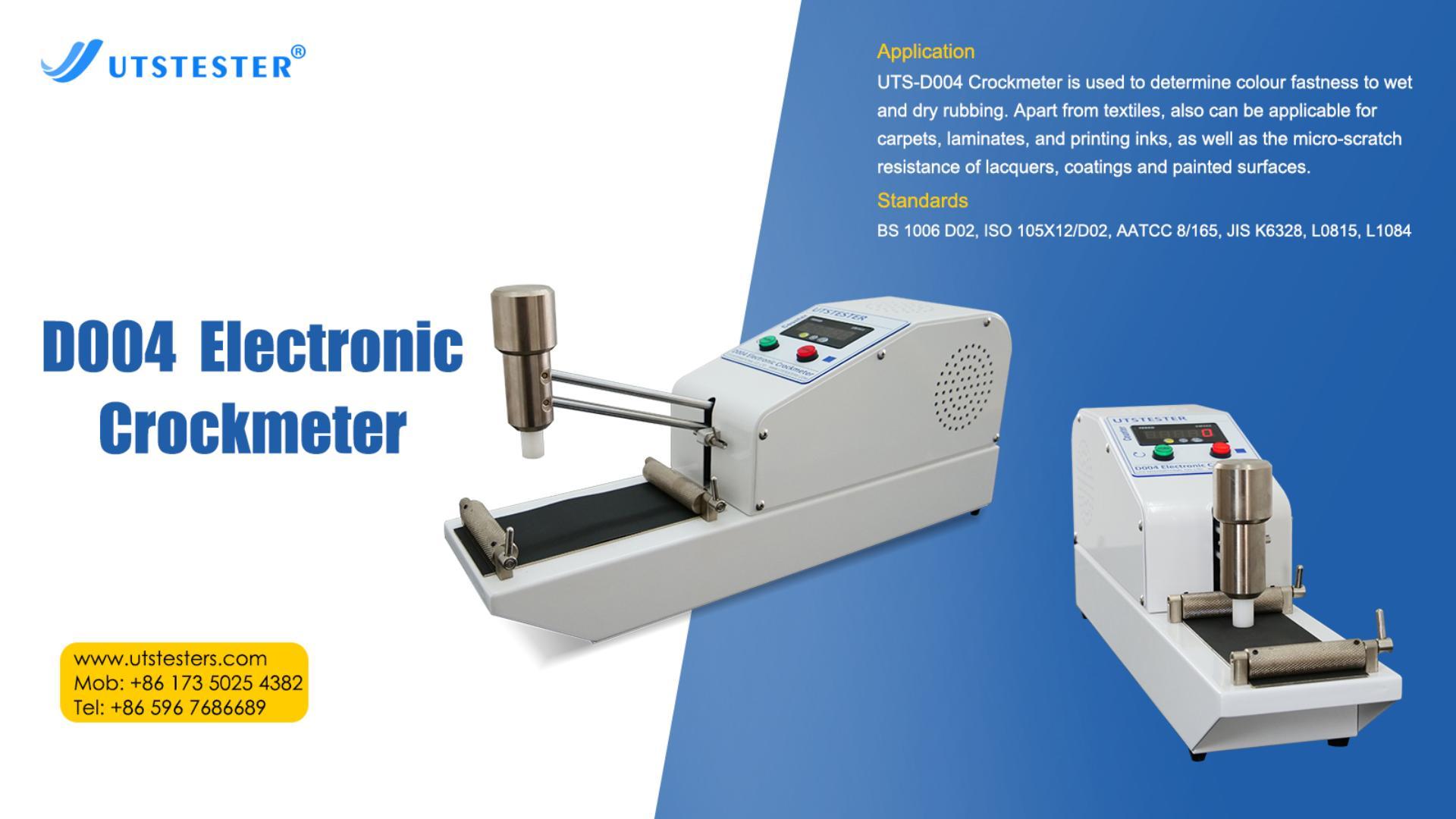
Place the sample on a rubbing fastness tester and rub it with a standard rubbing cloth under a certain pressure for a specified number of times. Each group of samples must undergo both dry and wet rubbing color fastness tests. The color transferred onto the standard rubbing cloth is graded using a gray scale, and the resulting grade represents the measured rubbing color fastness. Friction colorfastness requires both dry and wet friction tests, and all colors on the sample must be subjected to friction.


4. Dry cleaning color fastness

Similar to water washing color fastness, except that water washing is replaced with dry cleaning.


5. Sweat stain color fastness

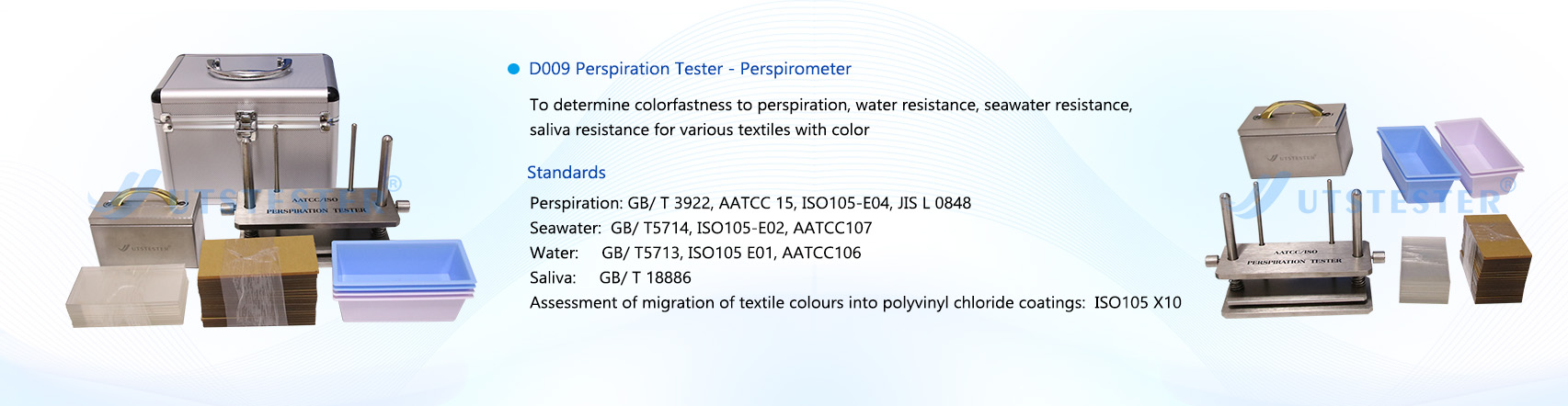
Sew the sample to the standard backing fabric, treat it in sweat stain solution, clamp it in a sweat stain color fastness tester, place it in an oven at a constant temperature, then dry it, and rate it using a gray card to obtain the test results. Different test methods have different sweat solution ratios, different sample sizes, and different test temperatures and durations.


6. Non-chlorine bleach colorfastness

The fabric is washed under non-chlorine bleach washing conditions, and the degree of color change is evaluated, which is the non-chlorine bleach colorfastness.


7. Pressing color fastness

Cover the dry sample with a cotton backing fabric, then press it for a certain period of time in a heating device at a specified temperature and pressure. Evaluate the discoloration of the sample and the color transfer to the backing fabric using a gray sample card. There are three types of heat pressing color fastness: dry pressing, damp pressing, and wet pressing. The specific test method should be selected based on different customer requirements and test standards.

Email: hello@utstesters.com

Direct: + 86 152 6060 5085

Tel: +86-596-7686689

Web: www.utstesters.com
Frozen Food Accurate Counting Solution

Frozen Food Accurate Counting Solution

Q1: What are the pain points of traditional frozen food counting methods?
Traditional manual or simple mechanical counting methods mainly suffer from two major pain points: low efficiency, which struggles to meet large-scale production demands, and high error rates, leading to cost losses and customer complaints.

frozen food counting machine


Q2: How does Zhiwan Vision Particle Counting Machine solve these problems?
Our automatic vision counting machine utilizes advanced machine vision and optical technology to provide a high-precision, fully automated counting solution, fundamentally eliminating the aforementioned pain points.


Q3: What are the core advantages of this equipment?

Advantage

Description

Counting Accuracy

Accuracy rate as high as 99.9% or above

Processing Speed

Capable of processing thousands of items per minute

Adaptability

Widely adapts to frozen foods of various shapes and sizes (e.g., meatballs, shrimp, vegetables)

Hygiene & Safety

Food-grade contact materials ensure no contamination

Smart Learning

Built-in algorithm continuously learns and optimizes for high recognition accuracy


Q4: What types of frozen foods can it recognize?
The equipment has a broad range of applications, including but not limited to:

  • Frozen meat, meatballs, sausages
  • Seafood (e.g., whole shrimp, shrimp meat, fish pieces)
  • Cheese cubes, frozen fruits, vegetables
  • Desserts, baked goods (e.g., frozen fries, pumpkin pies)
  • Other convenient frozen foods


Q5: In which stages of the production process is it typically used?
There are three main application scenarios:

  • Online Counting (Front-end Integration): Integrated at the front end of the production line to achieve fully automated counting from production to packaging.
  • Quality Sampling (End-stage Verification): Conducts precise sampling at the end of the packaging stage to strictly control outgoing quality.
  • Warehouse Inventory: Used for fast and accurate inventory checks in raw material or finished product warehouses, improving storage management efficiency.


Q6: What specific value can it bring to our customers?

Benefit

Description

Efficiency Boost

Counting efficiency is 5-10 times higher than manual methods, speeding up production cycles

Cost Control

Significantly reduces labor costs and material loss due to counting errors

Quality Assurance

Drastically reduces counting errors, improving product quality and customer satisfaction

Data Traceability

Provides complete counting data records for precise production traceability

Compliance & Safety

Fully complies with food hygiene and safety regulations and standards


Q7: How can we get more information or experience the product?
Feel free to contact our professional team at any time. We can provide detailed product technical documentation and success cases, and based on your needs, arrange a free on-site demonstration to offer a tailored technical solution.

Intelligent vision Counting Systems Precision for Modern Warehousing

Intelligent vision Counting Systems: Precision for Modern Warehousing

In today's Industry 4.0 landscape, warehouse efficiency and accuracy are crucial to competitive supply chain performance. Businesses handling bulk granular materials—such as fasteners, pharmaceuticals, seeds, electronic components, and jewelry accessories—often face inefficiencies and inaccuracies during counting processes. Manual methods are slow, prone to errors, and struggle with mixed batches or irregularly shaped items.

Hefei The One Electronic Technology Co., Ltd. specializes in advanced warehouse vision counting machine designed to overcome these challenges. Our machines enhance workflow accuracy, reduce operational costs, and support seamless digital integration—making them ideal for modern warehouses aiming for full automation.

warehouse vision counting machine


The Limitations of Manual Counting & Our Automated Approach

Common Issues with Traditional Methods

Time-consuming counting reduces throughput in receiving, sorting, and shipping.

Human errors lead to inaccurate inventories, financial discrepancies, and customer disputes.

High reliance on labor increases operational costs and limits scalability.

Manual data entry creates delays, inaccuracies, and poor traceability.


How Our vision Counting System Works
Equipped with high-resolution industrial cameras and proprietary AI-based vision algorithms, our system instantly recognizes, analyzes, and counts particles—even when overlapping or irregularly shaped.

Unmatched Speed and Accuracy: Count thousands of items per minute with near-perfect accuracy.

Wide Material Compatibility: Works with screws, capsules, seeds, electronic parts, beads, and more.

Real-Time System Integration: Compatible with WMS, ERP, and other warehouse management platforms for automated data synchronization.


Key Use Cases in Warehouse Operations

Incoming Goods Inspection
Rapidly verify quantities during receiving—whether performing full checks or random sampling—to ensure order accuracy and reduce offloading time.

Inventory Sorting and Cycle Counting
Integrate into packing lines for automated batch splitting and efficient stocktaking. Ideal for kitting and custom order fulfillment.

Outbound Quality Control
Recheck quantities before shipping to prevent order errors, reduce returns, and strengthen customer trust.

Fully Automated Packaging and Labeling
Select advanced models that combine counting, packaging, and labeling into one seamless operation—printing labels with item name, quantity, batch number, and date in compliance with international traceability standards.

fullly automatic counting and packaging machine


Engineered for Performance and Reliability

We independent developmed machine vision algorithms ensure robust performance across diverse industrial environments. Our systems are already trusted across industries including pharmaceuticals, agriculture, electronics, hardware, and retail logistics.

Designed to support lean management and Industry 4.0 readiness, our vision counters help businesses minimize waste, maximize efficiency, and transition toward fully automated warehouse operations.

Upgrade to a smarter, error-free warehouse with our vision counting systems.

2024 Shenzhen International HotelEX

2024 Shenzhen International Hotel EX Expo

Address: Shenzhen International Convention and Exhibition Center
Exhibition Hall: Hall 13
Booth No.: 13c30
Exhibition Time: 2024.12.12-12.14,

Our C88W pyramid tea bag packing machine with different shape outer bag,

C28DX high speed pyramid tea bag packing with outer envelope,

single lane powder bag packing machine,

4 lane liquid bag packing machine,


A Revolutionary Bag Sachet Filling Machine for Mali’s Beverage and Pure Water Market

In the thriving beverage and pure water packaging industry of Mali, our company is proud to introduce a groundbreaking bag sachet filling machine. This innovative device stands out with its compact size, user-friendly operation, intuitive temperature control settings, advanced motor technology, and affordable pricing. It is designed to give beverage packaging and pure water packaging businesses a significant edge in the market.

Mali’s beverage and pure water market is unique. Unlike neighboring countries with strict plastic regulations, Mali does not limit traditional plastic bag usage. This has allowed the bagged beverage industry to flourish. However, the market is also highly competitive. Traditional bag sachet filling machines often come with drawbacks such as bulky sizes, complex operations, unintuitive temperature controls, outdated motor technology, and high costs. These factors limit their accessibility and efficiency for many small and medium-sized producers.

Our new bag sachet filling machine addresses these challenges head-on. First and foremost, its compact design makes it easy to install, move, and maintain in various production environments. This is particularly beneficial for small workshops and rural production sites with limited space. The machine’s simplicity extends to its operation. We have streamlined the user interface, making it easy for operators with minimal training to quickly master the machine’s functions. This is especially valuable in Mali, where technical expertise may be limited in some regions.

The temperature control system is another standout feature. Unlike traditional machines with complicated temperature adjustment processes that can lead to inconsistencies and errors, our machine features an intuitive temperature control interface. Operators can easily set and maintain the ideal temperature for different packaging materials, ensuring consistent sealing quality and reducing waste. This advancement significantly improves production efficiency and product reliability.

At the heart of the machine is its advanced motor technology. This not only enhances the machine’s performance but also reduces energy consumption, making it more cost-effective to operate. In a market where energy costs can impact profitability, this is a crucial advantage. Additionally, the machine’s affordable price point makes it accessible to a wider range of producers, including small businesses and startups looking to enter the bagged beverage and pure water market.

In the context of Mali’s market, where demand for affordable and efficient production equipment is high, our bag sachet filling machine offers a perfect solution. It combines the benefits of modern technology with practicality and affordability. For pure water producers using water machines in bag/sachet packing, this device provides a faster and more reliable way to meet the daily demand for bagged water. Similarly, for businesses involved in Juice filling machine operations, it offers a versatile solution for packaging juices in convenient bag formats.

Furthermore, the machine’s adaptability makes it suitable for various packaging materials and bag sizes, giving producers the flexibility to diversify their product offerings. Whether it’s pure water, fruit juices, or other beverages, this machine can handle the packaging requirements with ease.

As Mali’s beverage and pure water market continues to grow, driven by increasing consumer demand and the absence of plastic restrictions, our sachet packaging machine is poised to become a game-changer. It empowers producers to enhance their production capabilities, improve product quality, and ultimately capture a larger share of the market. By investing in this innovative machine, businesses can position themselves at the forefront of Mali’s dynamic beverage and pure water packaging industry, ready to meet the needs of consumers and stay ahead of the competition.

Advantages of Bag Water Filling Machines over Bottled Water Filling Machines

In Africa, with the growing demand for clean drinking water and the development of the water packaging industry, bag water filling machines have become increasingly popular and offer significant advantages over bottled water filling machines.

Lower Equipment Cost:

Compared to bottled water filling machines, bag water filling machines typically require a lower initial investment. For example, some high-performance bag water filling machines on the market cost approximately $1,000 to $5,000, while bottled water filling machines typically require a higher upfront cost due to their complex structure and advanced technology.

Lower Production Cost:

Sachet water machines use fewer materials than bottled water. The primary material for bagged water is plastic film, which is relatively inexpensive. In contrast, bottled water requires the purchase of plastic bottles, caps, labels, and other materials, which increases production costs. Furthermore, bag water machines typically consume less energy during operation. For example, some bag water machines have a rated power of only 1.6 kilowatts, further reducing production costs.

Reduced Transportation and Distribution Costs:

Bagged water is lighter and more compact, making it easier to transport and distribute. This reduces logistics costs and minimizes losses caused by bottle breakage during transportation. In parts of Africa where transportation infrastructure is underdeveloped, the lightweight and space-saving nature of bagged water makes it an advantage in distribution.

Flexible Packaging Sizes:

Water filling machines can accommodate a variety of packaging sizes, typically offering capacities from 50 to 500 ml, to meet diverse consumer needs. This flexibility allows businesses to adjust packaging sizes based on market demand and consumer preferences. Bottled water filling machines, on the other hand, are typically limited to specific bottle sizes, making switching between different capacities inconvenient.

Adaptable to Different Water Sources:

Water quality varies significantly across Africa. Bagged water filling machines can be equipped with simple filtration systems to adapt to different water sources and produce clean, hygienic drinking water. However, bottled water filling machines have more stringent water quality requirements and typically require more complex and expensive water treatment equipment to ensure the quality of the bottled water.

High Consumer Acceptance:

Bagged water is widely accepted in the African market. In many African countries, bagged water has become a popular choice due to its convenience, affordability, and compatibility with local consumer lifestyles. For example, in the Accra-Tema metropolitan area of Ghana, bagged water consumption has surged over the past decade, filling a critical gap in household water security. In contrast, bottled water is often viewed as a higher-end product, which limits the purchasing power of some consumers.

Strong Market Potential:

As Africa's population grows and living standards improve, the demand for clean drinking water continues to rise. Bagged water, as an affordable and convenient option, holds significant market growth potential. Entrepreneurs and businesses can leverage bagged water machines to quickly enter the market and capture a larger share of the drinking water market.

Easy Operation:

Bag filling machines feature a user-friendly design. Their one-touch control interface and automated features make them easy to operate, even for workers with minimal technical training. This reduces operational complexity and training costs for businesses. However, bottled water filling machines typically require higher levels of skill and technical knowledge.

Low Maintenance Cost:

Bag filling machines typically have a simple structure with fewer mechanical parts, resulting in lower maintenance requirements. Routine maintenance mainly involves cleaning and replacing easily worn parts, which helps ensure stable machine performance and reduce downtime. Bottled water filling machines have complex mechanical and electrical systems and require more frequent and professional maintenance.

In the African market, bagged water filling machines offer numerous advantages over bottled water filling machines, including cost-effectiveness, flexibility, adaptability, market demand, ease of operation, and environmental sustainability. These factors have made bagged water filling machines the preferred choice for many water producers and entrepreneurs. As Africa's economies develop and the demand for clean drinking water grows, bagged water filling machines will play an even more critical role in providing safe and affordable drinking water to the region's population.