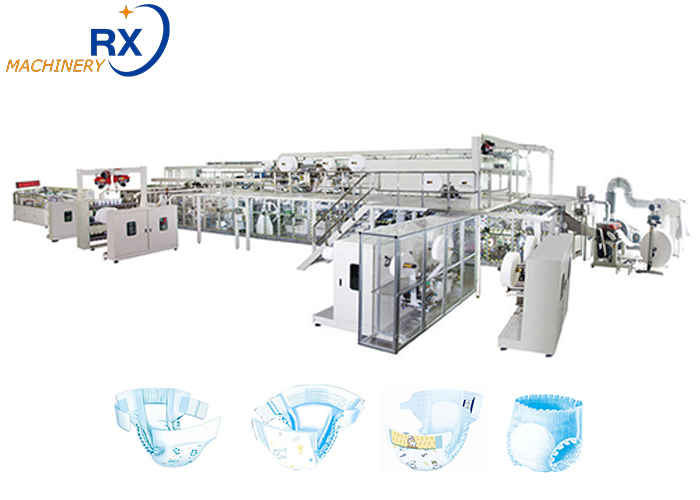
Automatic production machine for pet pads - making pet life more convenient

The Pet pad machine for producing pet urine pads is a kind of equipment specially designed for making high-quality pet urine pads. The Pet pad machine adopts advanced technology and automation process, which can achieve efficient production and ensure the consistency and quality of the products.


The main working process of the Pet pad machine includes the following steps:

1. Raw material input: The Pet pad machine puts the required raw materials (such as absorbent materials, leak-proof layers, surface materials, etc.) onto the production line through an automatic feeding system.

2. Pressing and molding: The raw materials are processed through a series of processes and pressed into a specific shape of pet urine pad. This process is usually completed through a mold to ensure that the size and shape of each urine pad are consistent.

3. Water absorption processing: After forming, the pet urine pad needs to be treated with water absorption. The Pet pad machine will add water-absorbing materials to the urine pad to ensure that it has good water absorption capacity.

4. Testing and quality inspection: The Pet pad machine will automatically perform various tests on the pet urine pad to ensure that its quality meets the standards. For example, the Pet pad machine can test the water absorption performance, leakage resistance and appearance quality of the urine pad.

5. Packaging and stacking: Through the automatic packaging system, the Pet pad machine will pack the produced pet urine pads and stack them for subsequent storage and transportation.
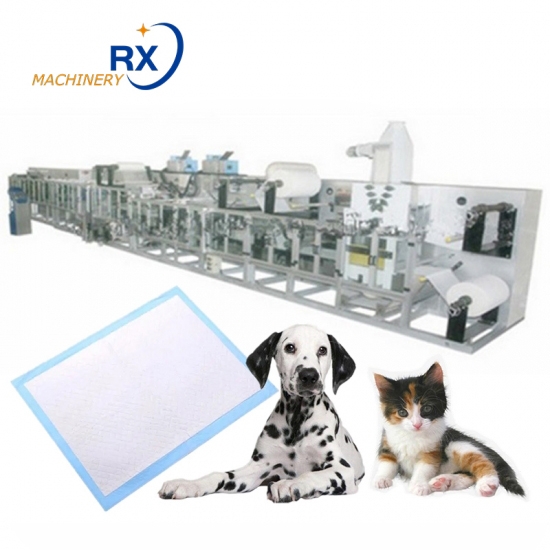
Pet pad machine

This machine for producing pet urine pads has the following advantages:

1) Improve production efficiency: The use of automated technology greatly improves production speed and efficiency, saving human resources and time costs.

2) Ensure product quality: The machine can stably produce high-quality pet urine pads, ensuring the consistency and quality of each product.

3) Reduce human errors: The automated operation of the machine reduces the errors and deviations that may occur in human operation, and improves the stability and reliability of the product

4) Cost saving: Automated production can reduce labor costs, reduce scrap rates, and save raw material costs.


In short, the machine for producing pet urine pads improves production efficiency, ensures product quality, and brings cost savings through automated processes. This machine has broad application prospects in the field of pet urine pad production.


At Quanzhou Ruoxin Machinery Co.,ltd, we can provide a perfect solution with pet pad machine, if you are interest in hygiene machine, please feel free to contact us!
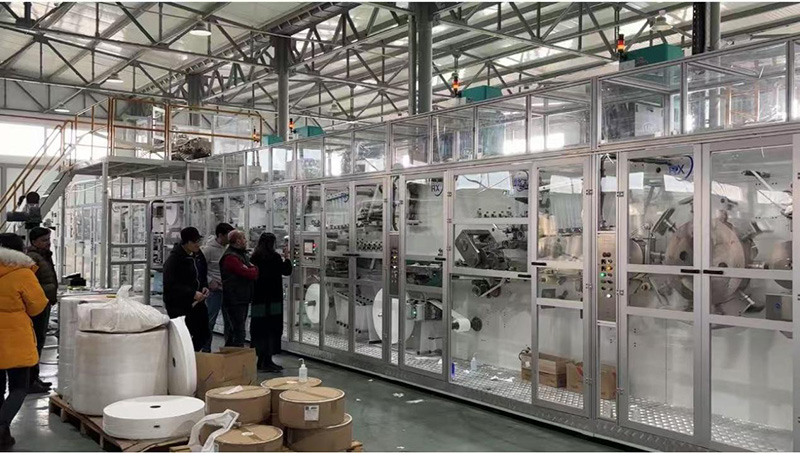
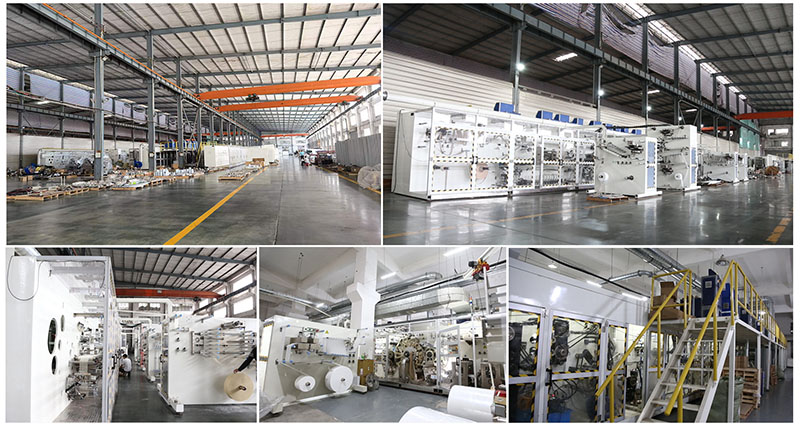
Deeply exploring customer needs From raw materials to equipment customization, a record of the win-win cooperation between RX Machinery and Indian customers

In the field of diaper and sanitary napkin production equipment and raw material supply, we always believe that every cooperation is a dual test of professionalism and service. Today, we share the in-depth cooperation story between Quanzhou Ruoxin Machinery Co., Ltd. and an Indian client, showing how we achieved the leap from raw material supply to high-end equipment orders—with equipment technology as the core and customized services as the bridge.


I. From Raw Materials to Equipment Cooperation: The First Step in Building Trust

Our bond with the Indian client began with raw material supply. Through long-term stable material cooperation, we gradually built trust. When the client revealed the need to purchase new diaper production equipment/sanitary napkin production line, we invited their team to visit our Chinese factory. Though visa restrictions hindered the plan, we adjusted swiftly—inviting the client to Uzbekistan to inspect our newly installed and debugged equipment, letting them intuitively experience its operation efficiency and stability. Meanwhile, via online meetings, our management and technical teams explained equipment parameters, production processes, and industry applications, not only answering operation queries but also analyzing industry trends to showcase our technical strength.


sanitary napkin production line


II. Technical Collision: Winning Recognition with Professionalism

After the client’s visa was approved in January, their procurement and technical teams visited our factory. Coincidentally, our high-configured diaper/sanitary napkin production equipment was in final debugging. The client’s technicians, with rich experience, offered valuable suggestions on equipment details. Though the equipment wasn’t customized for them, we cherished the technical exchange, communicating deeply on new equipment details. From function optimization to efficiency improvement, we absorbed ideas openly and demonstrated our rapid response to technical iterations.


III. Customized Services: All-Weather Response Leading to Order Confirmation

Based on prior technical communication and demand analysis, we launched in-depth customization. From equipment function adjustments to process adaptation, our entire equipment team was on standby round-the-clock. The material team also collaborated, providing professional raw material-equipment matching solutions, showcasing our one-stop service advantage. Finally, through coordinated efforts of the equipment and material teams, the client recognized our technical strength and service sincerity, officially confirming the order.


IV. RX Machinery’s Core Advantages: More Than Equipment—A Full Chain of Services

As an enterprise focusing on diaper and sanitary napkin production equipment and raw material supply, we prioritize “customer needs”:
· Technological Leadership: Continuously upgrading equipment performance to meet high-speed production and personalized process needs.
· Customization Capability: Offering full-process customization, from equipment functions to raw material formulas.
· One-Stop Service: Ensuring seamless integration of equipment delivery, raw material supply, and technical support to reduce client collaboration costs.


Whether cooperating with new clients or exploring deep needs of old ones, RX Machinery always bases itself on professional technology and considerate service, providing high-quality solutions in diaper and sanitary napkin production for global clients. We look forward to collaborating with more industry partners to explore paths for production efficiency and quality enhancement!

Sanitary Pads Manufacturing Machine | Automatic Pad Making Machine Price

1. Introduction to Sanitary Pads Manufacturing Machine

The hygiene products industry is growing rapidly, and the Sanitary Pads Manufacturing Machine plays a key role in meeting market demand. This specialized equipment allows manufacturers to produce high-quality sanitary pads at scale, ensuring consistency, comfort, and hygiene standards.


In addition to traditional models, advanced options such as High Speed Sanitary Pads Machines and Automatic Feminine Pad Production Lines are now available, catering to different production capacities and budgets.


2. What Is a Sanitary Pads Manufacturing Machine?

A Sanitary Pads Manufacturing Machine also known as Sanitary Napkin Manufacturing Equipment automates the production process from raw materials to finished products.


The main steps include:

* Pulp molding and absorbent core formation

* Layer wrapping with non-woven fabric or cotton top sheet 

* Gluing, folding, and sealing

* Individual wrapping and packaging


Modern Feminine Hygiene Pad Making Equipment is designed for maximum efficiency, reducing material waste while maintaining consistent quality.


3. Benefits of an Automatic Sanitary Pad Making Machine

Investing in an Automatic Sanitary Pad Making Machine or High Speed Feminine Pad Production Line brings:

* High Production Speed Up to thousands of pads per hour.

* Consistent Quality Control Uniform absorbency, comfort, and fit.

* Lower Labor Costs Automation reduces manpower needs.

* Customizable Output Produces various sizes, thicknesses, and designs to suit different markets.


4. Sanitary Pads Machine for Sale What We Offer

We provide Sanitary Pads Machines for Sale to help manufacturers establish or expand their production lines. Our machines are designed specifically for producing sanitary pads, not for selling finished pads directly to end consumers.


As a Hygiene Product Machinery Supplier, our range includes:

* Semi-Automatic and Fully Automatic Models

* High Speed Sanitary Pads Machines for large-scale operations

* Customizable Feminine Pad Making Equipment for niche markets

* Energy-efficient systems to lower operating costs


5. Automatic Sanitary Pad Making Machine Price Key Factors

The Automatic Sanitary Pad Making Machine Price depends on your specific configuration. Main factors include:


* Production Capacity & Sizes Output speed and pad dimensions.

* Component Choices Such as web guiding system brand, glue applicator model.

* Optional Functions Wrapping units, automatic packaging, inspection systems.

* Customization Special materials or formats.

* Logistics & Services Shipping, installation, training.


We offer transparent, itemized quotations based on your exact needs, ensuring you know all costs before ordering.


6. Why Choose Us as Your Feminine Hygiene Machinery Partner

We have over 20 years of experience as a Sanitary Napkin Manufacturing Equipment Supplier, serving clients in Asia, Africa, the Middle East, and South America.


Choosing us means you get:


* A wide range of Hygiene Product Machinery to suit different business sizes.

* Professional installation, training, and ongoing technical support.

* Competitive pricing without compromising quality.


Whether you need an entry-level Semi-Automatic Pad Making Machine or a High Speed Sanitary Pads Machine, we can provide the right solution for your production goals.


7. Conclusion

The demand for feminine hygiene products continues to grow worldwide. Investing in the right Sanitary Pads Manufacturing Machine whether standard or high-speed ensures consistent quality, greater efficiency, and higher profitability.


If youre looking for a Sanitary Pads Machine for Sale, Feminine Hygiene Pad Making Equipment, or want a customized Automatic Sanitary Pad Making Machine Price, contact our team for a detailed, transparent quote tailored to your production requirements.


Contact Us to Get a Quote Today

For inquiries about our Sanitary Pads Manufacturing Machines or pricing details, contact us:

*WhatsApp: +86 152 6037 3015

*Email: qzniso@rxhygiene.com

Well provide a customized quote tailored to your needs.

What is the Cost of a Diaper Machine? | Quanzhou Rx Machinery

If you're considering entering the baby diaper manufacturing industry, one of the first and most important questions you'll ask is:
"How much does a diaper machine cost?"

The answer depends on several key factors — such as machine type, production speed, level of automation, and product design (e.g., I-type, T-type, big waistband diapers, or pull-up pants). In this article, we’ll guide you through the types, prices, and factors affecting the cost of baby diaper machines, and how to choose the right solution for your business.

1. Types of Baby Diaper Machines

At Quanzhou Rx Machinery Co., Ltd, we manufacture and supply a full range of diaper production lines designed to produce different types of baby diapers. Below are the four most common machine types:

I-type Baby Diaper Machine

This machine produces traditional rectangular open-style diapers, known for their simplicity and cost-effectiveness. They're widely used in budget market segments.

  • Production Speed: Up to 600 pcs/min

T-type Baby Diaper Machine

T-type diapers offer a better fit and side protection, thanks to their “T”-shaped structure. These machines are slightly more complex and provide higher product quality.

  • Production Speed: Up to 600 pcs/min

Big Waistband Baby Diaper Machine

Designed to manufacture premium diapers with wide elastic waistbands that improve comfort and prevent leakage. The structure is more advanced, requiring higher automation.

  • Production Speed: 700–800 pcs/min

Pull-up Pants (Training Pants) Machine

These pull-up diaper machines are engineered to produce underwear-like pants, popular for toddlers and potty training. They feature full elastic waistbands and side welding.

  • Production Speed: 600–700 pcs/min

Whether you’re producing standard or premium baby diapers, choosing the right machine type is crucial for aligning with your market segment and ROI goals.

2. Diaper Machine Price and Speed Comparison

Here’s an overview of the estimated prices and production speeds for each type of baby diaper making machine:

Machine Type
Speed (pcs/min)
Price Range (USD)
I-type Baby Diaper Machine
Up to 600
$55,000 - $84,000
T-type Baby Diaper Machine
Up to 600
$75,000 - $100,000
Big Waistband Baby Diaper Machine
700–800
$75,000 - $130,000
Pull-up Pants Diaper Machine
600–700
$100,000 - $150,000
Used/Refurbished Machines
Varies by model
$30,000 - $70,000

Note: Pricing may vary depending on customization, automation level, materials, brand, and after-sales services.


3. Key Factors Affecting Diaper Machine Cost

Whether you're purchasing a new diaper production line or looking for a used or refurbished model, here are the primary cost drivers:

  • Automation Level
    Fully automatic baby diaper machines cost more but reduce long-term labor costs. Semi-automatic models are more affordable but need more manpower.

  • Production Speed
    Faster machines (600+ pcs/min) are more expensive, but enable higher output and efficiency.

  • Diaper Design Complexity
    Machines for pull-up pants or big waistband baby diapers involve more sophisticated components and processes.

  • Customization
    Options like size flexibility, SAP feeding, inline packaging, and online quality inspection will impact the price.

  • After-Sales Support
    Ongoing support, spare parts, and technical guidance are crucial for long-term productivity.

4. Other Costs to Consider

In addition to the machine itself, your diaper manufacturing setup will also require:

  • Raw materials: nonwoven fabric, SAP, pulp, elastic, etc.

  • Factory infrastructure: space, electricity, cleanroom air systems

  • Packaging machines and consumables

  • Skilled labor and operator training

  • Preventive maintenance and spare parts

By planning these factors early, you can create a cost-efficient and sustainable production environment.

5. Is Investing in a Diaper Machine Worth It?

With growing global demand—especially in Asia, Africa, and South America—baby diaper manufacturing continues to be a lucrative opportunity.

If you select the right technology, maintain consistent product quality, and target the appropriate market, your investment can yield high returns in a short time.

Why Choose Quanzhou Rx Machinery Co., Ltd?

As one of the leading diaper machine manufacturers in China, we provide reliable and high-speed solutions for:

  • I-type, T-type, and Pull-up Pants Machines

  • Big Waistband Baby Diaper Machines

  • Fully Automatic Diaper Production Lines

  • Customized Machines Based on Your Product Specs

We offer:

  • Factory layout planning

  • Operator training and installation

  • Remote and on-site technical support

  • Spare parts and maintenance programs

Our machines are already operating in over 30 countries, helping clients scale up their hygiene product businesses efficiently and reliably.

Final Thoughts

Investing in a baby diaper machine is a strategic move toward building a scalable and profitable hygiene product brand. Whether you're producing I-type open diapers or high-end pull-up training pants, Quanzhou Rx Machinery Co., Ltd is here to support you every step of the way.

Contact Information:
WhatsApp: +86-15260373015
Email: qzniso@rxhygiene.com

Contact us today for a free consultation and customized quote.


What is the difference between pantyliners and pads?

When it comes to women’s hygiene products, sanitary pads and pantyliners are two common options. Although they are all designed to provide comfort and protection for women during menstruation, they differ in shape, thickness, material and method of use. Here are the main differences between sanitary pads and pantyliners.


Shape and size:

Sanitary napkins are usually rectangular or curved, with a pastable back for attaching to underwear.
Pantyliners are usually thin, rectangular or oval in shape, and also have a pastable back.


Thickness:

Sanitary napkins are relatively thick, have a stronger absorption capacity, and can handle a larger amount of menstrual blood.
The pantyliners are relatively thin and suitable for handling lighter menstrual blood flow or for use at the end of the menstrual cycle.


Absorptive capacity:

Because sanitary pads are thicker, they usually have a higher absorptive capacity and can absorb more menstrual blood.

Pantyliners are usually designed to absorb lighter flows and therefore have less absorption capacity.


Materials:
Sanitary napkins usually use a soft pulp or absorbent layer, and an outer layer of leak-proof material.
Pantyliners are usually made of thin cotton or synthetic fiber materials to provide thinner feel and better air permeability.

How to use:
Sanitary napkins are used to attach to underwear and usually have a wing-like structure to provide better side protection and prevent side leakage.
The pantyliner are also attached to the underwear, but because of their thinner characteristics, they usually do not have a wing-like structure.

When choosing sanitary napkins or pantyliners, you can choose according to your personal preferences and needs. If you have a heavy flow during your period, you can choose a sanitary napkin with higher absorption capacity. For lighter flows or late-cycle phases, pantyliners may be more suitable for you. In addition, for people with more sensitive skin, it may be more appropriate to choose products made of natural materials.

Quanzhou RuoXin Machinery Co.,ltd is a professional manufacturer of hygiene machine, like sasnitary napkin machine, pantyliner machine, ect. We can provide one-step service with you, if you have any needs about this, please feel free to contact us!
What Type of Gas is R32?

When it comes to air conditioning and refrigeration, the term "refrigerant" often pops up. But among the many refrigerants used, R32 is becoming increasingly popular. So, what exactly is R32, and why is it causing such a buzz in the industry?


R32: A Modern Refrigerant

R32 is a type of refrigerant gas used in air conditioning and refrigeration systems. Technically, it’s a hydrofluorocarbon (HFC), which is a chemical compound that helps transfer heat efficiently. But more specifically, R32 is known for being a low global warming potential (GWP) gas compared to older refrigerants, like R22 or R410A.


What's the Difference Between R32 and Freon Gas?

You might have heard of "Freon," a term commonly used to refer to refrigerant gases. However, “Freon” is actually a brand name and has historically referred to various types of chlorofluorocarbons (CFCs) and hydrochlorofluorocarbons (HCFCs). While Freon was once the go-to refrigerant for cooling systems, it's now being phased out due to its harmful effects on the ozone layer.


R32, on the other hand, is much more environmentally friendly. It has one-third the global warming potential of R410A, which makes it a step toward reducing the carbon footprint of cooling systems. So, when people refer to “Freon gas” nowadays, they’re often thinking of older refrigerants, whereas R32 is a modern, safer alternative.


Why Is R32 Gaining Popularity?

Environmental Benefits: One of the most significant reasons R32 is gaining traction is its lower GWP. Unlike Freon-based gases, R32 doesn’t contribute as heavily to global warming, making it a much cleaner choice for the planet.


Energy Efficiency: R32 is more energy-efficient, meaning it can cool your space faster and with less energy. This translates into lower electricity bills and less environmental impact.


Better Performance: R32 has a higher cooling capacity than some older refrigerants, which means it can do the same job with less refrigerant. It’s a win-win for both performance and sustainability.


R32 in Practice

R32 is most commonly found in modern air conditioners and heat pumps. If you’re in the market for a new cooling system, there’s a good chance that R32 is the refrigerant used. It's also easier to handle and recycle compared to older gases, which makes the transition to R32 smoother for manufacturers and technicians alike.


The Bottom Line

To sum it up: R32 is a more eco-friendly, energy-efficient alternative to older refrigerants like Freon. It’s the go-to refrigerant for newer air conditioning systems, with lower environmental impact, better performance, and improved energy efficiency. So, if you want a cooler home with a smaller carbon footprint, R32 might be your best bet!


Whether you're a tech enthusiast or simply looking to stay informed about the world of cooling, understanding R32 and its benefits is key to making smart, sustainable choices in today’s world.

Can I Replace R404A with R134A?

The idea of swapping R404A with R134A may sound simple, but it's not that straightforward. These two refrigerants have different properties and are designed for different types of systems, so just replacing one with the other isn't recommended.


What’s the Difference Between R404A and R134A?

R404A is a blend of gases mainly used in low-temperature systems, like freezers and refrigerated trucks. It has a high GWP (Global Warming Potential), making it a target for phase-out due to environmental concerns.

R134A, on the other hand, is used in medium-temperature systems, like air conditioners and refrigerators. It has a lower GWP than R404A, but it still contributes to global warming, so it's not a perfect solution either.


Why You Can't Just Swap Them?

Temperature Range

R404A works well in systems that require very low temperatures, while R134A performs better in moderate temperature environments. Swapping them could lead to poor cooling performance.


Pressure Differences

R404A operates at higher pressures than R134A. If you switch refrigerants, the system might not work properly, and you could risk damaging parts like the compressor.


Lubricant Compatibility

The oils used in refrigeration systems are tailored to the refrigerant. If you change from R404A to R134A, you may need to replace or flush the oil, as they are not always compatible.


Can You Convert the System?

Technically, you can convert a system, but it requires replacing or adjusting key components like the compressor, expansion valve, and lubricants. It’s not a simple or cheap process.


The Environmental Aspect

While R134A is better for the environment than R404A, it still has a high GWP. More eco-friendly options like R32 or R1234yf are available and becoming more popular as replacements.


Conclusion

In short, you can’t just replace R404A with R134A without modifying your system. If you're aiming for a more eco-friendly refrigerant, it might be better to explore newer alternatives with lower environmental impact. Always consult a professional if you're considering a refrigerant change.

A Comprehensive Guide to UUPAC High-Stable Dimple 14 Head Weigher Suitable for Sticky Products

    For manufacturers and processors dealing with sticky, irregular, or poorly flowing materials, accurate and efficient weighing can be a notable challenge. Traditional weighing equipment often struggles with these substances, leading to inefficiencies, product waste, and inconsistent packaging. The UUPAC High-Stable Dimple 14 Head Weigher is a practical solution.

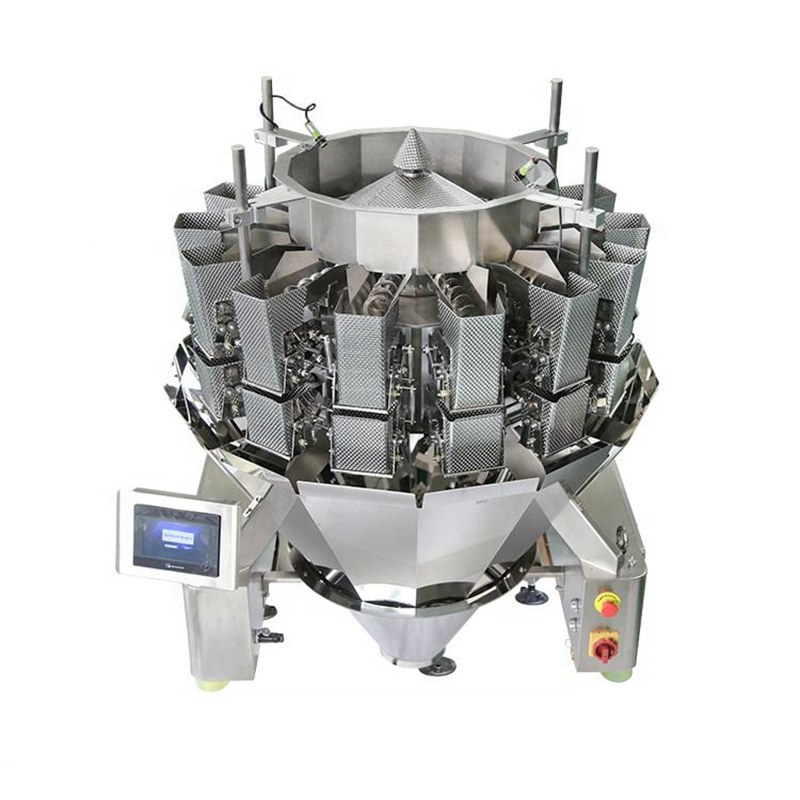
 dimple multihead weigher

  • Why Sticky Products Need a Specialized Weigher?

    Sticky materials—think capers, fresh meat, mustard, pickles, or powdered sugar—don’t behave like standard goods. Their tendency to clump, adhere to surfaces, or flow unevenly creates a cascade of issues:

  • Inconsistent weights that risk non-compliance with packaging regulations.
  • Frequent jams requiring manual cleaning, halting production lines.
  • Overfilled packages wasting product or underfilled ones damaging brand trust.
  • Rising labor costs as staff intervene to fix clogs or adjust settings.


  • Key Features of UUPAC's 14 Head Weigher: Designed for Performance

    What makes this multihead weigher stand out? Let's look at its notable features, each tailored to enhance productivity and reliability:

1. High-Precision Load Cells

Equipped with special load cells that meet strict accuracy standards, the weigher delivers consistent results, even for small or lightweight items. It achieves an accuracy of ±0.1g and has a minimum scale interval of 0.1g, which helps ensure every package meets your target weight, reducing waste and supporting compliance. The weigher can handle a weighing range of 5-600g per hopper, making it versatile for various product sizes.


2. IP65 Waterproof Rating

Built to withstand harsh production environments, the weigher features an IP65 rating—meaning it’s dust-tight and resistant to low-pressure water jets. With a 1.3L scraper hopper, all hoppers can stay open during cleaning, simplifying maintenance and reducing downtime.


3. Smart Program Recovery & Calibration

The weigher’s program recovery function helps minimize operational failures, while multi-segment weight calibration allows for fine-tuning based on product characteristics. This adaptability contributes to long-term stability, and it can reach a maximum weighing speed of 60 packages per minute, ensuring efficient production.


4. Anti-Stick & Anti-Noise Design

Material-contacting parts are coated with anti-noise PVC, preventing sticky substances from adhering to surfaces and reducing noise during operation. This helps keep the machine running smoothly with less manual cleaning.


5. Customizable Stepper Motor Settings

The stepper motor angle can be adjusted according to different products, ensuring optimal discharge speed and preventing product buildup—important for maintaining efficiency with varying viscosities.


6. User-Friendly Interface

With a 99-program capacity, the weigher adapts to diverse weighing needs. Its intuitive touchscreen includes a help menu, making operation simple for staff with minimal training.


7. Modular Electronic System

The modular design simplifies function expansion and maintenance, reducing repair costs and enabling quick troubleshooting—beneficial for keeping production lines running. The weigher operates on a power supply of 220V, 50/60Hz, which is compatible with many standard power systems.


8. High-Stability A/D Card

A professional A/D (Analog-to-Digital) card ensures accurate signal conversion, enhancing overall weighing stability. Plus, cards are interchangeable, minimizing downtime if replacement is needed. In terms of size, it has dimensions of 1,140(L)×1,140(W)×1,853(H)mm and a gross weight of 520kg, making it suitable for various production line setups.


9. Secure & Upgradable HMI

The HMI (Human-Machine Interface) includes multi-level authority management to protect settings, and programs can be upgraded via USB—keeping your equipment up-to-date with minimal effort.


  • Ideal Applications: What Can UUPAC's High-Stable Dimple 14 Head Weigher Weigh?

Food Products: Fresh meat, pickles, mustard, capers, small fish, powdered sugar, and more.

Viscous/Irregular Items: Any material with poor fluidity or irregular shapes that traditional weighers struggle to handle.


  • Why Consider UUPAC's 14 Head Weigher?

    For foreign equipment buyers, investing in reliable, efficient machinery directly impacts your production efficiency. The UUPAC High-Stable Dimple 14 Head Weigher offers:

  • Reduced Waste: Precise weighing helps cut down on overfilled packages.
  • Less Downtime: Easy cleaning, modular design, and program recovery minimize stops.
  • Versatility: Handles diverse products, adapting to changing production needs.
  • Long-Term Value: Durable construction and upgradable features support a lasting investment.


    If you're dealing with inefficiencies when handling sticky or irregular materials, the UUPAC's 14 Head Weigher could be a viable solution. With high stability, precision, and user-friendly design, it's built to streamline your production line.

A Practical Guide to Multihead Weighers for Food Packaging Hygiene, Accuracy, Compliance

    For food manufacturers—whether you're packaging large batches of bulky produce, pre-portioned mixed salads, or high-value nuts—choosing a multihead weigher requires balancing three non-negotiable priorities: hygiene that prevents cross-contamination, accuracy that cuts waste and avoids regulatory fines, and adaptability to handle light or bulky food products.


    UUPAC's 14-Head 5L Computer Weigher is built specifically to meet these needs, with a design tailored to the unique challenges of weighing light, bulky, or even small granular food items. This guide breaks down how this model solves food packaging pain points, and why it's a reliable choice for factories focused on safety, efficiency, and compliance.

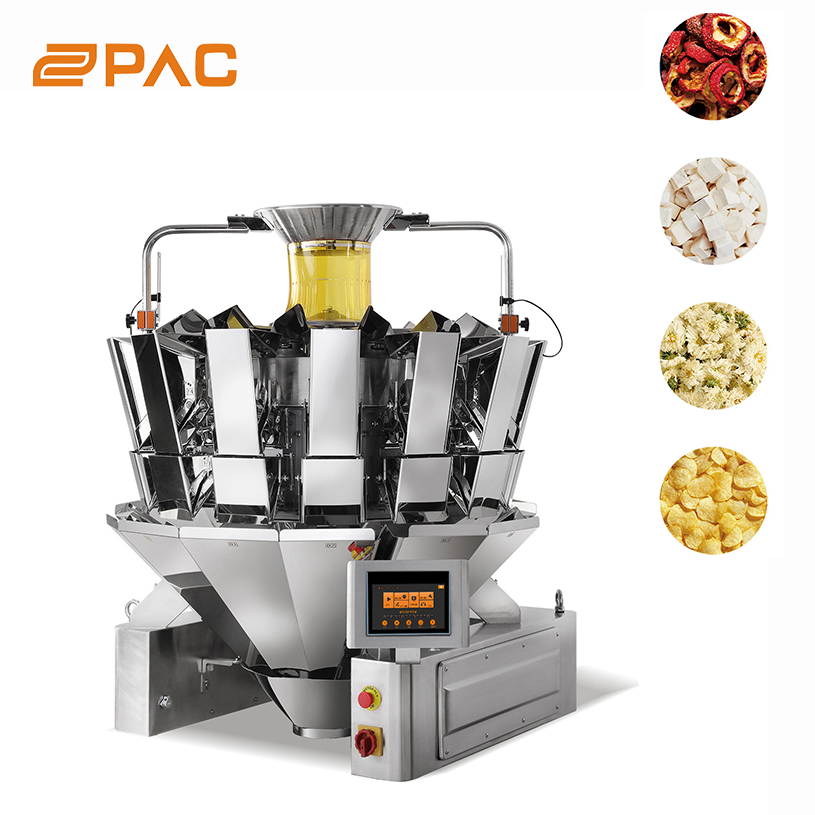
 14 head weigher

Why Food Factories Need a Weigher for "Light & Bulky" Products

Many food multihead weighers are designed for small, dense items (e.g., candy, spices)—but factories handling bulky or lightweight food (like large nuts, whole vegetables, or fresh salads) face distinct challenges:

  • Bulky products (e.g., large almonds, bell pepper slices) need roomy hoppers to avoid jamming, but small-hopper weighers cause frequent downtime.
  • Lightweight items (e.g., leafy greens, puffed snacks) are hard to weigh accurately—even slight air currents or uneven distribution can throw off measurements.
  • Fresh or moist foods (e.g., salads, cut veggies) require easy cleaning to prevent bacterial growth, but many weighers have hard-to-reach crevices that trap residue.


    A mismatched weigher leads to costly issues: A salad factory using a small-hopper model might lose 15% of daily output to jams; a nut packer with low accuracy could waste $400+ monthly on overpacked bags. UUPAC's 14-Head 5L Computer Weigher solves these problems with features built for light, bulky food.


1. Hygiene: Built for Fresh Food—Easy to Clean, No Hidden Risks

    For food like salads, fresh vegetables, or moist nuts, hygiene isn't just a "checklist ite"—it's critical to preventing spoilage and meeting safety standards (e.g., FDA, EU 10/2011). The 14-Head 5L Weigher's design eliminates contamination risks:


Food-Grade Materials & IP65 Waterproof Rating

  • All food-contacting parts (including the 5L hoppers) are made of SUS 304 stainless steel—non-porous, corrosion-resistant, and compliant with global food contact regulations (FDA 21 CFR §177.2600, EU 1935/2004). It won’t leach chemicals into food, even when exposed to moisture from fresh produce.
  • IP65 waterproof design lets you rinse the entire machine (hoppers, control panel cover, and frame) with high-pressure water after shifts—no need to disassemble parts to clean hidden gaps.


Fully Open Hoppers for Thorough Sanitization

    Unlike weighers with closed or hard-to-reach hoppers, the 14-Head 5L model’s 5L hoppers can stay fully open during cleaning. This means no trapped lettuce leaves, nut crumbs, or vegetable juice—reducing the risk of mold growth and cutting cleaning time by 30% (vs. traditional closed-hopper models).


2. Accuracy: ±0.1g Precision for Both Bulky & Small Granular Food

    Whether you're weighing 5000g bags of mixed nuts (bulky) or 100g portions of Chinese medicine tablets (small granular), accuracy directly impacts your bottom line. The 14-Head 5L Weigher delivers consistent precision for all food types:


High-Standard Load Cells & Multi-Segment Calibration

  • Equipped with special high-precision load cells (meeting OIML III standards), it achieves an accuracy of ±0.1g and a minimum scale interval of 0.1g. For a nut factory packing 20,000 1000g bags daily, this means:
  • No more 5g overpacks (which waste 100kg of nuts monthly, costing $300+ at $3/kg).
  • No underpacks that risk regulatory fines (e.g., EU penalties for mislabeled weight).
  • Multi-segment weight calibration lets you pre-set parameters for 3–5 different food types (e.g., large nuts, small tea leaves, fresh salads). Switch between products with one tap on the touchscreen—no manual recalibration needed, even when moving from bulky to lightweight items.


Anti-Noise PVC for Stable Weighing

    Material-contacting parts are lined with anti-noise PVC, which reduces vibration and interference from lightweight or fluffy foods (e.g., puffed snacks, leafy greens). This ensures stable measurements, even in busy production environments where machinery vibration might throw off less robust weighers.


3. Compliance: Features to Simplify Audits & Record-Keeping

    Food safety regulations require detailed production records—especially for products sold globally. The 14-Head 5L Weigher includes tools to make compliance stress-free:


Batch Data Logging & Authority Management

  • It automatically logs batch numbers, production times, target weights, and actual portion weights (with timestamps). You can export this data to a USB drive or sync it with your factory's ERP system—so if auditors ask for proof of consistent portioning, you don't have to rely on paper logs.
  • The HMI program includes different authority management (e.g., operator, supervisor, admin roles), ensuring only authorized staff can adjust weighing parameters. This prevents accidental changes that could lead to non-compliant portions, and creates a clear audit trail of who made adjustments and when.


Traceable Components & Certifications

    All parts of the 14-Head 5L Weigher (from load cells to stainless steel hoppers) come with certification documents (material safety data sheets, calibration certificates). This proves your equipment meets global food safety standards—critical for selling to strict markets like the EU, Japan, or the U.S.


Why the 14-Head 5L Weigher Is Perfect for Your Food Line

    This model shines for food manufacturers dealing with diverse or bulky products—here’s who it’s ideal for:

  • Nut & Seed Processors: Weigh large-sized nuts (e.g., walnuts, almonds) or small seeds (e.g., sunflower seeds) without switching equipment.
  • Fresh Food Factories: Package salads, cut vegetables, or fruit mixes—IP65 waterproof design handles frequent cleaning, and large hoppers avoid jams.
  • Specialty Food Brands: Weigh small-batch items like Chinese medicine tablets, premium tea, or artisanal chocolate beans—99 preset programs support quick SKU changes.

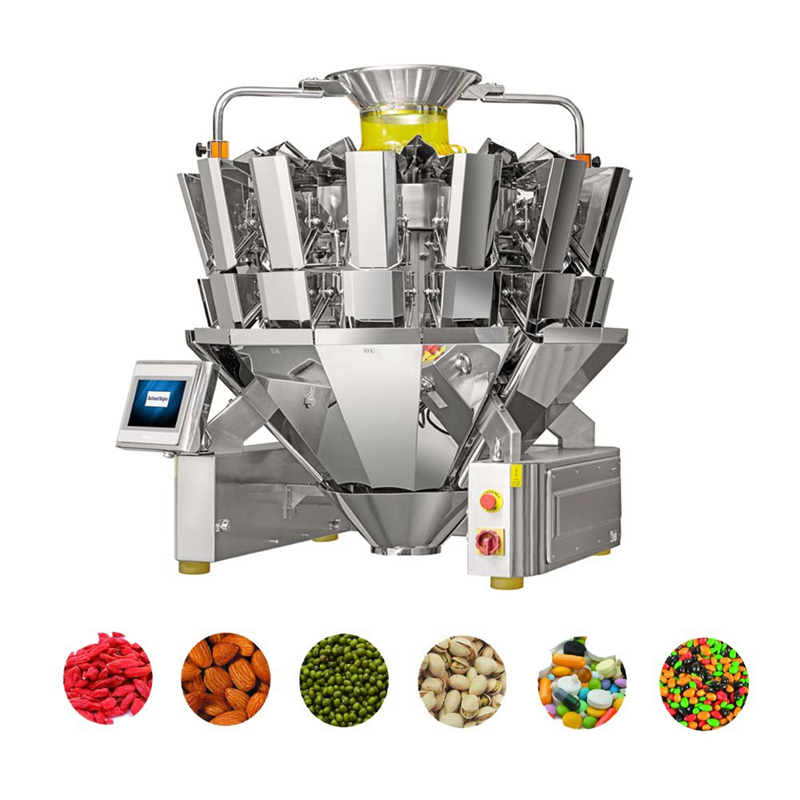
 multihead weigher

Final Tip for Food Manufacturers

    If you're tired of weighers that struggle with bulky food, take too long to clean, or can't keep up with compliance—UUPAC's 14-Head 5L Computer Weigher is built to solve these pain points. Contact us with your product type (e.g., "1000g almond bags" or "500g salad packs") and daily production target—we'll help you confirm it's the right fit.


    Food packaging should be about delivering quality products, not fixing weigher issues. The 14-Head 5L Weigher takes the stress out of weighing—so you can focus on growing your business.


Food Packaging? See How UUPAC Rotary Vacuum Bag Feeding Machine Automates Your Packaging Line

  • Are You Affected by the "Hidden Costs" in the Packaging Process?
  •     Food factories suffer from production line congestion due to slow manual packaging speeds, sauce enterprises face material leakage and loss caused by poor sealing, and the monthly labor cost of small and medium-sized factories accounts for more than 30%... The core of these problems often lies in the "automation gap" in the packaging process.

        As a Chinese manufacturer with 10 years of experience in packaging equipment, UUPAC's Rotary Vacuum Bag Feeding Packaging Machine has become the choice for many enterprises to upgrade their production lines with its three core capabilities: "cost reduction, efficiency improvement, and compliance".

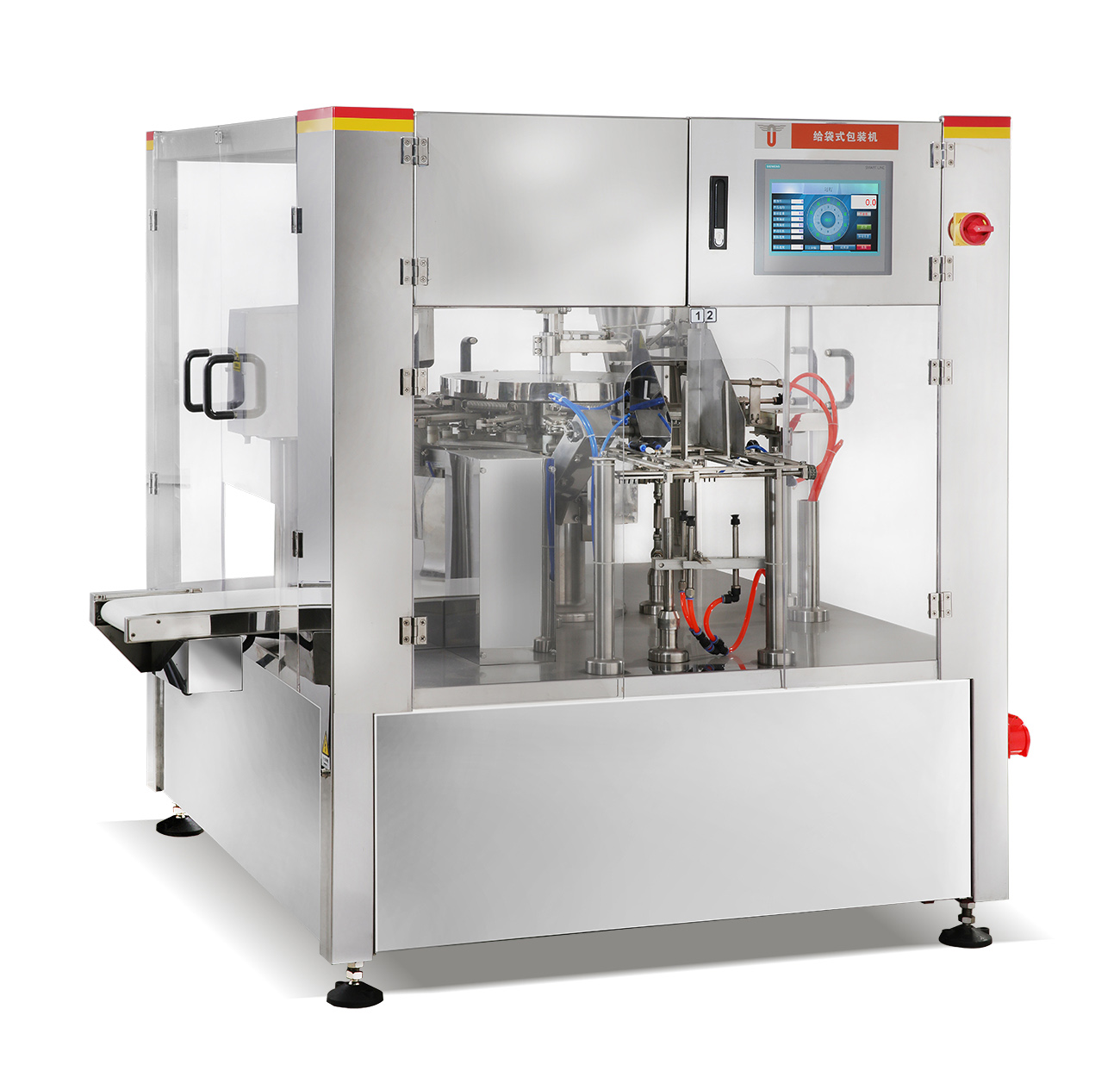
    UUPAC Rotary Vacuum Bag Packaging Machine

    • 2 Sets of Data Tell You: Why Automated Packaging Is a Must?

    1. Loss Control Calculation: Manual packaging is prone to 1%-3% waste of bag materials due to operational errors, while the equipment's automatic monitoring system can control the loss rate within 0.1%, reducing material loss by tens of thousands of yuan annually (based on a bag cost of 0.5 yuan and an annual output of 1 million bags).​

    2. Compliance Risk Calculation: In the food industry, microbial exceeding standards caused by manual contact with packaging may lead to unqualified quality inspections, with fines reaching 20%-50% of the value of the production batch. UUPAC equipment's fully automated process and food-grade stainless steel materials avoid such compliance risks from the source.


    • UUPAC Rotary Vacuum Bag Feeding Packaging Machine: 5 Core Advantages to Address Production Pain Points

    1. Efficiency Revolution: "1 Person Equals 10 People"​

    • Efficiency comparison: Traditional manual packaging is limited by physical strength and concentration, with large efficiency fluctuations and an obvious upper limit. However, the UUPAC equipment only requires one person to be responsible for replenishing packaging bags into the bag magazine, and it can achieve stable and efficient continuous output. The output per person is greatly improved, which can significantly reduce the number of required workers and reduce the scheduling pressure.​
    • Applicable scenarios: It is especially suitable for industries that require continuous production such as food and daily necessities - whether it is the bulk packaging of meat processing plants or the multi-shift production of washing powder factories, it can break through the bottleneck of manual efficiency through "less human involvement" operation.​
    • Principle: The bag magazine can hold hundreds of bags at one time, and the equipment automatically completes the entire process of "bag grabbing → opening → filling → sealing" without manual intervention in the intermediate links, avoiding efficiency losses such as pauses and errors in manual operations.​


    2. Multi-Scenario Compatibility, No More "Equipment Idle"​

    • Adaptable bag types: flat bags, stand-up bags, zipper bags, paper bags (TY-RVP200 model), covering multiple categories such as food (meat, snacks), daily necessities (washing powder), and chemical products (detergents).​
    • Flexible switching: When changing packaging specifications, the equipment automatically adjusts the bag width, reducing changeover time from 30 minutes to 5 minutes, meeting the needs of multi-batch and small-batch production.


    3. Intelligent Error Prevention, Controlling Every Penny of Cost​

    • Automatically detect faults such as abnormal air pressure and unopened bag mouths, stop and alarm immediately to prevent unqualified packaging from flowing to the next step; do not seal when there is no material, and empty bags can be reused, which greatly saves costs.


    4. Food-Grade Compliance: Materials and Processes for Safe Packaging​

        Parts in contact with products are made of SSUS304 stainless steel, which is acid and alkali resistant and easy to clean; the vacuum chamber can be disassembled and disinfected separately, meeting food safety production standards such as FDA and HACCP, making it particularly suitable for high-standard industries such as meat and aquatic products.


    5. "User-Friendly" Operation, No Professional Technicians Required​

        Equipped with a PLC+POD electronic control system, key parameters such as heat-sealing temperature and filling volume can be adjusted with one click via an intuitive human-machine interface, featuring clear and easy-to-understand operation logic; no professional technical background is needed, and ordinary employees can quickly master it after simple guidance, significantly reducing reliance on professional technicians.


    • How to Choose the Right Model for You? Understand Parameter Comparison in 2 Minutes​
    Demand Scenario Recommended Model Core Advantages
    Medium capacity (30-50 bags/minute), regular bag types TY-RP200 Cost-effective, suitable for start-up food factories
    High capacity (50 bags/minute), need to be compatible with paper bags TY-RVP200 Faster speed, suitable for more special bag types


    • Packaging Automation Is Not a "Choice" but a "Survival Issue"

        In today's era of rising labor costs and increasing consumer requirements for packaging quality, choosing a packaging equipment that can balance efficiency, cost and compliance is no longer a question of "whether to upgrade" but "how to upgrade quickly". As a Chinese local manufacturer, UUPAC not only provides cost-effective equipment but also can customize solutions according to your production line - consult now to turn your packaging link from a "cost center" into a "profit growth point".