Introducing Container Shearing Machines Powering Modern Recycling

Container shearing machines are robust industrial tools designed to dismantle and process large metal structures, such as shipping containers, vehicles, and scrap metal, into manageable pieces. These machines play a pivotal role in recycling and scrap handling industries, offering a blend of power, precision, and efficiency essential for modern waste management.  


Functionality and Design

Equipped with high-strength hydraulic systems, container shears apply immense force—often exceeding thousands of tons—to cut through thick steel. Their sharp, durable blades slice metal cleanly, minimizing dust and debris. Available as stationary units or mobile attachments for excavators, these machines adapt to diverse operational needs. Mobile shears, mounted on heavy machinery, offer flexibility for demolition sites or scrap yards, while stationary models suit high-volume recycling plants.  


Key Features

Modern container shears prioritize safety and automation. Features like overload protection, emergency stops, and reinforced guarding ensure operator safety. Advanced models integrate computerized controls for precise cutting angles and pressure adjustments, optimizing material recovery. Built to endure harsh conditions, they utilize wear-resistant materials, reducing downtime and maintenance costs.  


Applications and Benefits  

Widely used in recycling centers, shipbreaking, and automotive industries, these machines streamline the processing of bulky metal waste. By replacing labor-intensive methods like torch cutting, shearing machines enhance productivity, lower labor costs, and improve workplace safety. Their efficiency accelerates recycling workflows, ensuring faster turnaround and higher throughput.  


Environmental Impact  

Container shears support sustainability by enabling efficient metal recycling. Clean cuts produce uniform scrap, ideal for smelting and reuse, reducing reliance on raw ore extraction. This minimizes landfill waste and lowers carbon emissions, aligning with global circular economy goals.  


While the initial investment in container shearing machines may be significant, their long-term benefits—enhanced safety, operational efficiency, and environmental contributions—make them indispensable. As industries prioritize sustainable practices, these machines will remain central to transforming scrap into valuable resources, driving the future of recycling.

The Advantages of Metal Chips Briquetting Machines in Modern Manufacturing

In the bustling environment of manufacturing and metalworking facilities, the generation of metal chips and shavings is inevitable. These byproducts, often seen as mere waste, can pose significant challenges in terms of handling, cost, and environmental impact. Enter the metal chips briquetting machine—a transformative solution that compresses loose chips into dense, manageable briquettes. This article explores the multifaceted benefits of adopting this technology, underscoring its role in enhancing operational efficiency and sustainability.


Streamlined Waste Management

Metal chips, when loose, occupy substantial space, complicating storage and transportation. Briquetting machines compress these chips into compact blocks, reducing their volume by up to 90%. This drastic reduction allows facilities to store waste more efficiently, minimizing the need for frequent disposal and lowering the number of storage containers required. Transport costs plummet as more material can be shipped in fewer trips, optimizing logistics and reducing carbon footprints.


Significant Cost Savings

The financial implications of waste management are profound. By compacting metal chips, companies reduce disposal frequency and associated fees. Moreover, briquetted metal becomes a valuable commodity in recycling markets, often sold at higher prices than loose chips due to their purity and density. Recycling these briquettes in-house further curtails expenses by decreasing reliance on virgin raw materials, aligning with circular economy principles.


Environmental Stewardship

Metal briquetting supports eco-friendly practices by promoting recycling over landfill use. Recycling metal consumes far less energy than primary production—for instance, recycling aluminum saves approximately 95% of the energy required to produce it from ore. Additionally, compacting chips prevents residual oils or coolants from contaminating soil and waterways, mitigating environmental hazards. This process also reduces mining demand, preserving natural resources and lowering greenhouse gas emissions.


Enhanced Workplace Safety

Loose metal chips pose safety risks, including slip hazards and injuries from sharp edges. Their flammability, especially in fine forms like magnesium or aluminum, increases fire risks. Briquetting eliminates these dangers by transforming chips into stable, easy-to-handle blocks. A cleaner workspace reduces accidents and fosters a safer, more productive environment for employees.


Versatility Across Applications

Modern briquetting machines accommodate various metals—from aluminum and copper to steel—and can process chips mixed with oils or coolants. Adjustable pressure settings allow customization based on material type, ensuring optimal compression. Integration with existing systems, such as automated conveyors, enhances workflow efficiency without disrupting production lines.


Regulatory Compliance and Marketability

Adhering to environmental regulations is streamlined with briquetting, as it demonstrates proactive waste management. Companies may also leverage their sustainability efforts in marketing, appealing to eco-conscious clients and stakeholders. The higher quality of briquettes meets stringent recycling standards, ensuring compliance and fostering partnerships with recyclers.


Metal chips briquetting machines are a strategic investment for forward-thinking manufacturers. By transforming waste into a resource, they deliver cost savings, environmental benefits, and safer workplaces while enhancing operational efficiency. In an era where sustainability and efficiency are paramount, adopting this technology is not just an option—it’s a imperative for competitive, responsible manufacturing. Embrace briquetting to turn metal waste into a cornerstone of your sustainability strategy.

Applications of Extruder Mold Temperature Controllers in the Extrusion Industry

As a high-efficiency plastic processing equipment, extruders hold a vital position in industrial production due to their continuous production capabilities. This versatile machine can meet the molding needs of various materials, making it widely used in industries such as packaging films, construction pipes, automotive seals and parts, and cable sheaths. By accurately controlling temperature and pressure, extruders can flexibly produce diverse products, ranging from micron-level films to complex structural components. This not only ensures high-quality output but significantly enhances production efficiency. With the development of new materials and technologies, the application scope of extruders continues to expand.
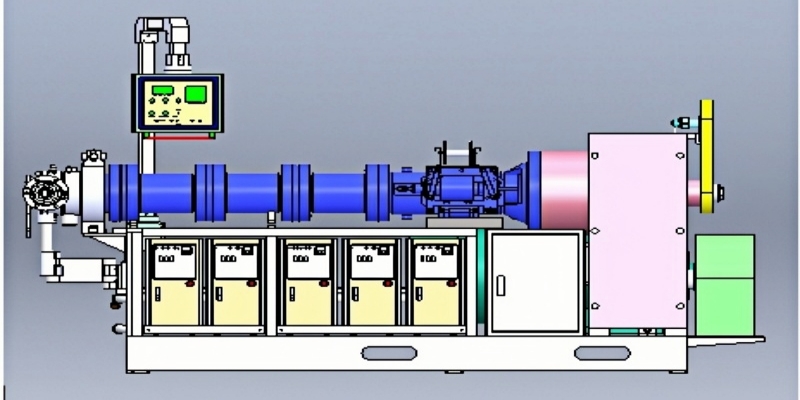
Cold feed extruder


Common Applications of Extruder Mold Temperature Controllers in the Extrusion Industry:

1. Plastic Extrusion Field

* Pipe Extrusion: In the production of plastic pipes, mold temperature controllers regulate the temperature of the molds, ensuring that the molten plastic flows evenly and cools properly. This results in pipes with uniform wall thickness, stable dimensions, and smooth surfaces. The reduced ovality and wall thickness deviations improve the pipe's pressure resistance and aesthetic quality, making it suitable for applications in construction water supply and drainage, gas transmission, and electrical cable conduits.


* Profile Extrusion: In the production of plastic profiles for doors, windows, and decorative materials, mold temperature controllers ensure that the molds maintain an appropriate temperature. This allows the plastic to fill the mold cavities more effectively, achieving precise shapes and dimensions. The temperature control also enhances the profile's surface quality and physical properties, such as rigidity and flexibility.


* Sheet Extrusion: For plastic sheet extrusion, precise mold temperature control ensures even distribution of internal stress in the sheet, preventing warping or deformation. It also guarantees the flatness and smoothness of the sheet's surface. High-quality plastic sheets are produced for industries such as construction, furniture manufacturing, and advertising displays.


Film Extrusion: In plastic film production, mold temperature controllers help regulate cooling rates and crystallinity. This results in films with excellent transparency, tensile strength, and flexibility, as well as uniform thickness. The controlled temperature improves film quality, making it ideal for use in packaging, agriculture, and electronics industries.
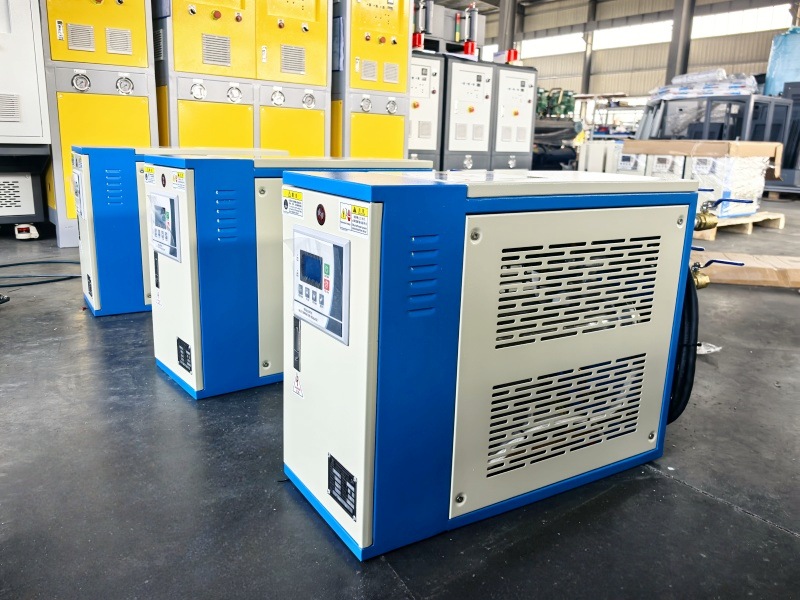
Rubber Mold Temperature Controller


2. Rubber Extrusion Field

* Rubber Hose Extrusion: During the production of rubber hoses, mold temperature controllers create a suitable environment that ensures the rubber has excellent flowability and plasticity during extrusion. This results in hoses with precise dimensions and smooth surfaces, enhancing performance in terms of pressure resistance, abrasion resistance, and aging resistance. These hoses are widely used in industries such as automotive, machinery, and chemical engineering for oil, water, and gas transmission.


* Rubber Strip Extrusion: In the extrusion of rubber sealing strips, mold temperature controllers ensure stable extrusion processes, maintaining consistent cross-sectional shapes and stable dimensions. This improves the sealing performance and elasticity of rubber strips, which are crucial for automotive door seals and window seals in construction.


* Rubber Sole Extrusion: For rubber sole extrusion, mold temperature controllers ensure that rubber materials are extruded at optimal temperatures, achieving excellent forming effects and physical properties such as elasticity, abrasion resistance, and slip resistance. This leads to higher quality and comfort in rubber footwear soles.
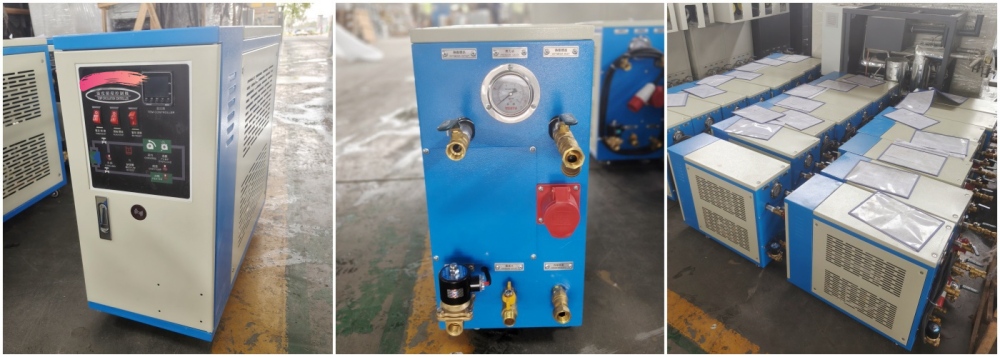
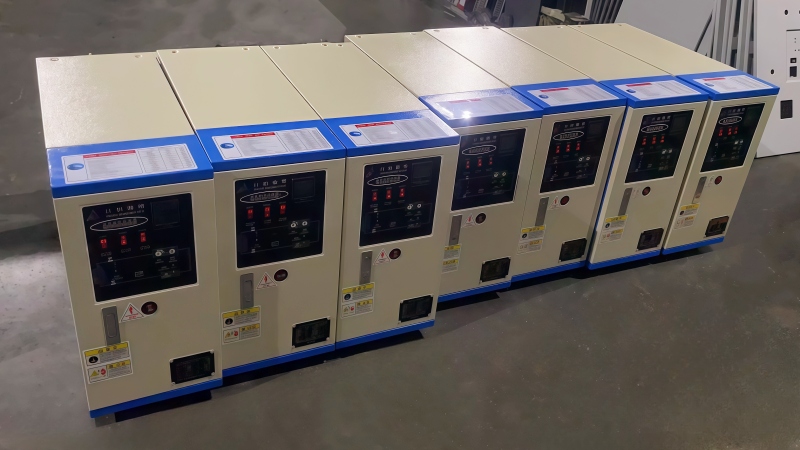
Rubber Mold Temperature Controllers


A rubber products manufacturer that previously used a natural gas boiler for heating faced significant energy waste during equipment downtime. The primary production equipment was a flat vulcanizing machine with heating plates measuring 1.2 meters by 1 meter by 40 millimeters, with six plates in total. The process required that the temperature of each heating plate be precisely controlled at 160°C.


For this production demand, the company selected a rubber extruder mold temperature controller with the following technical specifications: heating power of 60KW, circulating flow rate of 16m³/h, and lift of 30 meters. After more than a year of practical operation, the temperature controller system proved stable and reliable, meeting the demand for continuous production, with each heating plate's temperature achieving the required precision.


With the implementation of mold temperature controller system, the company not only solved the energy waste issue during equipment downtime but also significantly improved product quality and reduced defective rates. This demonstrates the importance  of selecting compatible mold temperature control equipment in improving production efficiency and product quality in rubber manufacturing.


3. Cable Extrusion Field

In cable production, extruder mold temperature controllers regulate the extrusion temperatures of cable insulation and sheath materials. By precisely controlling temperature, these systems ensure that insulation and sheath materials exhibit good flowability and uniformity during extrusion, guaranteeing consistent thickness and smooth surfaces. This improves both the electrical and mechanical properties of the cable, ensuring high quality and safety. These systems are widely applied in the production of power cables, communication cables, and various other types of cables.


4. Other Extrusion Applications

* Food Industry: In the extrusion of food packaging films and food processing pipes, mold temperature controllers maintain the temperature within an ideal range. This ensures the safety and stability of food-contact materials, while also stabilizing product dimensions and surface smoothness, meeting food hygiene standards.


* Composite Material Extrusion: When producing fiber-reinforced composite materials, mold temperature controllers help regulate mold temperatures, allowing better integration of resin matrices with reinforcing materials. This improves the performance and quality of composite materials, ensuring that products meet mechanical and thermal requirements.


Nanjing Hengde Electrical Equipment Co., Ltd, a professional manufacturer specializing in mold temperature controllers, produces over 200 models tailored to different industries, including those for the extrusion sector. Hengde offers one-on-one customer service, available 24/7, to meet all your production needs. Hengde's efficient and durable mold temperature controllers can save your company significant maintenance and replacement costs, improving both production efficiency and product quality.


Choose Hengde,Choose Perfect Mold Temperature Controller

Rubber Mould Temperature Controllers

Advanced Solution for Packaging Durability Testing


Introduction

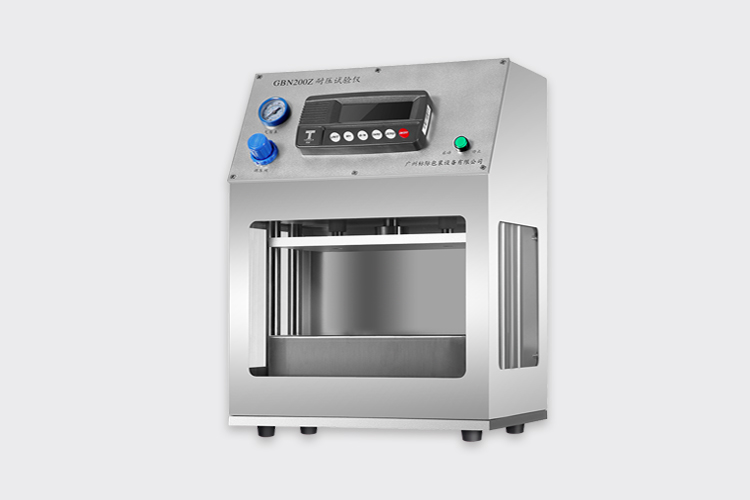
The integrity and durability of packaging materials are crucial in various industries, including food, pharmaceuticals, and consumer goods. The GBN200Z Compression Tester, developed by GBPI, is a high-precision instrument designed to evaluate the compression resistance and burst strength of packaging bags. This advanced equipment complies with GB standards and meets the market's rigorous demands for quality control and research applications.


Importance of Compression Resistance Testing

Packaging materials play a vital role in product protection, preventing contamination, maintaining shelf life, and ensuring consumer safety. One key property of packaging materials is their ability to withstand compression during storage, transportation, and handling. The GBN200Z Compression Tester provides an accurate and reliable method to assess packaging performance, helping manufacturers optimize material selection and improve production quality.


Key Features of GBN200Z

The GBN200Z incorporates state-of-the-art technology to deliver precise and consistent testing results. Some of its notable features include:

High-Precision Compression Control: The tester applies controlled compression to packaging materials, accurately measuring their resistance and burst strength.

Compliance with International Standards: Designed to meet GB standards, ensuring results are relevant and comparable across industries.

User-Friendly Interface: Equipped with an intuitive control panel and digital display for ease of operation.

Versatile Testing Capabilities: Suitable for various types of packaging, including plastic films, laminated materials, and flexible pouches.

Automatic Data Recording: Stores test results for detailed analysis and quality control.

Robust Construction: Built with durable materials to ensure longevity and consistent performance.


Applications Across Industries

The GBN200Z is widely used in multiple sectors where packaging integrity is critical. Below are some of the key industries that benefit from this advanced testing equipment:

Food Packaging: Ensures packaging materials can withstand transportation stress, preventing leaks and contamination.

Pharmaceuticals: Maintains the sterility and integrity of drug packaging, reducing risks associated with damaged containers.

Consumer Goods: Evaluates the strength of flexible pouches and plastic bags used in everyday products.

Quality Inspection & Research: Used in laboratories and testing institutions for material research and compliance testing.

Industrial Packaging: Assesses the durability of packaging materials used for bulk goods and logistics applications.

Medical Device Packaging: Ensures the safety and sterility of medical packaging used for instruments and supplies.


How the GBN200Z Works

The GBN200Z employs a precise testing methodology to measure the compression resistance of packaging materials. The general process includes the following steps:

Sample Preparation: A packaging bag or film sample is placed in the testing chamber.

Compression Application: The tester applies controlled compression to the sample, gradually increasing the force until the material reaches its breaking point.

Data Recording: The device records critical data such as maximum compression resistance and burst strength.

Result Analysis: Test results are displayed on the digital interface and can be exported for further analysis.


Benefits of Using the GBN200Z

The GBN200Z Compression Tester offers numerous advantages for manufacturers and quality control teams:

Enhanced Product Safety: Ensures packaging materials can withstand real-world conditions, reducing failure rates.

Improved Manufacturing Efficiency: Identifies weak points in materials, allowing for optimization and cost reduction.

Regulatory Compliance: Helps businesses meet industry standards and quality assurance requirements.

Data-Driven Quality Control: Provides accurate test data for making informed decisions in packaging development.


Conclusion

The GBN200Z Compression Tester is an essential tool for industries that rely on high-quality packaging materials. With its precise testing capabilities, compliance with GB standards, and user-friendly design, it provides manufacturers and researchers with a reliable solution for evaluating packaging strength. By investing in advanced testing equipment like the GBN200Z, businesses can enhance product safety, reduce defects, and maintain industry compliance, ultimately leading to improved customer satisfaction and brand reputation.


Why Melt Flow Rate Testing Matters

In the world of plastic manufacturing, precision matters. Whether you're producing packaging materials, automotive components, or consumer electronics, understanding how your raw materials behave under heat is essential. One of the most important indicators of a thermoplastic material’s processing performance is its Melt Flow Rate (MFR) or Melt Volume Rate (MVR). This is where the GBB-R Melt Flow Index Tester, developed by Guangzhou Biaoji’s expert R&D team, comes into play.

What Is Melt Flow Rate, and Why Should You Care?

The melt flow rate refers to how easily a thermoplastic polymer flows when melted under specific temperature and load conditions. It's measured by how much material extrudes through a standard die over a given period. This value—expressed as either mass (MFR, g/10min) or volume (MVR, cm³/10min)—can significantly impact the molding and extrusion behavior of the material.

Imagine producing a batch of polypropylene components. If the MFR is too high, the material might flow too quickly, leading to flash or overpacking. Too low, and the mold might not fill properly, causing structural defects. Knowing the exact melt flow rate helps technicians fine-tune their processing parameters, reduce waste, and ensure consistent product quality.


Meet the GBB-R: Precision Meets Reliability

The GBB-R Melt Flow Index Tester is designed in full compliance with standards such as GB/T 3682, ISO 1133, and JB/T 5456. It is suitable for testing a wide range of polymers, including:

Polyethylene (PE)

Polypropylene (PP)

Polystyrene (PS)

ABS resin

Polycarbonate (PC)

Nylon

Fluoroplastics

Acetal resins

The device operates by heating the plastic sample to a specified temperature and applying a standard load. The molten material then flows through a calibrated die, and the machine calculates the flow rate automatically. Both MFR and MVR values can be measured with high repeatability and accuracy.


Who Needs a Melt Flow Index Tester?

The GBB-R is essential for any industry that relies on thermoplastic materials. Its main users include:

Plastic raw material manufacturers: for quality classification and batch consistency

Injection molding factories: to optimize molding parameters and reduce defects

Extrusion and film producers: for continuous quality control during production

Petrochemical companies: for product development and R&D testing

Testing labs and research institutes: for comparative material analysis

In industries like food packaging, pharmaceutical packaging, automotive parts, and consumer goods, the flow behavior of polymers directly influences production speed, product stability, and overall cost efficiency. Having a reliable instrument like the GBB-R gives companies a clear advantage in process control and quality assurance.


Key Benefits at a Glance

Standards-compliant: Fully meets ISO 1133 and GB/T 3682

Wide material compatibility: Suitable for a variety of thermoplastics

Accurate and stable results: Ensures repeatability across different tests

Easy operation: User-friendly interface and automation options

Ideal for both lab and production line: Flexible for different testing scenarios


Final Thoughts

In modern plastic manufacturing, the smallest details make the biggest difference. The melt flow rate of your polymer can determine the success or failure of your production process. Investing in a high-quality, reliable melt flow index tester like the GBB-R not only ensures accurate testing results but also enhances your entire production workflow.

Whether you’re developing new plastic materials or ensuring consistency in daily operations, the GBB-R is the smart choice for manufacturers who value quality and control.

How to Choose the Right Direct-Cooling Block Ice Machine A Comprehensive Guide

Introduction


The direct-cooling block ice machine is a highly efficient refrigeration machine that finds widespread application of the ice machine for fishery, food processing, and supermarket industries. In this article, we will provide you with a comprehensive guide on how to choose a direct-cooling block ice machine that offers excellent value for money and quality.


Understanding the Principles and Features of Direct-Cooling Block Ice Machines


Direct-cooling block ice machines operate by directly absorbing heat using refrigerant, allowing water to freeze into ice blocks within the ice mold. These machines possess several key features:

  • Fast ice production with high-quality ice blocks;
  • Energy-efficient and environmentally friendly, resulting in low operational costs;
  • Simple structure for easy maintenance;
  • Wide application range, customizable ice block sizes according to specific needs.


Understanding the Main Components of a Direct-Cooling Block Ice Machine


Before diving into the nuances of selecting a direct-cooling block ice machine, it is crucial to grasp the fundamental components that make up these machines. Each component plays a pivotal role in the machine’s operation, and understanding their functions is essential for making an informed purchase decision.


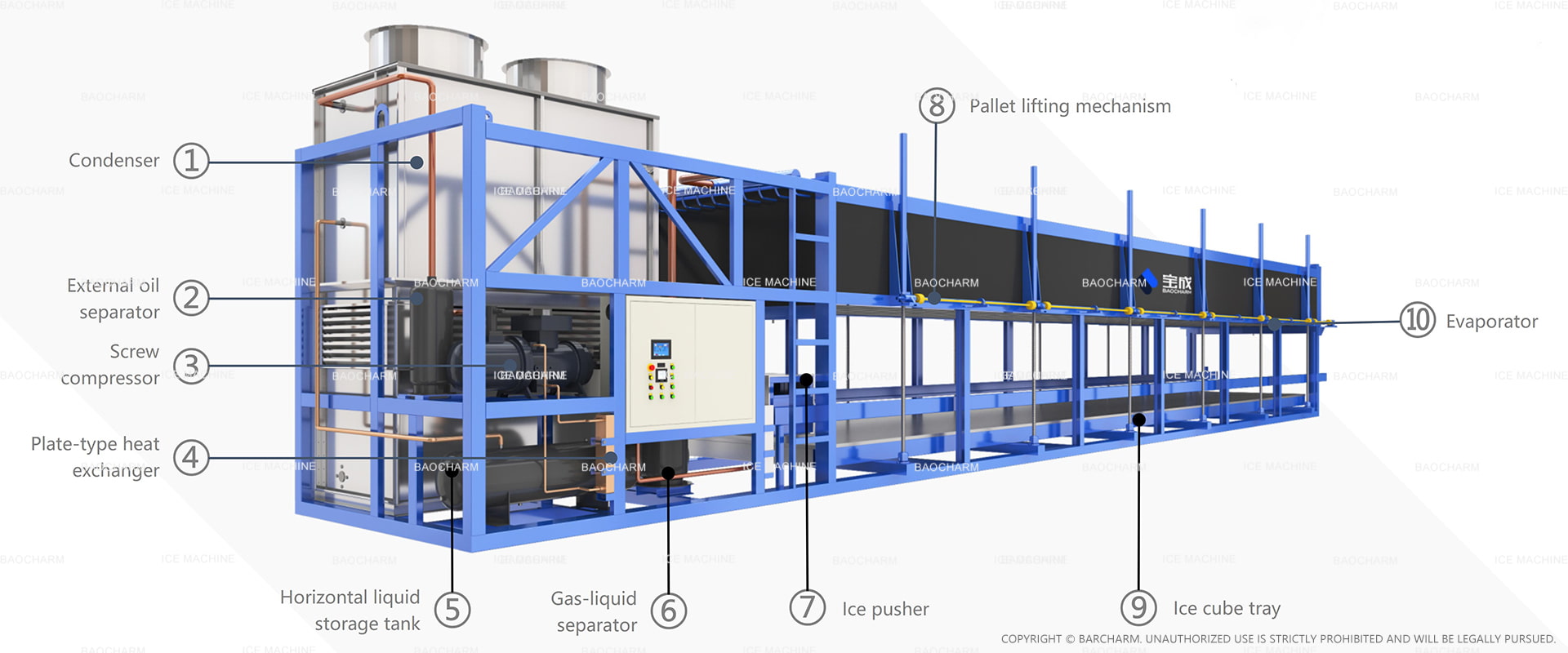
Ice Block Machine Structure


  • Ice Machine Compressor: The heart of the direct-cooling block ice machine, the compressor is responsible for pumping the refrigerant through the system. It facilitates the transfer of heat, allowing the refrigerant to absorb heat from the water and convert it into ice. The compressor’s efficiency directly impacts the machine’s ice production rate and energy consumption.


  • Ice Machine Evaporator (Ice Block Mold): The evaporator is where the refrigerant absorbs heat from the water, leading to the formation of ice blocks. The design and quality of the evaporator are critical to the machine’s overall performance. In a direct-cooling block ice machine, the ice block mold shapes the ice blocks, and it’s essential to select a mold that meets your specific requirements and desired ice block size.


  • Ice Machine Condenser: The condenser is responsible for removing heat from the refrigerant after it has absorbed heat from the water. There are several types of condensers, including water-cooled, air-cooled, and evaporative cooling condensers. Each type has its advantages and is suitable for different environments and applications.


  • Ice Machine Control System: The control system is the brain of the machine, managing all operations. It includes the water supply system, refrigeration system, and the automatic ice ejection system. A well-designed and precise control system ensures smooth operation, optimal performance, and safety.


  • Ice Machine Mechanical System: The mechanical system includes the tray lifting system and the ice pushing system. The tray lifting system allows for easy loading and unloading of ice blocks, while the ice pushing system automates the process of moving ice blocks from the machine to storage or the desired location.


  • Ice Machine Frame and Ice Tray: The frame provides the structural support for the entire machine, ensuring stability and durability. The ice tray holds the water that will freeze into ice blocks, and its design is crucial for efficient ice production and easy ice retrieval.


Key Considerations for Choosing a Direct-Cooling Block Ice Machine


  • Ice Production Capacity: Determine the required ice production capacity based on your ice maker machine for business needs. Larger ice production capacities often come with higher costs, so it is crucial to strike a balance between capacity and budget.
  • Ice Block Size: Direct-cooling block ice machines come in various ice block sizes, such as 5KG, 25KG, 50KG, and 100KG. Choose a size that aligns with your intended use.
  • Brand and After-Sales Service: Opt for a reputable brand known for quality and reliability. Additionally, consider the after-sales service, including warranty periods, maintenance, and repair services.
  • Efficiency: Look for machines with high ice production efficiency and low energy consumption. Factors affecting efficiency include machine power, ice mold design, and the quality of the compressor and evaporator.
  • Safety: Ensure the machine has safety features such as overload protection and short-circuit protection to guarantee safe operation.


Additional Considerations for Optimal Selection


  • Industry Trends: Stay updated on the latest developments in the direct-cooling block ice machine industry, including new models and technologies. This knowledge will help you make informed decisions during the selection process.
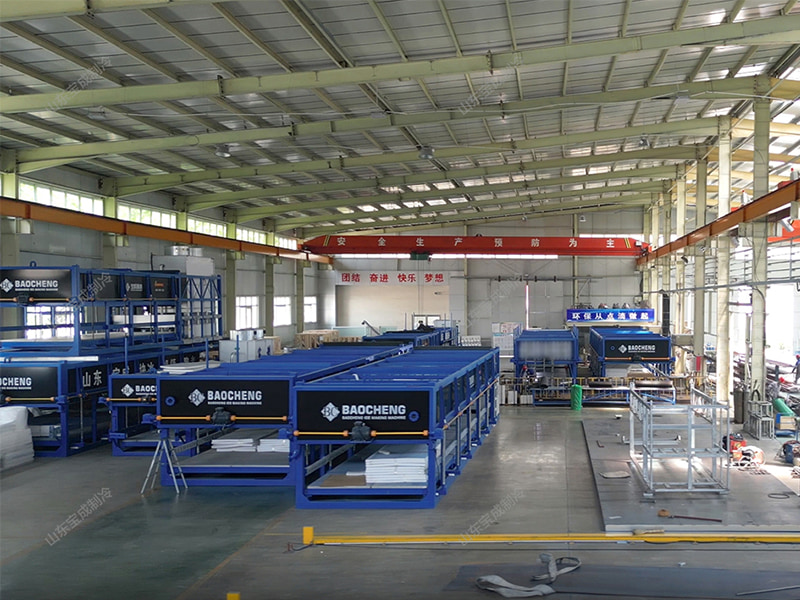
  • Manufacturer Background: Investigate the manufacturer’s background, including the ice machine china company history, production facility size, R&D capabilities, equipment quality and stability, energy consumption ratio, export and transportation experience, and more.


Conclusion


Choosing a direct-cooling block ice machine is a multifaceted task that requires careful consideration. By understanding the principles and features of these machines, comparing their advantages, and selecting a reputable manufacturer with a strong track record, you can secure a high-quality, cost-effective direct-cooling block ice machine that meets your business needs.


Baocharm: Your Trusted Partner in Ice Making

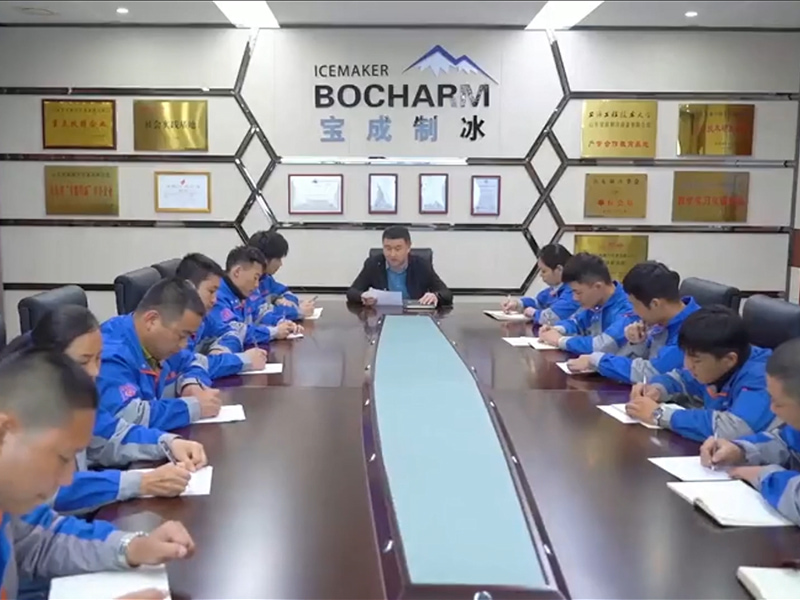
Having navigated the complexities of direct-cooling block ice machines, it is clear that Baocharm stands out as a manufacturer that not only understands the intricacies of ice production but also prioritizes customer satisfaction. Our reputation for providing high-quality, cost-effective solutions is built on years of experience and a commitment to excellence.


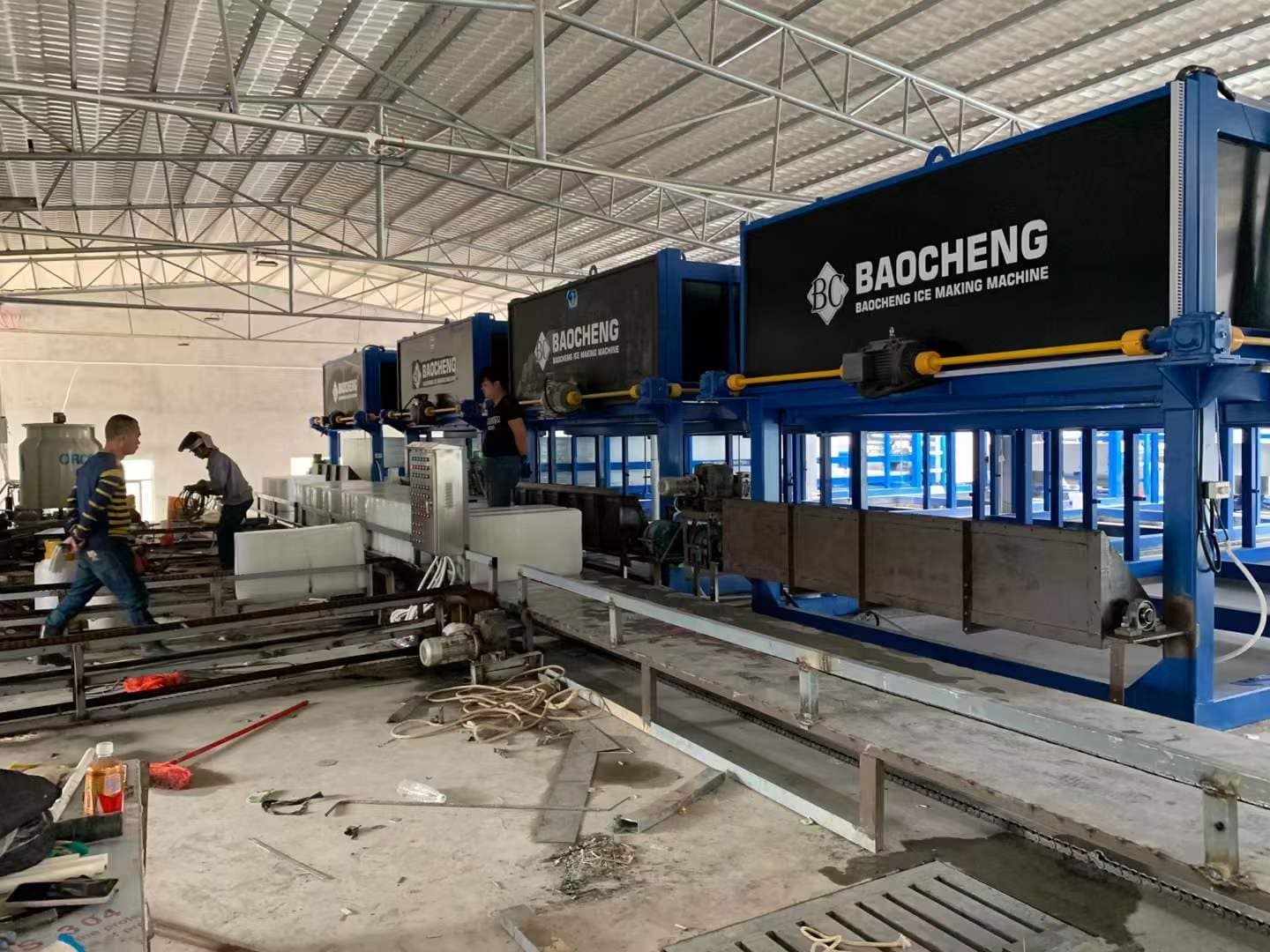
Baocharm Ice Machine


The use of moisture permeability tester

The moisture permeability tester is a professional device used to measure the water vapor transmission rate (WVTR) of textiles, films, non-woven fabrics and other materials. The following are the standard operating procedures and technical points.


I. Equipment structure and principle

Core components

1. Test chamber: sealed chamber with controllable temperature and humidity (usually divided into dry/wet chamber)

2. Weighing system: high-precision balance (0.001g resolution)

3. Temperature control system: PID precise temperature control (range 20-50℃±0.5℃)

4. Humidity system: saturated salt solution or steam generator

5. Data acquisition: automatic recording of mass changes and temperature and humidity


Test principle

Positive cup method (ISO 2528): water vapor permeation from wet chamber to dry chamber

Inverted cup method (ASTM E96): water vapor absorption from dry chamber to wet chamber

Dynamic method (JIS L1099): determination of water vapor carried by airflow


II. Standard operating procedures

1. Sample preparation

Cut a circular sample with a diameter of ≥70mm (no creases/breaks)

If testing multiple layers of materials, stack them according to the actual use direction

Pretreatment: equilibrate at the test temperature and humidity for 24h (GB/T 12704 requirements)


2. Equipment initialization

1. Turn on the constant temperature water bath (set to 23℃ or 38℃)

2. Prepare saturated salt solution:

Dry environment: Mg(NO₃)₂ (RH≈53%)

High humidity environment: K₂SO₄ (RH≈97%)

3. Calibrate the balance (use standard weights)

3. Sample loading and sealing

1. Fix the sample at the mouth of the test cup:

- Positive cup method: add distilled water (liquid surface 3mm away from the sample)

- Inverted cup method: add desiccant (anhydrous CaCl₂)

2. Press with silicone seal to ensure no side leakage

3. Weigh the initial mass (m₀) to an accuracy of 0.001g

4. Test execution

1. Place the test cup in a constant temperature and humidity chamber

2. Set parameters:

Temperature: 23±1℃ or 38±1℃ (select according to the standard)

Air flow rate: 0.5-1.0m/s (dynamic method needs to be set)

Test interval: 1h/time (static method)

3. Start the test, the system automatically records the mass change (m₁, m₂...mₙ)

5. Data processing

Water vapor permeability meter:

WVTR = (Δm×24)/(A×t) Unit: g/(m²·d)

Δm: mass change (g)

A: effective test area (m²)

t: test time (h)

Example:

If the mass decreases by 0.12g within 24h and the test area is 0.00283m², then:

WVTR = (0.12×24)/0.00283 = 1017.7 g/(m²·d)


Email: hello@utstesters.com

Direct: + 86 152 6060 5085

Tel: +86-596-7686689

Web: www.utstesters.com

Uses of fabric air permeability tester

The fabric air permeability tester is an instrument specially used to measure the air permeability of fabrics (such as clothing, footwear, industrial textiles, etc.). Its core purpose is to evaluate the ability of materials to allow air to pass under different pressure difference conditions. The following are its main application scenarios and purposes:


1. Quality control and production optimization

Production process verification: Ensure that the air permeability of fabrics during the production process (such as textile, coating, lamination, etc.) meets the design standards to avoid performance degradation due to process deviations.

Batch consistency detection: Compare different batches of raw materials or finished products to maintain the stability of product air permeability.


2. Functional clothing and equipment development

Sports/outdoor clothing: Test the air permeability of products such as assault jackets and mountaineering clothes, and balance the needs of windproof and moisture removal (such as the research and development of fabrics such as GORE-TEX).

Protective equipment: Evaluate the air permeability of medical protective clothing and industrial dustproof clothing to ensure the protective effect while avoiding stuffiness.

Shoe materials and tents: Optimize the air permeability of upper materials or tent fabrics to improve wearing comfort or ventilation performance.


3. Industry standards and certification

Compliance testing: meet international standards (such as ISO 9237, ASTM D737, GB/T 5453, etc.) and obtain product certification (such as CE, OEKO-TEX).

R&D benchmarking: compare competitor or industry benchmark data to guide new product development.


4. Material research and innovation

Evaluation of new materials: test the air permeability efficiency of innovative materials such as nanofibers and breathable membranes to promote technology applications.

Analysis of multi-layer composite materials: study the impact of different laminate structures (such as non-woven fabrics + films) on overall air permeability.


5. User experience and market competitiveness

Comfort quantification: convert air permeability data (such as mm/s or cfm) into product selling points (such as "air permeability increased by 20%)" to enhance market persuasiveness.

Problem diagnosis: for the "stuffy" problem complained by users, locate material or design defects through testing.


Brief description of test principle

The instrument applies a controllable air pressure difference on both sides of a fixed area of fabric to measure the volume of air (or flow rate) passing through per unit time. The results are usually expressed as air permeability (such as L/m²/s) or air permeability resistance, with higher values indicating greater air permeability.


Key parameters for selecting a tester

Test standard compatibility (such as support for multiple international standards)

Range and accuracy (adapting to different materials from dense down-proof fabrics to sparse mesh fabrics)

Automation functions (such as digital pressure regulation, direct data export)


This type of instrument is indispensable in textile laboratories, quality inspection agencies and R&D centers, and directly affects the functional positioning and market acceptance of products.

Email: hello@utstesters.com

Direct: + 86 152 6060 5085

Tel: +86-596-7686689

Web: www.utstesters.com

Guide to using a textile air permeability tester Accurately test the air permeability of fabrics

Breathability is an important indicator for measuring the comfort of textiles, and is particularly suitable for quality control of products such as sportswear, outdoor equipment, and medical textiles. An air permeability tester can scientifically evaluate the ability of air to pass through fabrics to ensure that the product meets industry standards (such as ISO 9237, ASTM D737, etc.). This article will provide a detailed introduction to the use of an air permeability tester to help you obtain accurate and repeatable test data.


1. Equipment and preparation

(1) Composition of an air permeability tester

Test head: Fixed sample, usually with test holes of different diameters (such as 20cm², 38cm², etc.).

Airflow control system: Adjusts and measures air flow (unit: mm/s or cm³/cm²/s).

Pressure sensor: Detects the pressure difference on both sides of the sample (unit: Pa).

Display/software: Displays test data, and some devices support data export.


(2) Calibration and inspection

Calibration: Calibrate the equipment using a standard calibration plate according to the instructions to ensure accurate data.

Air tightness check: Test whether the airflow is stable when unloaded to avoid air leakage affecting the results.

Environmental conditions: It is recommended to test under standard temperature and humidity (such as 20±2℃, 65±4% RH) to avoid interference from environmental factors.


(3) Sample preparation

Cut at least 5 representative samples (such as 20cm×20cm), avoiding fabric edges or obvious defect areas.

If different parts are tested (such as the front chest and back of the garment), samples must be taken and marked separately.


2. Test steps

(1) Install the sample

1. Loosen the test head clamp and place the sample flat on the test area to avoid wrinkles or stretching.

2. Tighten the clamp evenly to ensure that the sample is fixed and there is no air leakage (you can check by lightly pressing the edge with your fingers).


(2) Set parameters

Test standard: Select the applicable standard (such as ISO 9237, GB/T 5453, etc.).

Test area: Select the test hole size according to the thickness of the sample (small holes for thin fabrics and large holes for thick fabrics).

Pressure difference setting: usually 100Pa or 125Pa, adjusted according to the standard requirements.


(3) Start the test

1. Start the equipment, the system will automatically apply a stable airflow and measure the air permeability.

2. After the value stabilizes (usually 10-30 seconds), record the data (unit: mm/s or L/m²/s).


(4) Repeat the test

Each sample should be tested at least 3 times, and the average value should be taken as the final result.

If the data difference is too large (>10%), it is necessary to check whether the sample is improperly fixed or the equipment is abnormal.


3. Data interpretation and reporting

(1) Common air permeability units

mm/s (millimeter/second): The speed of air flow passing through the fabric vertically.

L/m²/s (liter/square meter/second): The amount of air flow passing through a unit area per unit time.

cfm (cubic feet/minute): Used in some European and American standards.


Summary

Textile air permeability tester is an indispensable tool in research and development, quality inspection and trade. Correct use of equipment and standardized operating procedures can ensure the reliability and comparability of test data. Whether it is product development or acceptance inspection, scientific air permeability evaluation can provide strong support for quality control.


Email: hello@utstesters.com

Direct: + 86 152 6060 5085

Tel: +86-596-7686689

Web: www.utstesters.com


Heat and sublimation fastness tester

I. Instrument introduction

The heat and sublimation fastness tester is a professional equipment used to determine the color stability of textiles under high temperature conditions. It mainly evaluates two properties:

1. Heat fastness: color change when the material contacts a high temperature surface

2. Sublimation fastness: color migration caused by the dye directly changing from solid to gas at high temperature


II. Preparation before testing

1. Sample preparation

Cut a sample with a size of 40mm×100mm

The sample needs to be balanced under standard atmospheric conditions (20±2℃, 65±2%RH) for 24 hours

Prepare multi-fiber adjacent fabrics or single-fiber adjacent fabrics of the same size


2. Instrument inspection

Confirm that the surface of the heating plate is clean and free of contamination

Check the accuracy of the temperature control system

Ensure that the pressure device is working properly

Calibrate the temperature sensor


III. Operation steps


Heat fastness test

1. Turn on the power and preheat the equipment to the set temperature (usually 180-210℃)

2. Lay the sample flat on the heating plate

3. Lower the pressure device and apply a standard pressure of (4±1) kPa

4. Start timing and keep contact for 30 seconds

5. Immediately raise the pressure device after the time is up and remove the sample

6. Cool the sample under standard atmospheric conditions

7. Use a gray sample card to assess the discoloration level


Sublimation fastness test

1. Overlap the sample with the front of the adjacent fabric

2. Place in a tester that has been preheated to the set temperature (temperature is selected according to the material type)

3. Apply standard pressure (4±1 kPa)

4. Keep for 30 seconds to 4 minutes (according to the test standard requirements)

5. Take out the sample and cool to room temperature

6. Assess the discoloration of the sample and the staining level of the adjacent fabric respectively


IV. Temperature selection reference

Polyester fabric: 180℃ or 210℃

Other synthetic fibers: adjusted according to the fiber melting point

Natural fibers: usually 150-180℃


V. Result evaluation

1. Use a standard gray sample card to assess:

Discoloration level (1-5, 5 is the best)

Staining level (1-5, 5 is the best)

2. Record the test conditions (temperature, time, pressure)

3. Take photos before and after the test


Related standards

ISO 105-X11: Textile color fastness test

AATCC 133: Heat color fastness

GB/T 8427: Textile color fastness test

Email: hello@utstesters.com

Direct: + 86 152 6060 5085

Tel: +86-596-7686689

Web: www.utstesters.com