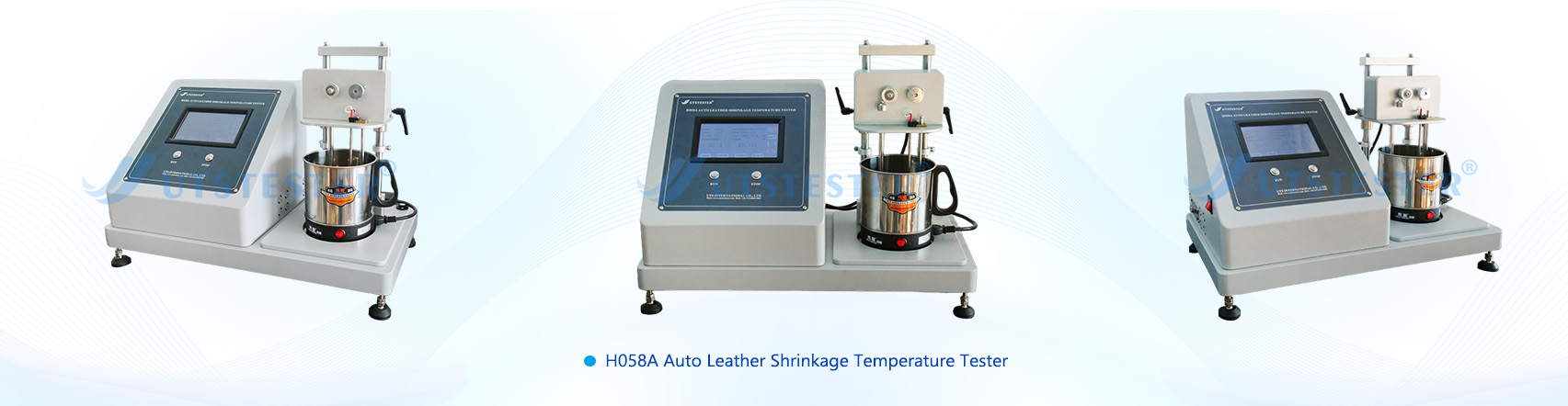
Testing of Leather Shrinkage Temperature

1. Scope of Application

Applicable for testing the shrinkage temperature of leather.


2. Compliance Standards

Complies with ISO 3380, IULTCS/IUP 16, QB/T 2713-2005, and other standards.


3. Technical Parameters

3.1 Temperature Control Range: Ambient to 100°C, with tensile displacement distance 0-110mm;

3.2 Heating Rate: 2±0.2°C/min

3.3 Heating Medium: Distilled water or deionized water

3.4 Test Load: 0-3g

3.5 Instrument Dimensions: 630x330x450mm (L x W x H)

3.6. Instrument Weight: 17kg

3.7. Power Supply: Single-phase 220V, 50Hz

3.8. Control System: PLC

3.9. Operating Interface: 7-inch color touchscreen with Chinese/English language switching

3.10. Touchscreen displays test data curves and real-time temperature readings


4. Composition

The leather shrinkage temperature tester is a device used to measure the temperature at which leather shrinks during heating. This tester typically consists of a heating unit and a measurement system.

During the leather shrinkage temperature test, the sample is usually a small leather patch or fabric. The sample is placed in the heating device and heated to a specific temperature. As the temperature rises, the leather begins to shrink until it reaches the shrinkage temperature. The measuring system records and displays the leather's shrinkage temperature.


5. Applications

The leather shrinkage temperature tester is primarily used in the following areas:

5.1 Quality Control: Shrinkage temperature is a key indicator for assessing leather quality. By conducting shrinkage temperature tests, the leather's shrinkage performance can be evaluated to determine compliance with quality standards.

5.2 Material Research and Development: Testing the shrinkage temperatures of different materials helps R&D personnel understand the shrinkage characteristics of various leather types during heating, providing reference for new material development and improvement.

5.3 Production Process Optimization: Testing leather shrinkage temperatures under different heating conditions enables optimization of production processes, enhancing production efficiency and product quality.

5.4 Market Competitive Analysis: Understanding competitors' product shrinkage temperatures aids in formulating competitive strategies and market positioning.

leather shrinkage temperature tester

Email: hello@utstesters.com

Direct: + 86 152 6060 5085

Tel: +86-596-7686689

Web: www.utstesters.com

What is fabric waterproofness, and how is it tested?

Fabric waterproofness is a special requirement for clothing performance and can be categorized into two main categories: waterproofness and impermeability.


I. Waterproofing


Waterproofing is correctly termed "water repellency." A common method involves adding a hydrophobic compound additive to a liquid tank at the entrance of the finishing machine. The fabric is then fed into the tank, padded, and dried, depositing the hydrophobic compound on the fiber surface. The hydrophobic compound modifies the surface tension of the fibers, limiting their reactivity and reducing the attraction of water molecules to the fibers (fiber surface tension is less than the cohesive force of water molecules). Water forms rolling droplets on the fabric surface (much like a lotus leaf pushing dewdrops). This is also known as "water repellency" or "waterproofing" (abbreviated W/R). See the figure below:


Fabric pores allow air and water vapor to pass through, but if water remains trapped in these pores for extended periods or under pressure, it can still penetrate and even absorb moisture. When wearing waterproof clothing in the rain, water droplets will roll off or shake off, but whether the inner layer of the garment or any undergarments becomes damp depends on the amount of rain and the duration of exposure. The surface water-repellent effect of clothing gradually diminishes with washing and prolonged use, eventually becoming ineffective. Therefore, water repellency essentially reduces the fabric's ability to absorb water; it's not truly waterproof, but simply labeled "waterproof."


II. Waterproofing


Waterproofing is truly waterproof. "Waterproof" means resisting or preventing water penetration, which means it's truly waterproof.


True waterproof fabrics are superior to waterproof fabrics. Their physical and chemical properties are relatively stable and generally withstand washing and long-term use. True waterproofing creates an impermeable barrier on one side of the fabric, requiring a high water pressure rating, such as 3000mm or higher. Waterproofing typically involves applying a rubber-based layer or film to the reverse side of the fabric to prevent water penetration. Common methods include coating and lamination.Coating involves applying a fabric coating adhesive or film to one side of the fabric, creating a waterproof membrane. Common methods include direct coating (dry, wet, or hot melt) and transfer coating. Lamination typically involves pressing a layer of waterproof membrane material (commonly known as a "waterproof membrane") onto the fabric to form a single layer. Regardless of whether the fabric is waterproof or not, the membrane adhered to the fabric always acts as a barrier to water penetration. Another lamination method, hot melt calendering, bonds a polymer waterproof membrane to the fabric, achieving the same barrier effect.True waterproofness (or water penetration) is measured and evaluated by resistance to water pressure, measured in millimeters of water column. Using a fixed surface area of waterproof fabric, water is prevented from penetrating from one contact surface to the other. As water pressure increases, the pressure corresponding to the third drop of water penetrating from the surface is the fabric's resistance to water pressure. Generally speaking, fabrics that withstand a water pressure exceeding 1000 mm are considered to have basic waterproofing.


III. Fabric Waterproofing Test

1. Spray Method: AATCC 22-2025 Waterproofness Test 


Test Procedure: Under specified conditions and procedures, water is sprayed onto a stretched specimen to form a wet streak on the surface. The size of the wet streak correlates to the fabric's water repellency. The evaluation result is determined by comparing this wet streak with a standard wet streak.


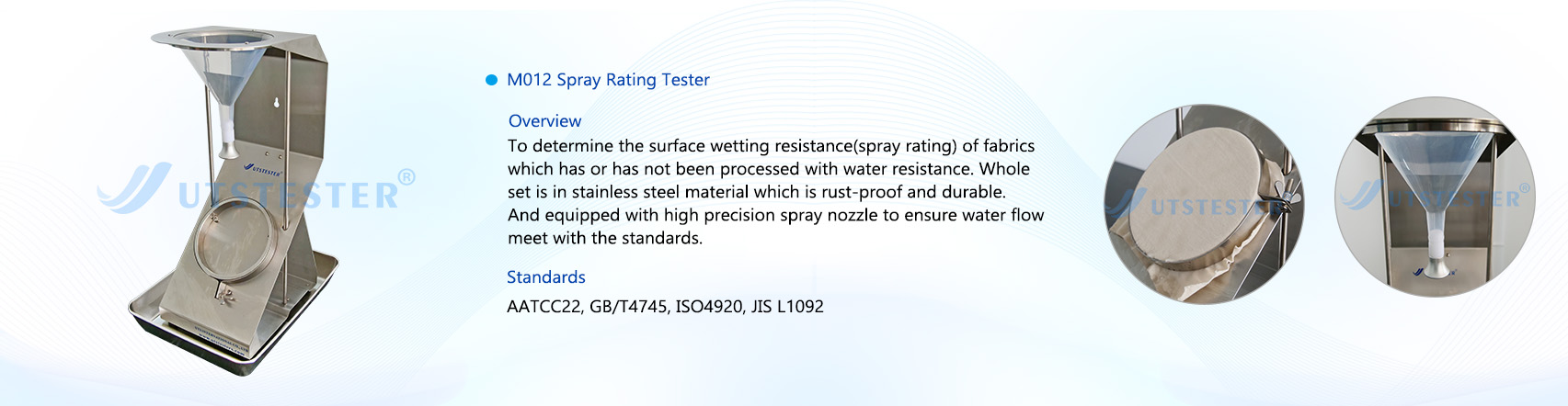
AATCC Spray Tester


The spray method evaluates the water repellency of fabrics by continuously spraying or dripping water onto the specimen. After a specified period of time, the surface water stain characteristics of the specimen are observed and compared with photographs of specimens at different levels of wetting. The spray method simulates the degree of wetting experienced by clothing in light rain.


This method is applicable to all waterproof and non-waterproof fabrics. The measured waterproof performance results are closely related to the fiber, yarn, fabric treatment and fabric structure. It is usually measured using a spray-type waterproof tester. In the AATCC 22-2005 test method, the test sample is fixed with an iron ring. The sample is kept taut and the surface is flat and wrinkle-free. Distilled water is sprayed from a standard nozzle at a 45-degree angle, aimed at the sample below the nozzle, for 25-30 seconds. The bottom of the iron ring holding the sample is tapped once on a solid object with the test surface facing the solid object. The iron ring is then rotated 180° and tapped again. The sprayed sample surface is then compared with the standard chart and scored to evaluate the waterproof performance of the fabric.

The rating scale is 5, with 5 being the best and 1 being the worst. Level 5: No water droplets on the specimen surface; Level 4: Slightly wet spots on the specimen surface; Level 3: Obvious raindrops on the specimen surface; Level 2: Partially wet specimen surface; Level 1: Completely wet specimen surface.


2. Hydrostatic Pressure Test: AATCC 127-2003 Water Resistance: Hydrostatic Pressure Test


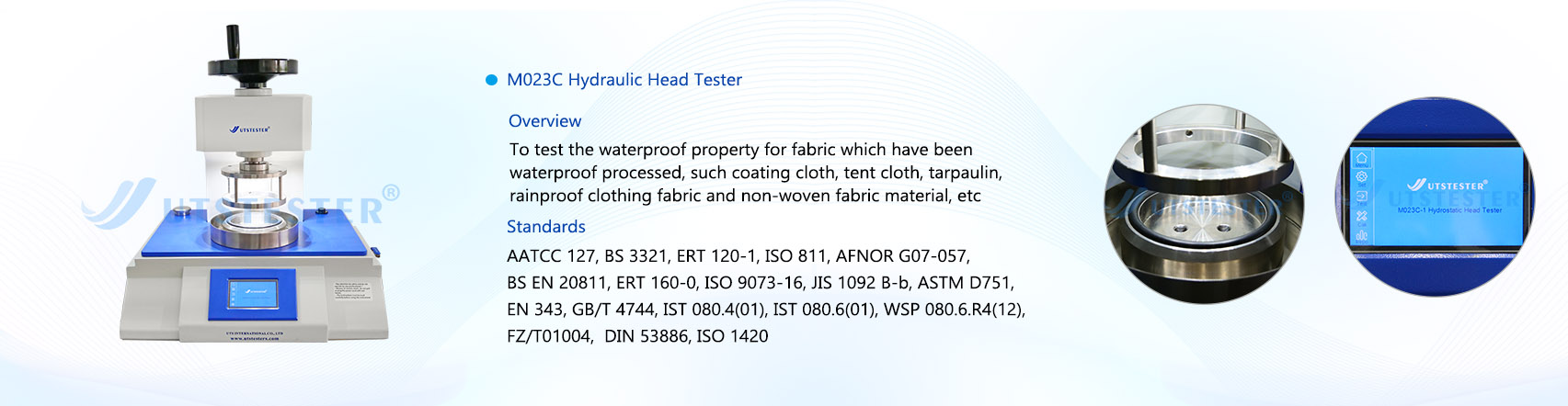
Test Procedure: Apply water pressure to one side of the specimen at a steadily increasing rate until three water penetrations are observed on the other side. Water pressure can be applied from the top or bottom of the specimen. Hydrostatic Pressure Tester

spray-type waterproof tester


Hydrostatic Head Tester


The hydrostatic pressure test measures the water permeability of a fabric under a certain water pressure. This test is suitable for all types of fabrics, including those with water-repellent treatments.

A fabric's water repellency is related to the water resistance of the fibers, yarns, and fabric structure, and differs from the results obtained when water is sprayed or rained on the fabric surface. There are two methods for measuring fabric water repellency: static pressure and dynamic pressure. The static pressure method applies hydrostatic pressure to one side of the fabric and measures the amount of water released under this pressure, the time it takes for the water to drip off, and the hydrostatic pressure at a given water release rate. Hydrostatic pressure can be expressed as the height of a water column or pressure. In actual testing, water permeability per unit area and per unit time (mL/cm²·h) is measured.For waterproof fabrics, the time it takes for a water drop to appear on the other side of the sample is measured, or the number of water drops that appear on the other side after a certain period of time is observed. In the AATCC 127-2003 test method, at least three samples measuring 200 mm x 200 mm are taken diagonally from the sample to be tested. The two sides of the sample are marked with different water resistance levels. The test is conducted using distilled water at (21 ± 2)°C over a test area of 100 cm². The test surface is immersed in water, and the water pressure is increased at a rate of 60 mbar/min (or 10 mm/s).The test is terminated if water droplets appear at three different locations on the sample. However, water droplets appearing within 3 mm of the sample holder are invalid. The test result is the average of three test samples tested under the same conditions. The higher the test value, the greater the pressure required for water to seep out of the sample, indicating better water resistance.

Email: hello@utstesters.com

Direct: + 86 152 6060 5085

Tel: +86-596-7686689

Web: www.utstesters.com

Which light sources are commonly used in color matching light boxes?

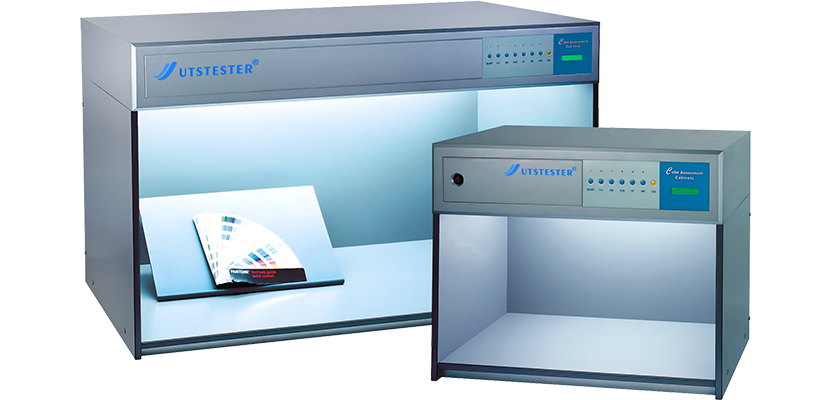
Color matching light boxes, as optoelectronic devices for color inspection, typically incorporate multiple types of standard light sources internally. However, the specific light sources configured vary across different models of color matching light boxes. Below is an introduction to the most commonly used light sources in color matching light boxes.


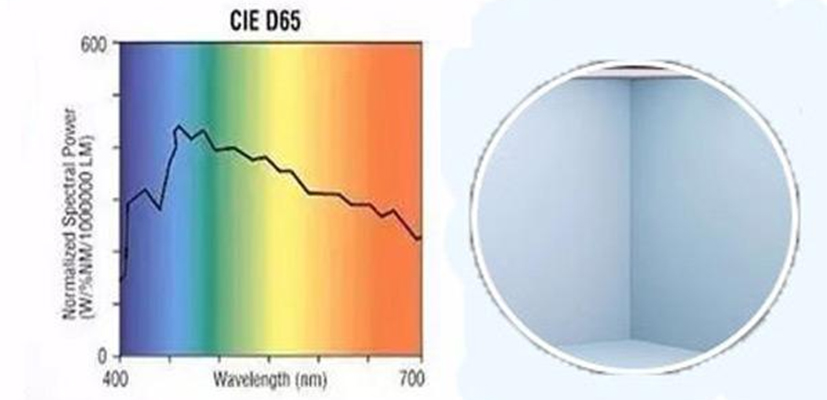
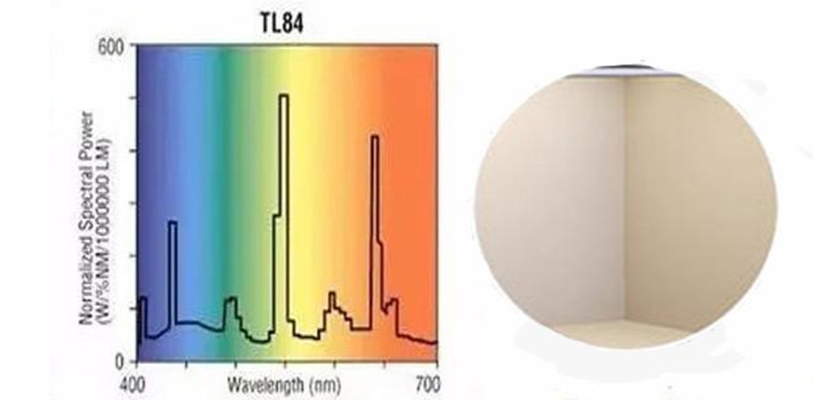
The most commonly used color-matching light sources in standard light boxes include A, D65, TL84, CWF, and U30. These light sources are often combined and arranged by professional manufacturers within a single standard light box for customer use. Different light boxes may have varying configurations to meet the diverse needs of different customers.


1. A (INCA) Light Source

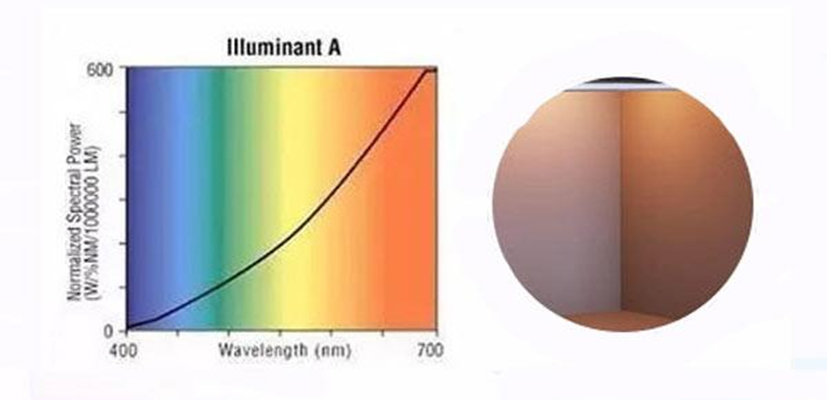
The A light source is a gas-filled spiral tungsten filament lamp with a color temperature of 2856K. It is a typical incandescent lamp primarily used for accent lighting in residential interiors or retail spaces.


2. D65 Light Source

Among the D-series standard illuminants, CIE recommends D65 as the preferred illuminant. D65 represents average daylight with a correlated color temperature of 6500K, derived from measurements of overcast northern hemisphere daylight at a north-facing window—averaged across all seasons and times of day. D65 is an indispensable standard light source in numerous standards, including ISO 105-A01 “General Rules for Testing the Colour Fastness of Textiles” and ASTM D1729 “Standard Practice for Visual Evaluation of Opaque Materials.” However, due to the unique spectral power distribution of D65, no artificial light source currently exists that can emit light with an identical spectral power distribution to D65; only approximate simulations are possible. In most standard lightboxes, two high-color-rendering fluorescent lamps are used to simulate the D65 light source. In the GretagMacbeth SPLⅢ standard lightbox, however, tungsten-filtered halogen lamps employ tungsten-filtered technology to simulate the D65 light source.


3. Commercial Lighting Sources (F Series)

The TL84 (F) light source belongs to the F series of fluorescent light sources, a proprietary product of Philips. Widely used in Marks & Spencer stores across the UK, it has become a key commercial color-matching light source in the European market. The TL84 light source typically employs Philips' “TLD” (thin-walled) fluorescent tubes coated with rare-earth phosphors. It is a trichromatic fluorescent lamp with a correlated color temperature (CCT) of 4000K. CWF light source (F2) is primarily used in commercial and office settings in the United States, with a correlated color temperature of 4150K. CWF stands for Cool White Fluorescent.

U30/TL83 light source (F12): U30, fully named Ultralume3000, is also a trichromatic fluorescent lamp with a correlated color temperature of 3000K. Sears department stores across the United States utilize U30 tubes manufactured by Westinghouse Electric Corporation. The U30 light source is equivalent to the TL83 light source used in Europe. In the GretagMacbeth Judge II standard lightbox, the Philips TL83 fluorescent lamp is employed to achieve the U30 light source.


4. Other Light Sources

In addition to the above light sources, standard light boxes typically include a UV light source. This ultraviolet lamp is often used alone or in combination with other light sources to inspect fabrics for whitening agents and fluorescent dyes. Additionally, some light boxes feature a HOR (HORIZON) light source. This halogen tungsten lamp simulates daylight during dawn or dusk.

Color matching light box

Email: hello@utstesters.com

Direct: + 86 152 6060 5085

Tel: +86-596-7686689

Web: www.utstesters.com


Ai Color Sorting for Hardware Manufacturing — GroTech in Thumbtack and Small Hardware Sorting

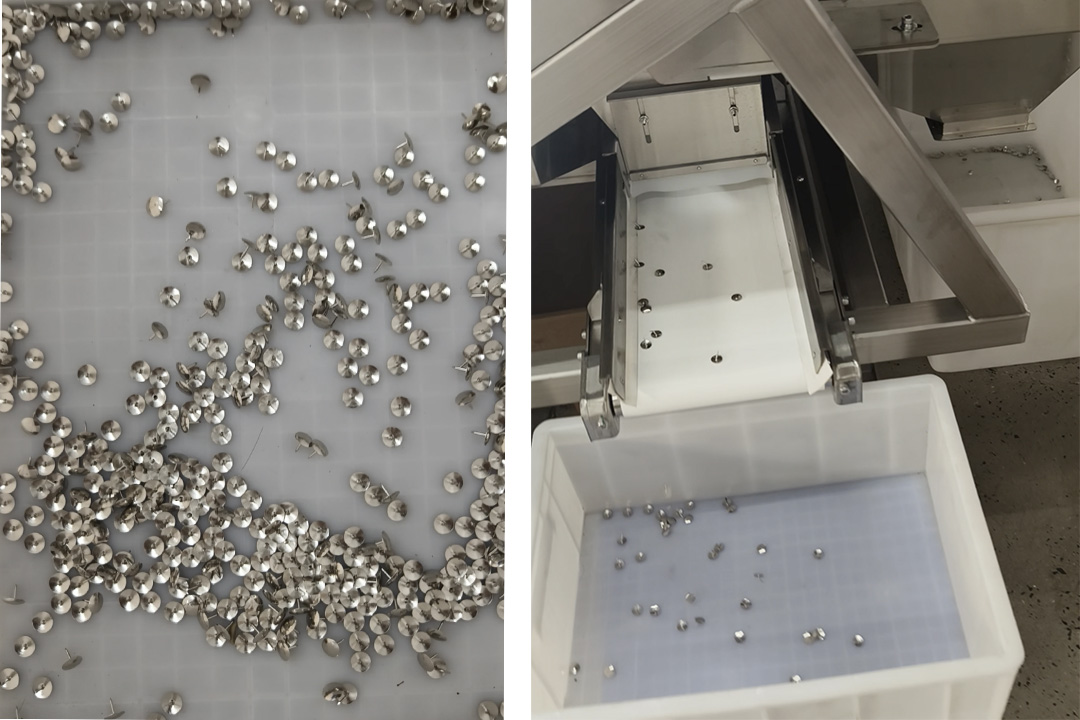
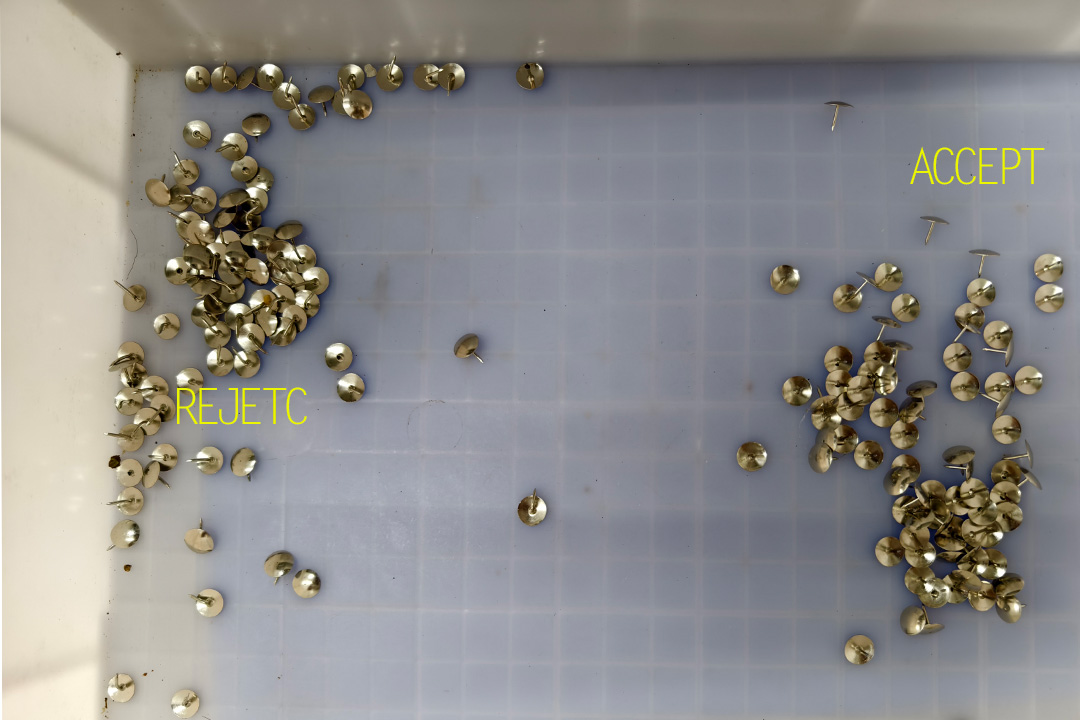
In the hardware industry, small components such as thumbtacks, screws, rivets, and washers may seem insignificant, but they directly affect product quality and customer experience. Traditional manual sorting is inefficient, error-prone, and costly. With advanced imaging and AI recognition technology, the GroTech Color Sorter delivers high-efficiency sorting and defect removal, helping manufacturers reduce costs, improve efficiency, and build a stable and reliable quality reputation.

GroTech in Thumbtack and Small Hardware Sorting


Challenges in Hardware Sorting

In the production of thumbtacks, screws, and other small hardware, quality issues often arise:

  • Inconsistent colors affecting overall appearance.

  • Surface impurities or defects lowering customer satisfaction.

  • Manual sorting inefficiency, requiring high labor costs with limited accuracy.

These challenges limit productivity and hinder the pursuit of high-quality, large-scale manufacturing.


Advantages of GroTech Color Sorter

1. High-Definition Recognition & Precision Sorting

Equipped with advanced optical imaging and AI algorithms, the GroTech Color Sorter can quickly detect color differences and surface defects in thumbtacks, screws, rivets, and washers, removing defective pieces with high-speed air-jet technology.

2. Improved Product Consistency

By ensuring every batch of hardware parts has uniform color and appearance, GroTech enhances product reliability and strengthens brand trust in competitive markets.

3. Cost Reduction & Efficiency Boost

One GroTech Color Sorter can replace multiple workers in manual sorting, enabling continuous, automated production that significantly lowers labor costs while increasing throughput.

4. Wide Applications

Beyond thumbtacks, the GroTech Color Sorter is also suitable for screws, nuts, rivets, washers, and other small hardware components, making it a versatile solution for the hardware manufacturing industry.


GroTech in Thumbtack and Small Hardware Sorting


A Quality Guardian in the Era of Smart Manufacturing

As industrial automation accelerates, intelligent hardware sorting has become an inevitable trend. With its efficiency, precision, and stability, the GroTech Color Sorter is becoming the “quality guardian” for more and more hardware manufacturers.

French Fry and Potato Chip Color Sorting Machine

   GroTech, a leading manufacturer of optical color sorting machines, offers advanced solutions for potato processing industries — including French fries and potato chips.
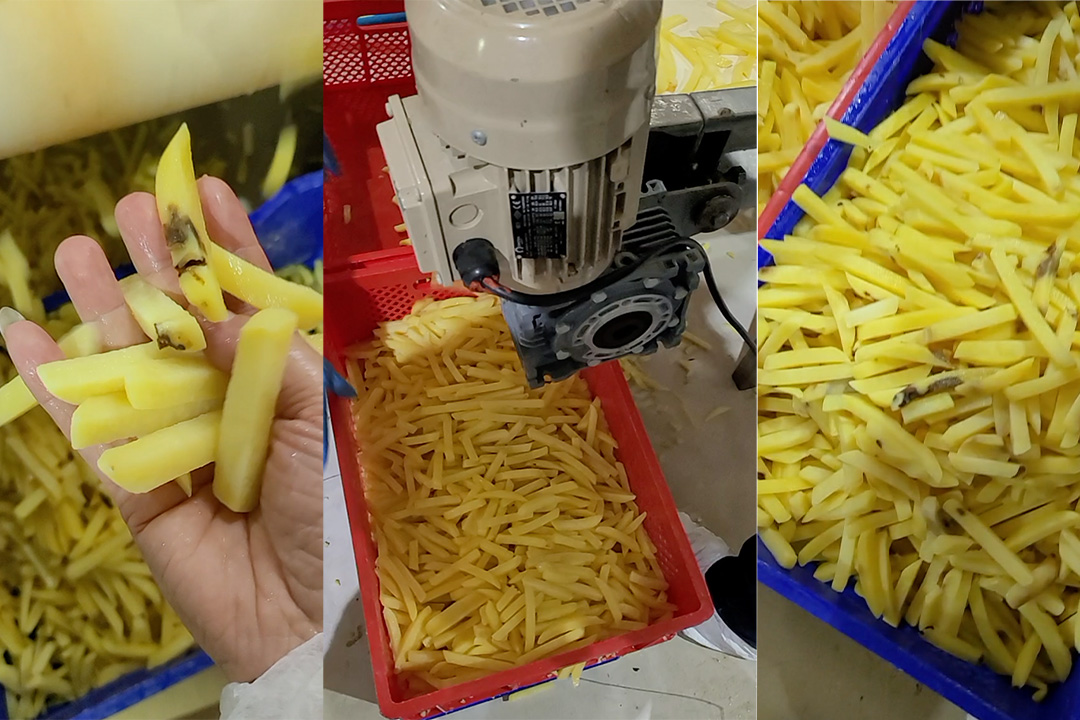
Our AI-powered sorters with high-definition camera recognition accurately detect and remove defects like browning, green spots, dark specks, and foreign materials. Designed for both wet and dry potato materials, GroTech sorters deliver up to 99.5% accuracy, improving yield, reducing waste, and ensuring every product looks perfectly golden and appetizing.


Why Choose GroTech for Potato Processing?

Tailored for demanding sorting tasks — built on optical intelligence and industrial reliability.✅ High-Definition Camera Recognition

GroTech employs industrial-grade HD CCD/CMOS cameras to capture fine surface details of potato strips and slices. The system detects browning, greening, dark spots, and peel residues with exceptional clarity, even during high-speed operation.

  AI-Based Intelligent Sorting

Advanced AI algorithms continuously learn from product data, distinguishing acceptable variations from true defects. This self-optimizing capability reduces false rejections and ensures long-term consistency and accuracy.

Fully Washable, Food-Safe Design

All product-contact parts are made of food-grade stainless steel and designed for quick, thorough cleaning. The structure prevents starch buildup and bacterial contamination, meeting international food safety standards.

Gentle Ejection & Handling

Precision air-jet systems and soft buffering ensure defective pieces are removed cleanly without damaging good products — ideal for delicate potato slices and strips.

Modular & Configurable Architecture

GroTech’s modular design allows flexible configurations: chute or belt type, multiple sorting channels, and optional infrared or RGB sensors. The system can be adapted to different capacities and product characteristics.

 Dual Application: French Fries & Potato Chips

French Fry Raw Material Sorting

GroTech sorters efficiently remove oxidized, green, or broken potato strips, ensuring even frying, bright golden color, and consistent product quality. By precisely separating defects early in the process, manufacturers can reduce waste and increase usable output.

Potato Chip Sorting

For potato chips, the sorter identifies burnt or discolored slices, uneven cuts, and foreign materials before frying or packaging. This prevents oil absorption caused by low-quality slices, reduces rework, and ensures a clean, uniform finished product.

In both wet (pre-freeze) and dry (pre-fry) environments, GroTech’s optical sorters maintain exceptional sorting accuracy — often exceeding 99.9%, while boosting throughput and yield compared with traditional manual sorting. Their robust construction and hygienic design make them ideal for continuous operation in food-grade production lines.


Global Reach & Industry Applications

GroTech’s product portfolio spans multi-functional color sorters, AI-driven optical sorters, and infrared sorting systems — serving industries such as grains, nuts, plastics, minerals, dried vegetables, and seafood.
With exports to more than 40 countries and regions — including the USA, Brazil, Vietnam, Russia, Nigeria, Bangladesh, and across Europe — GroTech continues to deliver reliable, intelligent sorting solutions to global partners.

 Customer Value

Consistent Quality: Uniform color and texture across fries and chips

Labor Savings: Significantly reduces manual sorting requirements

Higher Efficiency: Increased throughput, improved yield, reduced waste

Food Safety: Fully washable and hygienic design for food processing

Brand Confidence: High-grade, consistent output enhances reputation


GroTech Grain Color Sorter Smart Solution for Millet, Japonica Rice, and Glutinous Rice

In modern grain processing, product quality is the key to winning customer trust and expanding market share. Raw millet, japonica rice, and glutinous rice often contain impurities, discolored kernels, or defective grains after harvesting. Traditional manual sorting is labor-intensive and inconsistent.

TheGroTech Grain Color Sorter solves this problem withartificial intelligence recognition and high-resolution cameras. Powered by AI algorithms, it can accurately detect impurities, moldy grains, and foreign particles, ensuring only clean, high-quality grains are delivered.

Millet color sorter machine price

Multiple Models for Different Capacities

Every grain processor has unique production needs. That’s why GroTech providesa wide range of models:

Small-capacity color sorter – ideal for farms and small processing plants.

Medium-capacity color sorter – balancing performance and cost, suitable for most processors.Large-capacity color sorter – designed for rice mills and industrial grain processing, running at high speed with maximum efficiency.

Whether you are a family-owned mill or a large-scale grain enterprise, GroTech offers the right solution for your business.

AI grain color sorter manufacturer

Wide Applications: From Millet to Rice and More

GroTech grain color sorters are not limited to one crop. They are widely used for sorting:

Millet – removing impurities and discolored grains.

Japonica rice – ensuring consistent whiteness and appearance.

Glutinous rice – achieving clean and uniform quality.

Other grains – including oats, barley, corn, and buckwheat.

With one machine, you can handle multiple grain types, improving overall efficiency.

Key Benefits for Your Business

✅High efficiency – much faster than manual sorting.
✅Stable quality – consistent grain purity and color.
✅Reduced waste – minimizes loss of good grains.
✅Better competitiveness – premium quality boosts your brand and sales.

As the grain industry moves towards automation and intelligence, GroTech continues to lead withAI-powered grain color sorters. With flexible models, wide grain compatibility, and superior sorting accuracy, GroTech helps processors of millet, japonica rice, glutinous rice, and other cereals achieve higher efficiency and quality.

 GroTech Grain Color Sorter – Clean Grains, Stronger Business.

A Complete Guide to Buying a Used Excavator

Investing in a used excavator is one of the smartest ways for contractors to save money while still getting high-quality construction equipment. However, buying a second-hand machine requires careful evaluation to avoid unexpected repair costs. Here’s a step-by-step guide to help you make the right decision.

1. Define Your Project Needs

Before buying, ask yourself:

  • What type of work will the excavator handle? (earthmoving, demolition, mining, or roadwork)

  • Do you need a mini excavator (1.5–6 tons) for urban projects or a large excavator (30+ tons) like the Komatsu PC450 for heavy-duty operations?

Choosing the right size saves fuel and improves efficiency.

2. Check Machine Hours

One of the most important factors in evaluating a used excavator is working hours. Machines with under 5,000 hours are generally considered low-hour and still have a long lifespan. A Caterpillar 320D with 4,500 hours or a Hyundai R220LC-9S with 6,000 hours can still deliver strong performance.

3. Inspect Key Components

  • Engine: Look for smoke, unusual noise, and oil leaks.

  • Hydraulics: Check for smooth operation and no jerky movements.

  • Undercarriage: Worn-out tracks can be expensive to replace.

  • Boom and Bucket: Inspect for cracks or welds that may indicate past damage.

Brands like Volvo and Doosan are known for durable hydraulic systems, while CAT and Komatsu excel in undercarriage strength.

4. Review Service Records

Always ask for maintenance history. A well-maintained machine with regular servicing is more reliable than a low-hour machine with poor records. Machines from rental fleets often have complete service logs, making them a safe choice.

5. Consider After-Sales Support

Buying a popular brand like Caterpillar, Komatsu, Hyundai, or SANY ensures easy access to spare parts. Global availability of parts reduces downtime and keeps your project running smoothly.

6. Work with Trusted Dealers


When possible, buy from a reputable dealer who offers inspection reports and warranties. This minimizes risk compared to private sellers.

Choosing the Right Excavator — How It Impacts Productivity and Profit in Construction

When it comes to construction or mining projects, the excavator is often the most critical piece of equipment on site. It is the machine that moves earth, loads trucks, and shapes the landscape. However, not every excavator is the same, and the difference between choosing the right one and the wrong one can mean the difference between profit and loss.


The Role of an Excavator in Modern Construction

An excavator is more than just a digging machine—it’s the backbone of almost every construction project. From site preparation and trenching to demolition and material handling, the excavator is used in every phase. Contractors rely on these machines for their strength, versatility, and speed.

However, the wrong excavator size, brand, or condition can increase fuel costs, delay project timelines, and reduce efficiency. Choosing the correct excavator directly impacts productivity and long-term profitability.


New vs. Used Excavators — What’s Right for You?

One of the first decisions contractors face is whether to buy a brand-new excavator or a used one. While new machines offer the latest technology, a used excavator for sale can deliver excellent value for money—especially for contractors in developing regions where cost control is essential.

A quality used Hyundai, Komatsu, or SANY excavator can perform like new if properly maintained. The key is to purchase from a trusted heavy equipment supplier who inspects, tests, and services every unit before shipment.


Factors to Consider When Selecting an Excavator

  1. Operating Weight and Power — The size of the excavator must match the type of work. A 22-ton machine like the Hyundai 220LC or SANY SY215 is ideal for general construction, while a 35-ton or 50-ton excavator suits mining and road building.

  2. Hydraulic System — A strong hydraulic system ensures smooth control and digging force. Always check for leaks and inspect the main pump before purchase.

  3. Fuel Efficiency — Modern excavators are designed with eco-friendly engines that reduce fuel consumption without compromising performance.

  4. Parts Availability — Choose a brand with widely available spare parts. Hyundai, Komatsu, and Caterpillar all have extensive global networks.

  5. Machine History — For used units, check the working hours, maintenance records, and component wear—especially the undercarriage, which accounts for 50% of operating cost.


How the Right Excavator Saves You Money

A properly matched excavator not only improves speed but also reduces unnecessary fuel consumption and maintenance. Using an oversized excavator for light work wastes energy, while an undersized one wears out faster.
With the right match, you’ll see:

  • Lower fuel and maintenance costs

  • Fewer breakdowns

  • Higher operator comfort and productivity

  • Longer machine lifespan


Final Thoughts

Choosing the right excavator is not just a technical decision—it’s a business strategy. It affects your fuel bills, project schedules, and customer satisfaction. Whether you are buying a used excavator or investing in a new model, consider your long-term operation cost, the quality of after-sales service, and the availability of spare parts.

In construction, every minute counts, and every liter of diesel adds up. The smarter your equipment choices, the stronger your business foundation becomes.

Excavator Maintenance Guide — Keep Your Heavy Equipment Running Like New

An excavator is a serious investment, whether new or used. Keeping it in good condition means maximizing your return on that investment. Proper maintenance not only extends the life of your machine but also ensures consistent performance and safety for operators.

Here’s a complete guide on how to keep your excavator in top working shape—so your projects stay efficient and profitable.


1. Daily Inspection Before Operation

Before every shift, conduct a quick but detailed walk-around inspection. Check for oil leaks, loose bolts, or unusual wear. Look at the track tension and inspect the teeth on the bucket. Daily attention to small issues prevents costly repairs later.

Operators should also check fluid levels—engine oil, hydraulic oil, coolant, and fuel. A few minutes spent on inspection can save hours of downtime.


2. Keep the Hydraulic System Clean

The hydraulic system is the heart of your excavator. Contaminated oil can lead to pump failure or system inefficiency. Always use clean filters and replace them according to the manufacturer’s schedule.
If you notice slow movement, low digging power, or strange noises, stop operation immediately and inspect the system for leaks or air contamination.


3. Maintain the Undercarriage

The undercarriage accounts for nearly 20% of an excavator’s total cost—and almost 50% of its maintenance expenses. Regular cleaning after work, especially in muddy conditions, prevents soil and rocks from damaging the rollers and sprockets.
Track tension should be checked weekly. Too tight increases wear; too loose can cause track derailment.


4. Engine and Cooling System Care

An overheated engine can cause major damage. Keep the radiator and coolers clean from dust or debris. Replace air filters on time, especially if you’re working in desert or quarry environments.
A well-maintained engine ensures smoother operation, lower fuel consumption, and fewer breakdowns.


5. Store and Operate Properly

When the excavator is not in use, store it under cover to prevent rust and weather damage. If you operate in extremely cold or hot climates, adjust your maintenance schedule accordingly.
Also, always train operators properly—many component failures result from incorrect handling rather than mechanical defects.


6. Work With a Reliable Supplier

Whether you’re maintaining a brand-new Hyundai or a used Komatsu excavator, spare parts and technical support are crucial. Partner with a trusted construction machinery supplier who can provide genuine parts, professional inspection, and after-sales guidance.


Why Maintenance Equals Profit

Well-maintained excavators work faster, use less fuel, and break down less often. This means more completed projects, lower repair bills, and higher resale value when you decide to upgrade.

Neglect, on the other hand, shortens lifespan and increases total cost of ownership. A machine that fails on site can halt the entire project—something no contractor can afford.


Final Words

Caring for your excavator is not just about keeping it clean—it’s about running a smarter, more profitable operation. By maintaining your machine regularly and buying from reliable suppliers, you ensure long-term success in the heavy equipment business.


Excavator Maintenance Tips How to Keep Your Machine in Top Condition

An excavator is one of the most important machines on a construction site. Whether you use it for earthmoving, mining, or road building, keeping it in excellent condition is the key to long-term performance and lower operating costs. Here are some essential maintenance tips every operator and contractor should follow.


1. Perform Daily Inspections

Before starting work, always check:

  • Engine oil and coolant levels

  • Hydraulic oil level

  • Track tension and undercarriage condition

  • Filters and air intake system
    Spotting small issues early can prevent major breakdowns.


2. Keep the Hydraulic System Clean

The hydraulic system is the “heart” of an excavator. Regularly check hoses and cylinders for leaks and replace worn seals. Always use clean hydraulic oil and change filters as recommended by the manufacturer.


3. Take Care of the Undercarriage

The undercarriage often wears the fastest. Clean mud, rocks, and debris at the end of each day to avoid unnecessary stress. Proper track tension also improves fuel efficiency and extends service life.


4. Use Genuine Spare Parts

When replacing components, always choose original spare parts. They provide better durability and reduce the risk of breakdowns, ensuring your excavator works reliably in tough environments.


5. Follow Scheduled Servicing

Stick to the manufacturer’s service intervals for oil changes, filter replacement, and system checks. Preventive maintenance costs much less than emergency repairs.


Conclusion


A well-maintained excavator is safer, more efficient, and has a higher resale value. By following these maintenance tips, contractors can save fuel, reduce downtime, and keep their projects running smoothly.