Fully Automated Fabric Stiffness Testing Method

Fully automated fabric stiffness testing serves as a critical method for evaluating a fabric's resistance to bending (stiffness and softness), widely applied in quality control for textiles such as cotton, wool, synthetic fibers, and home textiles. Its core principle involves automatically measuring the bending deformation of fabric samples under specific conditions via mechanical devices to calculate stiffness values. This method offers advantages including high precision, excellent repeatability, and reduced human error. The following details the fully automatic fabric stiffness testing method across six dimensions: testing principle, standard basis, instrument structure, operational procedure, data processing, and precautions.


I. Testing Principle

Fabric stiffness fundamentally represents a fabric's resistance to bending deformation, closely related to fiber type, yarn structure, fabric weave, and finishing processes (such as coating or calendering).

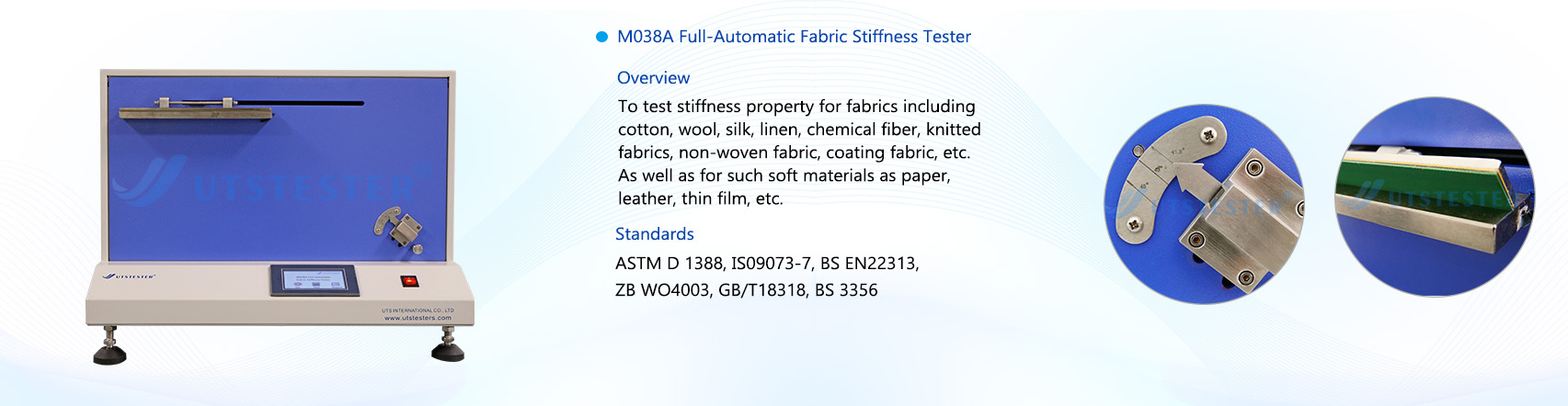
Fully automated testing employs the “cantilever beam method” (the mainstream approach): one end of the fabric specimen is fixed as a “cantilever,” while the other end is allowed to hang freely. The instrument automatically applies a small external force (or relies solely on the sample's own weight) to bend the sample to a specific angle (e.g., 45°, 30°, 15°). The bending length (L) or bending moment (M) at the free end is recorded at this angle. This value is then combined with the sample's mass per unit area (g/m²) to calculate the stiffness index.

Bending Length (L): The horizontal distance the free end extends beyond the fixed end when the specimen is bent to a specified angle, measured in cm.

Stiffness Value (S): Commonly expressed as “bending length × mass per unit area” (unit: mg·cm). Higher values indicate greater fabric stiffness.


II. Reference Standards

Testing standards in different countries/regions specify requirements for specimen dimensions, bending angles, environmental conditions, etc. Common standards include:

GB/T 18318-2009 Textiles—Determination of bending length of fabrics—Cantilever method

ISO 9073-7:1998 Textiles—Test methods for nonwovens—Part 7: Determination of bending length and bending stiffness

AATCC 124-2020 Evaluation of fabric appearance smoothness and stiffness

JIS L1096:2020 Test methods for textiles


III. Test Procedure

Using GB/T 18318-2009 (45° bend angle) as an example:

1. Sample Preparation

Randomly select at least 5 specimens from different areas of the fabric sample. Each specimen should measure 25mm (width) × 150mm (length). Test 5 specimens each in the warp and weft directions to evaluate stiffness differences between warp and weft.

Avoid fabric edges (≥10cm from edge) and defects (e.g., holes, oil stains). Sample edges must be straight (cut with a dedicated cutter to avoid frayed edges).

Environmental Conditioning:

Balance samples in standard temperature and humidity conditions for at least 24 hours (20±2°C, 65±4% RH). Maintain stable conditions throughout testing (prevent airflow interference with specimen bending).

2. Instrument Calibration

Before testing, calibrate the instrument using a standard calibration block (metal strip with known bending length):

Secure the calibration block in the fixture and set the bending angle to 45°;

Initiate the test. If the displayed bending length deviates ≤0.1mm from the calibration block's standard value, the instrument is functioning correctly; otherwise, adjust the optical sensor or mechanical precision.

3. Parameter Setting and Testing

Power on the instrument and its software, select the test standard (e.g., GB/T 18318-2009), and set parameters:

Bending angle: 45°;

Test direction: Warp (or weft);

Sample quantity: 5 pieces (per set);

Movement speed: 5 mm/s (standard recommendation).

Clamping the specimen:

Place one end (lengthwise) of the specimen into the fixture, ensuring it lies flat against the fixture without tension or slack. After clamping, the free end of the specimen should hang naturally downward.

Initiate Test:

The instrument automatically drives the fixture to move, gradually extending the free end of the specimen to initiate bending;

An optical sensor continuously monitors the bending angle. When 45° is reached, the fixture stops moving, and the software automatically records the “Bending Length (L)”;

Repeat the operation to complete testing for all warp and weft specimens.


4. Data Processing and Reporting

Software automatically calculates:

Stiffness value of a single specimen:

S = L×m (where m is the fabric mass per unit area, g/m², pre-measured using an electronic balance with 0.01g precision);

The average (Sˉ), standard deviation (SD), and coefficient of variation (CV% = SD/Sˉ × 100%) for the sample group. CV% must ≤5% (otherwise, resampling is required to eliminate sample non-uniformity effects).

Report Generation:

The report must include: sample name, fabric composition, test standard, temperature/humidity, warp/weft bending length, warp/weft stiffness value, average value, CV%, and be signed for confirmation.

Textile Testing Equipment

Email: hello@utstesters.com

Direct: + 86 152 6060 5085

Tel: +86-596-7686689

Web: www.utstesters.com

How Do Shoe Manufacturers Test for Slip Resistance and Safety?

1. Slip resistance testing of shoes

(1) Ramp Test

Standards: EN ISO 13287, DIN 51130

Procedure:

Test platform: Adjustable-angle ramp (0°–35°),

surface covered with standard test materials (e.g., ceramic tiles, steel plate + glycerin solution to simulate wet and slippery conditions).

The tester wears the shoe sample and gradually increases the incline angle on the platform until slipping occurs.

Critical angle: Record the angle at which the sole begins to slip (the larger the angle, the better the slip resistance).

Grade classification:

DIN 51130: Divided into three grades (A, B, C; Grade A is the highest, suitable for oily industrial environments)

EN ISO 13287: Minimum critical angle ≥12° (dry surface) or ≥8° (wet surface)


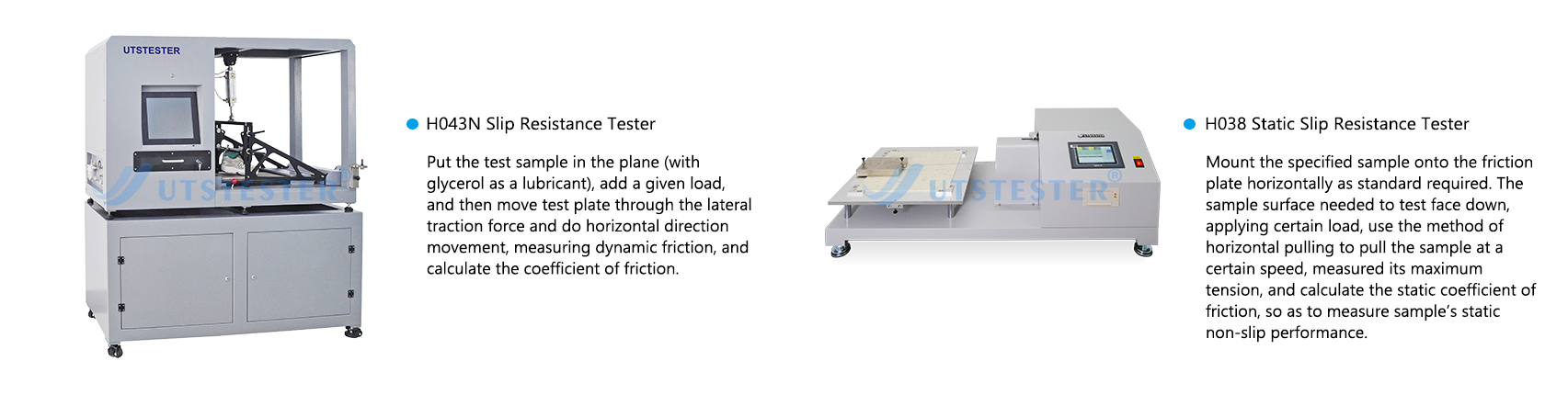
(2) Friction coefficient test method (friction tester method)

Standards: ASTM F2913, GB/T 3903.6

Steps:

Contact surface: dry/wet/oily condition;

Pressure: Simulated human foot pressure (e.g., 50 N)

Equipment: Pendulum-type or traction-type friction tester, simulating dynamic/static friction between the shoe sole and the ground

Test Parameters:

Results: Calculate the static coefficient of friction (COF) and dynamic coefficient of friction (generally requiring COF ≥ 0.4).


2. Safety Testing for Footwear

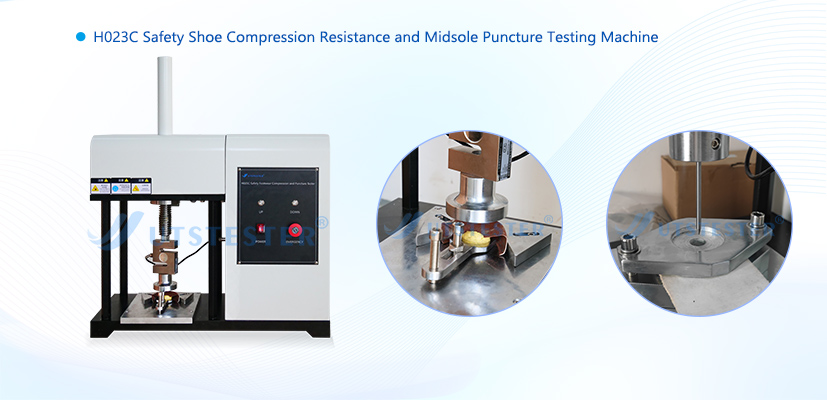
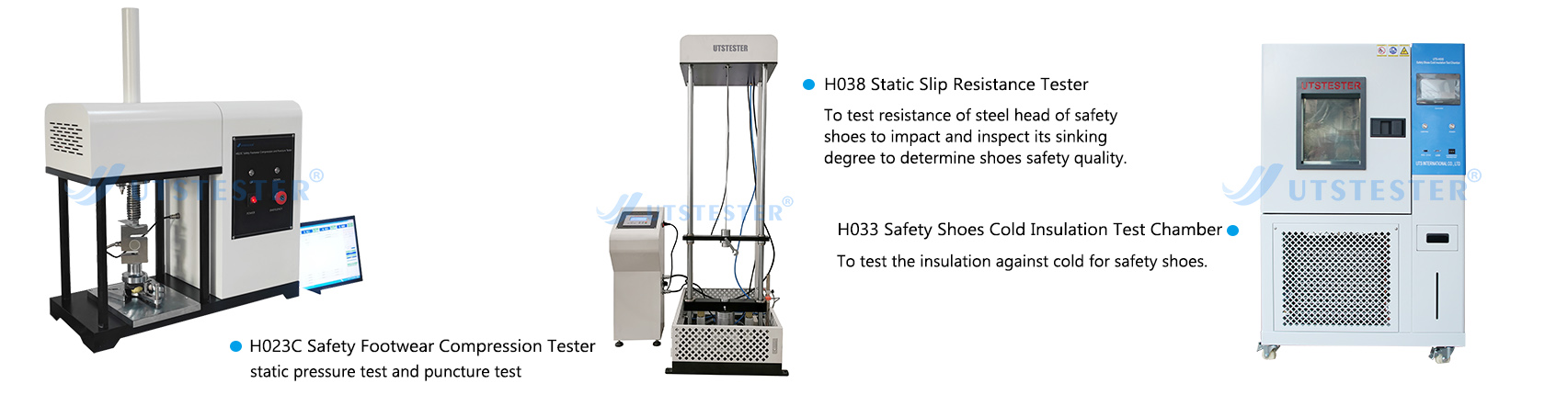
(1) Impact and Compression Testing The primary function of safety footwear is to protect the feet from injuries caused by impact and compression. The EN ISO 20345:2022/A1:2024 standard requires safety shoes to withstand at least 200 joules of impact energy (equivalent to a 20-kilogram object falling from a height of 1,020 millimeters) and 15 kilonewtons (KN) of compression force (equivalent to a 1.5-ton weight applied to the toe area).

Testing methods:

Impact resistance: A specified-weight impact hammer (e.g., 20 kg) is dropped from a specific height (e.g., 30 cm) onto the shoe toe, and the deformation of the shoe toe is measured (must be ≤15 mm), with no sharp edges or cracks inside the shoe toe.

Compression Resistance: Apply vertical pressure (e.g., 15 kN) to the shoe toe using a press, maintain for 1 minute, and inspect for deformation and structural integrity of the shoe toe (no cracking or excessive deformation).

These two tests simulate the risks of heavy object impact and compression injuries in actual work environments to evaluate the protective performance of safety shoes.


(2) Puncture resistance testing Puncture resistance testing is a critical metric for evaluating the ability of the midsole of safety footwear to resist penetration by sharp objects. The EN ISO 20345:2022/A1:2024 standard provides detailed specifications for puncture resistance testing, including testing methods for both metal and non-metal puncture-resistant pads. For metal puncture-resistant pads, the standard requires no more than 3 corrosion points, with an average area not exceeding 2mm²; for non-metal puncture-resistant pads, such as composite materials (PL type and PS type), the standard requires no perforations after multiple tests, and no separation of layers.

Testing method:

Secure the sole sample and use a 3mm-diameter steel nail to vertically pierce it at a specified speed (e.g., 50mm/min), recording the maximum force at the time of penetration (which must be ≥1100N, with some higher standards requiring ≥1500N). Some safety shoes may have steel plates or Kevlar fibers embedded in the sole, and testing must verify their protective effectiveness.


Email: hello@utstesters.com

Direct: + 86 152 6060 5085

Tel: +86-596-7686689

Web: www.utstesters.com


How to Conduct Fabric Bursting Strength Testing (Hydraulic Method)

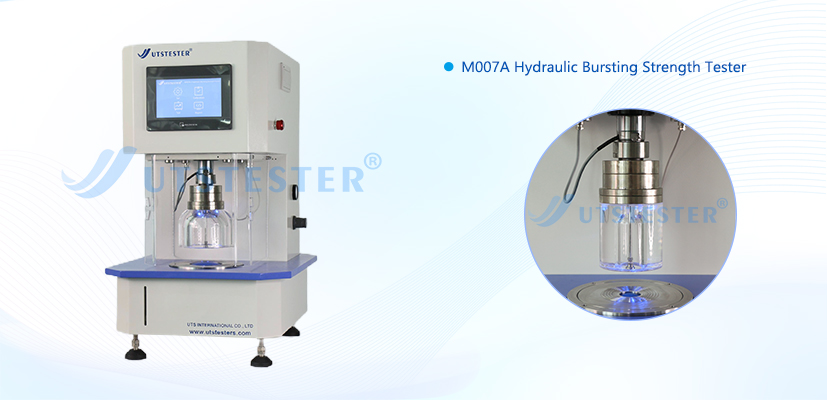
Hydraulic bursting strength testing is a mechanical property evaluation method used to assess a material's resistance to hydraulic rupture. It is widely applied in quality inspection and performance research for flexible or semi-rigid materials such as films, textiles, leather, rubber, and plastics. The core principle involves applying uniform and progressively increasing hydraulic pressure to the material's surface until rupture occurs, thereby quantifying the material's tolerance limit under dynamic pressure.


I. Understanding the Fabric Bursting Strength Tester

Before conducting bursting strength tests, familiarize yourself with the equipment's key characteristics.

1. Place a specimen of defined area over an elastic diaphragm, secure it with a ring-shaped fixture, and gradually increase pressure beneath the diaphragm via the hydraulic system. This causes the specimen to expand until rupture occurs, determining the bursting strength of woven/knitted fabrics, nonwovens, paper, protective clothing, leather, and cardboard.

2. Specifications and Functions: Understanding the specifications and capabilities of the fabric burst strength tester is essential. This includes its maximum load capacity, test speed, and other relevant parameters.

3. Safety Requirements: Always consult the instruction manual for safety requirements. These may include wearing gloves, safety goggles, and other protective equipment.

4. Testing Standards: Adhere to standards such as ASTM D3786-06, BS 3424-6-B, ISO 13938-1, ISO 3303-B, ERT 80-4.02, and GB/T 7742.1.


II. Technical Specifications:

1. High-definition color touchscreen interface

2. Operates standalone or via computer connection

3. Test platen and collection tray constructed from corrosion-resistant materials

4. Test enclosure features imported high-transmittance POM material with integrated LED illumination for full-spectrum observation of sample testing

5. 32-bit processor; 24-bit high-speed A/D conversion chip

6. Laser displacement sensor measures displacement changes

7. Waste liquid collection system prevents instrument leakage and contamination

8. Overload protection with automatic burst detection system; sensitive and reliable; includes over-range and over-extension protection

9. Built-in thermal printer


III. Test Procedure

1. Power On: Turn on the power supply. Remove the protective cover.

2. Installation: Install the lower fixture: First install the aluminum block, then place the rubber diaphragm (note: the diaphragm has a front and back side; the smooth side faces upward), and finally position the lower pressure plate.

3. Sample Placement: Secure the test sample, ensuring it is properly aligned and tensioned.

4. Parameter Setup: Enter the settings interface to configure test parameters: Set the initial test speed and select the appropriate fixture. Other parameters cannot be modified as they are preset according to standards.

5. Test Initiation: Begin the formal test. Place the sample, clear the data, and click “Test.” Results will display upon completion. You may decide how many tests to perform as needed. Test results will appear after the fabric burst strength test.


IV. Data Analysis and Interpretation

After completing the test, you must analyze and interpret the data—a critical step to ensure the results are usable and accurate. Click the “Check” button to access the results view interface. Click “Print All” to print all results.

Organize the data recorded during testing into a format suitable for analysis. Utilize appropriate tools and methods to analyze the data and draw conclusions about the sample's performance.

By properly familiarizing yourself with the equipment, thoroughly preparing, conducting the test, and analyzing the data, you can ensure an efficient and accurate testing process. Before using any specific equipment, be sure to thoroughly study the operating manual and any relevant training materials. We hope this proves valuable for your testing efforts, ensuring the quality and safety of the products you use.


Email: hello@utstesters.com

Direct: + 86 152 6060 5085

Tel: +86-596-7686689

Web: www.utstesters.com


Introduction to several types of laboratory dyeing machines

About Laboratory Dyeing Machines

Textile manufacturers use laboratory sample dyeing machines to test samples before dyeing large quantities. Textile labs use these machines to research dyeing methods and conduct experiments to achieve the best possible results.


Types of Laboratory Dyeing Machines

Lab-scale dyeing machines are used to simulate the dyeing production process. They can create shades tailored to customer needs and are suitable for large-scale production.

Without a fabric sample dyeing machine, dyeing an entire batch of fabric to the desired shade is risky. Manufacturers can use laboratory dyeing equipment to test their recipes. This allows them to repeat the process until the exact desired shade is achieved. This also helps develop shades at a low cost.


The following are the main types of sample dyeing machines used in the textile and dyeing industries:


Infrared (IR) laboratory dyeing machines

High-temperature laboratory dyeing machines

Oscillating dyeing machines

Laboratory jigger dyeing machines

Laboratory Dyeing Machine


1. Infrared (IR) Laboratory Dyeing Machine

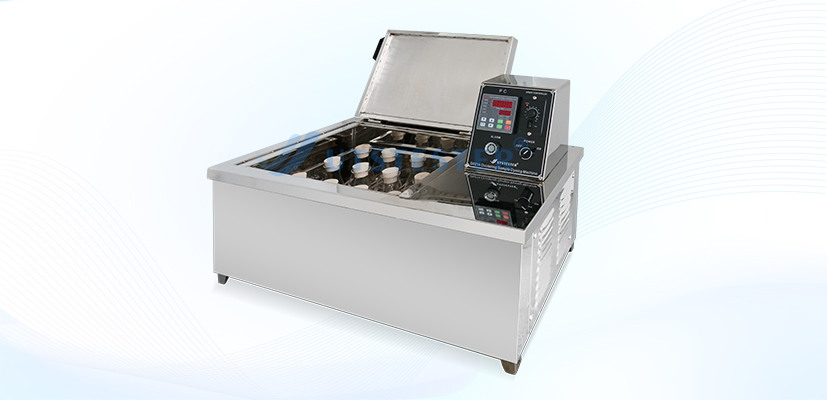
Infrared laboratory dyeing machines use infrared light to heat the dye bath. They are used to dye a variety of synthetic and natural fabrics. IR dyeing machines use low bath ratios, providing accurate and repeatable results.

The IR dyeing machine is equipped with 24 beakers, allowing for multiple tests to be performed simultaneously. The beakers move in both clockwise and counterclockwise directions, ensuring uniform dyeing.

The IR dyeing machine's beakers are made of stainless steel, allowing for rapid temperature increases and the ability to withstand both standard and high pressures used in the dyeing process.

Infrared heat heats the beaker without any intermediate surface. This reduces electricity costs by up to 50%. A high-precision PT-100 temperature monitoring probe is used to measure temperature.

A digital display shows time, temperature, and program number, simplifying operator control of the machine. The infrared laboratory dyeing machine has a temperature range of 30-140°C and a cooling rate of 0.5-3.5°C/minute.


2. High-Temperature Laboratory Dyeing Machine

High-temperature laboratory dyeing machines can dye synthetic fibers such as nylon and polyester. These machines dye fabrics at a temperature of 140 degrees Celsius, simulating the industrial dyeing process on a small scale.

Using high-temperature dyeing machines facilitates color matching, dye evaluation, quality control, and R&D in synthetic fiber dyeing. They can be used for small-scale fabric dyeing, with each beaker holding up to 300 milliliters of dye.

High-temperature laboratory dyeing machines come with 6 to 24 beakers, depending on the size of the machine. They feature a precise temperature control system, with a digital interface for programming temperature and time.


3. Oscillating Dyeing Machine

An oscillating dyeing machine is used to dye yarn, fiber, fabric, and loose fibers. This machine does not move three-dimensionally. It does not rotate left and right like an infrared dyeing machine.

It uses a reciprocating motion to penetrate the dye solution into the fiber. Oscillating dyeing machines are suitable for dyeing delicate fabrics, such as silk, fine wool, and synthetic microfibers.

The back-and-forth motion reduces wrinkling during dyeing and prevents yarn tangling. It can be used for disperse dyeing at high temperatures. In oscillating dyeing machines, operators use a bath ratio of approximately 1:5 to 1:8 to ensure optimal dye fixation.

The manufacturer's latest oscillating dyeing machines are equipped with a PLC for precise temperature control. You can set the time, temperature, oscillation speed, and direction through the interface.

The unit has a capacity of 24 beakers, each containing 250 ml of dye solution. The shaking distance is maintained at 42 mm, and the operating speed is 0 to 140 rpm.


4. Laboratory Jigger

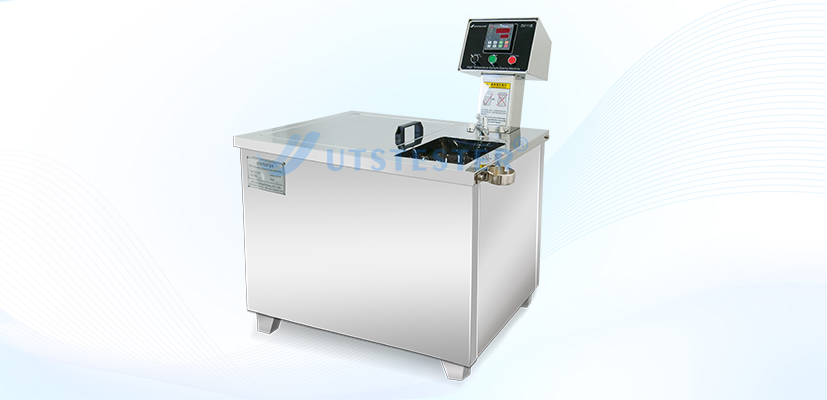
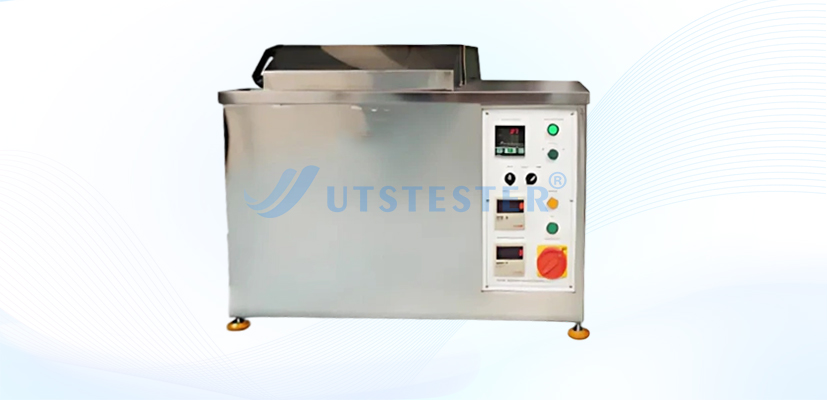
A laboratory jigger simulates the industrial jigger dyeing process. During jigger dyeing, fabric is passed through a stationary dye bath. The jigger moves with full stretch across a pair of rollers, moving the fabric back and forth in the dye bath.

The jigger is used to dye fabric to ensure wrinkle-free dyeing. The fabric is stretched and then immersed in the dye bath. The jigger consists of a drum and a trough or tray containing the dye bath.

The fabric moves from one drum to another in the dye bath. It then returns from the second drum to the first. This process helps dye the fabric a uniform color.

A laboratory dye jigger precisely controls a variety of factors. It can control the dye bath temperature, the speed of the fabric, and the frequency of dyeing. It also tracks dyeing time and fabric tension. Modern laboratory dye jiggers are equipped with digital controllers and feature automatic dosing and temperature adjustment systems.

This machine is suitable for dyeing at medium and low temperatures up to 98°C under normal pressure. Fabrics can be dyed using reactive, direct, vat, or sulfur dyes.

Email: hello@utstesters.com

Direct: + 86 152 6060 5085

Tel: +86-596-7686689

Web: www.utstesters.com

Testing Method for Roll-Box Pilling Tester

The durability of textiles plays a crucial role in ensuring customer satisfaction and product longevity. By subjecting textiles to rigorous testing, this instrument helps manufacturers identify and address potential issues related to pilling and snagging, ultimately enhancing product quality.


1. The Importance of Textile Durability

Textile durability is a key factor directly impacting customer satisfaction and the overall lifespan of textiles. When textiles exhibit signs of pilling or snagging, their aesthetic appeal is significantly diminished and their functionality compromised. Therefore, manufacturers strive to develop textiles with exceptional durability to meet consumer expectations and maintain competitive market advantages.


2. Test Principle:

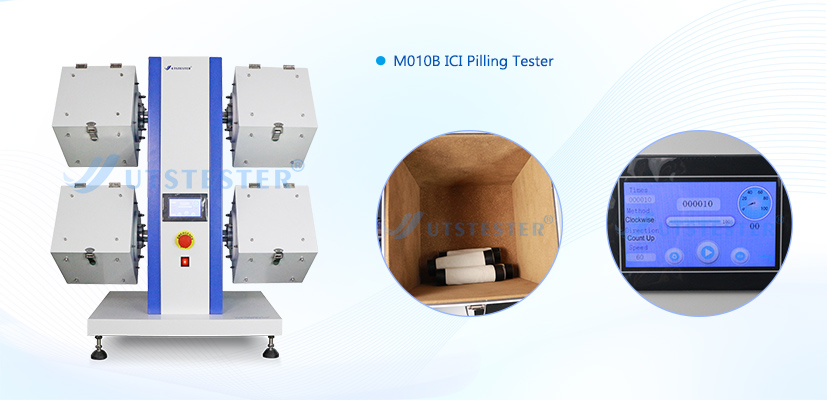
Place the specimen tube containing the test sample into the pilling test chamber. Activate the instrument, allowing the samples to tumble and rub against each other within the chamber. After the specified number of tumbling cycles, remove the samples for grading.


3. Sample Preparation:

(1) Pretreatment: If pretreatment is required, samples may be washed or dry-cleaned using methods mutually agreed upon by both parties. (Pretreatment is recommended to protect the friction surfaces of the pilling chamber and sample tubes from residual lubricants or finishing agents on the fabric.)

(2) Cut four specimens measuring 125mm × 125mm from the fabric sample. Additionally, cut one identical piece as a reference sample for grading. Fold two specimens lengthwise with the right side facing inward, and fold two specimens widthwise with the right side facing inward. Sew each fold 12mm from the edge using a sewing machine.

(3) Turn the stitched specimens right side out. Trim 6mm ports at both ends of the specimen tube to eliminate stitching distortion. Slip the specimen over the polyurethane specimen tube and secure with PVC tape (ensuring 6mm of polyurethane remains exposed at each end; tape length should not exceed 1.5 times the tube's circumference).

(4) Humidify.


4. Test Procedure:

(1) Clean the pilling chamber.

(2) Place four sample tubes with attached samples into the chamber, securely close the lid, and set the counter to the required rotation count.

(3) Preset rotation count. Agreed rotation count. In the absence of agreement, coarse fabrics undergo 7,200 rotations, while fine fabrics undergo 14,400 rotations.

(4) Start the pilling machine. After testing, remove samples, trim threads, and grade samples.


5. Result Evaluation: Pilling Grade Determination

(1) Evaluation Environment Requirements

Light source: Use standard D65 light source (color temperature 6500K, illuminance 500lx±100lx). The light source angle to the sample surface is 45°, and the observer's line of sight angle to the sample surface is 90° (vertical observation) or 45° (oblique observation, as specified by the standard, typically vertical observation).

Environment: Avoid direct strong light, dust, and colored backgrounds (use neutral gray background, color code N7) to prevent environmental color interference with pilling observation.

(2) Evaluation Method (Example: GB/T 4802.3)

Comparison with reference images: After resting, lay the sample flat on the neutral gray platform and compare it individually with the standard pilling reference images (Grades 1-5), focusing on the quantity, size, and density of pills on the sample surface:

Grade 5: No pills or only extremely slight fuzz (no noticeable spherical protrusions);

Grade 4: Surface exhibits a small number of fine pills (≤5 pills/cm², diameter ≤0.5mm);

Grade 3: Surface exhibits a moderate number of pills (5–10 pills/cm², diameter 0.5–1mm), with no significant large pills;

Grade 2: Numerous pills on surface (pill count >10/cm², some diameter >1mm), with a few large pills;

Grade 1: Surface completely covered with pills, including numerous large pills (diameter >2mm), with some pills adhering together.

Multiple Assessors: At least two trained assessors independently determine the grade. If the difference between their assessments is ≤1 grade, take the average (e.g., one assessor grades 3, another grades 4, resulting in 3.5). If the difference is >1 grade, a third assessor must re-evaluate, and the two consistent results are adopted.

Result Documentation: Record the pilling grade for each specimen. The final pilling test result for the fabric is the average grade of the three specimens (rounded to one decimal place, e.g., 3.3 grade). Include parameters such as the test standard, abrasive type, and test date.


Email: hello@utstesters.com

Direct: + 86 152 6060 5085

Tel: +86-596-7686689

Web: www.utstesters.com


What Is an Environmental Test Chamber and How Is It Used in Product Development?

1. Basic Introduction to Environmental Chambers

An environmental test chamber is a sealed experimental device capable of precisely simulating various natural or extreme environmental conditions (such as temperature, humidity, air pressure, lighting, gas composition, vibration, radiation, etc.). Its core function is to provide controlled and repeatable environmental scenarios for products or materials, enabling the evaluation of their performance, stability, durability, safety, and other critical metrics under different environmental conditions. It is widely used in product development, quality testing, scientific research experiments, and other fields, serving as an “environmental simulation laboratory” for verifying product reliability.

Environmental Testing Equipment


2. Structural Composition of the Environmental Chamber

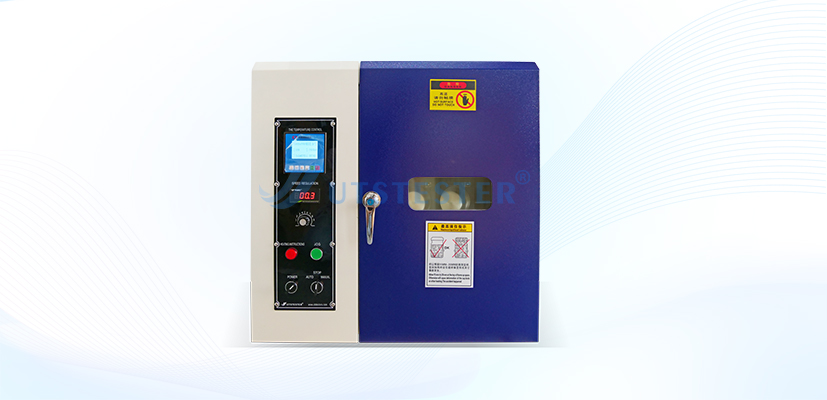
(1)Control System: Includes control modules for temperature, humidity, lighting, gas concentration, etc., serving as the “brain” of the environmental chamber, responsible for setting, monitoring, and controlling environmental parameters.

(2)Test Chamber: Constructed from high-strength, corrosion-resistant materials, it features excellent sealing and insulation properties, with an adjustable internal space designed to accommodate test samples.

(3)Heating and Cooling System: Enables rapid temperature changes and stable control within the chamber, ensuring the accuracy of the test environment.

(4)Humidity Control System: Utilizes humidification and dehumidification devices to precisely control humidity levels within the chamber, meeting various testing requirements.

(5)Circulation System: Ensures uniform distribution of environmental parameters within the chamber, enhancing the reliability and accuracy of testing.

(6)Monitoring System: Continuously monitors environmental parameters inside the chamber to ensure environmental stability and provide reliable data support for testing.

(7)Alarm System: Issues an alarm signal when environmental parameters exceed the set range, promptly alerting users to ensure safe testing operations.


3. Environmental Chamber Usage Process

When using an environmental chamber for testing, the following process should generally be followed:

(1)Preparation: Inspect all components of the equipment to ensure they are in good condition and that cable connections are secure; clean the interior of the test chamber to ensure no debris affects test results; verify that parameters in the control system are correctly set; place the product to be tested into the environmental simulation chamber.

(2)Set Test Conditions: Based on test requirements, use the control panel to set parameters such as temperature, humidity, lighting, and gas concentration; activate the cooling or heating system to adjust the internal temperature to the desired level; activate the ventilation system to maintain airflow within the chamber.

(3)Begin testing: After setting the test conditions, the environmental testing of the product can commence. Throughout the testing process, closely monitor changes in internal parameters such as temperature and humidity, and promptly adjust relevant parameters in the control system to ensure accurate and reliable test results.


4. Application Cases for Environmental Chambers

(1) When developing an outdoor smartwatch, it is necessary to test its screen display, battery life, and sensor sensitivity under extreme conditions of -30°C (extreme cold) and 60°C (high temperature) in a high/low-temperature test chamber. Additionally, the material of the watch strap must be verified in a humid heat test chamber to ensure it does not crack or mold due to high humidity (90% RH).

(2) Medical devices (such as infusion sets) must undergo sterilization compatibility testing in accordance with ISO 11607 standards. This involves simulating the sterilization process in a high-temperature, high-pressure steam test chamber to verify whether the materials deform or experience performance degradation due to high temperatures.

(3) For special industries (such as aerospace, defense, and polar research), environmental test chambers must simulate extreme environments to verify product reliability under “non-routine conditions.”


Email: hello@utstesters.com

Direct: + 86 152 6060 5085

Tel: +86-596-7686689

Web: www.utstesters.com

What is the Martindale Abrasion Test?

The Martindale Abrasion Test is a test of textile products using the Martindale standard system to determine the abrasion resistance of a fabric. Abrasion resistance refers to a fabric's resistance to repeated friction with other materials. Pilling resistance is a key quality indicator of textile products, directly impacting their durability and performance. The Martindale Abrasion Tester is used to test a fabric's abrasion and pilling resistance.

1. Martindale Test Standards

Because different countries and regions have different standards, we can categorize them into international standards, US standards, European standards, and Chinese standards. Details are as follows:

1.1International Standards

ISO 12947.2—1998 Martindale Test for Fabrics — Part 2: Measurement of Specimen Damage

ISO 12947.3—1998 Martindale Test for Fabrics — Part 3: Measurement of Mass Loss

ISO 12947.4—1998 Martindale Test for Fabrics — Part 4: Measurement of Appearance Change

1.2American Society for Materials (ASTM)

ASTM D4966-2010

1.3EU Standards

EN ISO 12947.2-1998 - Determination of fabric resistance to abrasion and pilling by the Martindale method - Part 2: Measurement of specimen breakage

EN ISO 12947.3-1998 - Determination of fabric resistance to abrasion and pilling by the Martindale method - Part 3: Measurement of mass loss

EN ISO 12947.4-1998 - Determination of fabric resistance to abrasion and pilling by the Martindale method - Part 4: Measurement of appearance change

1.4Chinese Standards

GB/T 21196.2-2007 - Determination of fabric resistance to abrasion and pilling by the Martindale method - Part 2: Measurement of specimen breakage

GB/T 21196.3-2007 - Determination of fabric resistance to abrasion and pilling by the Martindale method - Part 3: Measurement of mass loss

GB/T 21196.4-2007 - Determination of fabric resistance to abrasion and pilling by the Martindale method - Part 4: Determination of appearance change


2. How is the Martindale Wear Test performed?

2.1 Preparation: Check the instrument status and prepare the specimen and sandpaper.

2.2 Specimen Installation: Secure the specimen in the specimen fixture and adjust the contact force between the specimen and the sandpaper.

2.3 Test Parameter Settings: Set the rotational speed, wear load, and other parameters according to the test requirements.

2.4 Test Start: Start the instrument, perform the wear test, and record the specimen wear.


3.Note: The standard friction cloth should be replaced before testing each new sample or after 50,000 cycles. Check the standard friction cloth for contamination or wear and replace if necessary. This method is not suitable for fabrics thicker than 3mm. Samples may be washed or dry-cleaned before testing.


4. Test Results Evaluation Methods

There are three Martindale methods for evaluating fabric abrasion resistance: the specimen breakage method, the mass loss method, and the appearance quality change method. The specimen breakage method is the most commonly used of the three methods, as it offers minimal error, intuitive and clear test results, and facilitates comparison of the abrasion resistance of different fabrics. The mass loss method and the appearance quality change method are more complex to evaluate, but they can reflect the abrasion resistance of a sample at different stages of friction. They are highly practical for manufacturers and research institutions in analyzing fabric usage.


Email: hello@utstesters.com

Direct: + 86 152 6060 5085

Tel: +86-596-7686689

Web: www.utstesters.com


Alligator Shear The Heavy-Duty Metal-Cutting Machine

Alligator shears are powerful hydraulic machines widely used in metal recycling and fabrication industries. Shaped like an alligator's open jaws, their large, sharp blades can cut through various metals, including steel, iron, aluminum, copper, and even reinforced bars, with ease and precision.


These shears operate on a simple yet effective principle. A robust hydraulic system generates high-pressure force, driving the upper blade down onto the metal placed on the fixed lower blade. The powerful shearing action cleaves through the material quickly and cleanly, reducing it into smaller, more manageable pieces with minimal deformation.


Their applications are diverse and critical across multiple sectors. In scrapyards and recycling centers, alligator shears break down large metal scraps such as beams, pipes, and car parts, optimizing storage, transportation, and melting efficiency. In manufacturing and metal fabrication, they are used to cut metal rods, strips, and plates into specific sizes for further processing. Construction sites also employ these shears for rebar and structural steel cutting.


Key advantages include enhanced safety features such as overload protection valves to avoid machine damage, and durable blades made from high-grade alloy steel that retain sharpness over prolonged use. Their simple structure allows for easy maintenance and low operational costs.


By automating one of the most labor-intensive steps in metal processing, alligator shears significantly enhance workflow efficiency, reduce manual labor, and improve the overall productivity and safety of metal-handling operations. Thanks to their reliability, rugged construction, and cutting-edge hydraulic technology, alligator shears remain essential tools in modern metalworking.

Container Shear Buying Guide

In the demanding sectors of demolition and scrap processing, maximizing productivity while maintaining safety is the ultimate goal. The container shear has rapidly become a critical tool in achieving this objective, offering a powerful and versatile solution for material reduction.


The container shear’s uniquely designed jaws deliver immense cutting power, capable of cleanly shearing through thick steel, structural beams, automobiles, and mixed industrial scrap. This ability to process diverse materials makes it an incredibly valuable asset on any job site.


The advantages of integrating a container shear into your operations are clear. It dramatically increases productivity by reducing large, unwieldy items into compact, manageable loads in minimal time. This efficiency not only speeds up project cycles but also optimizes transportation and storage space, leading to significant cost savings. Furthermore, by streamlining the size reduction process, it produces higher-quality, contaminant-free scrap, which can increase its value in the recycling market. From a safety perspective, the mechanized cutting process reduces reliance on manual torching or unpredictable demolition methods, creating a more controlled and safer working environment.


Choose a container shear that suits you, the following points are very important

1. Cutting Force:

Usually measured in tons (Tons) or kilonewtons (kN). This is the core metric for measuring a shear's capacity, ranging from several hundred tons to thousands of tons. The greater the cutting force, the thicker and harder the material it can handle.


2. Cutting Length:

This determines the width of material that can be cut at a time. Common sizes range from 600mm to 2000mm or even longer.


3. Feed Opening Size:

The width and height determine the size of the scrap you can handle. If you frequently process large scrap, you'll need a wide and tall feed opening.


4. Main Cylinder Pressure and Motor Power:

These two factors together determine shear force and operating speed. Higher power generally results in faster cycle times and higher efficiency.


5. The required production capacity:

How many tons of material do you need to process per hour/day/month? This is the most critical factor in determining the type (size) of equipment. Production capacity directly impacts the price.


6. Cycle Time:

The time required to complete one cycle of "press, shearing,push out,back." The shorter this time, the higher the theoretical production capacity.


More than just a powerful tool, the container shear is a strategic investment. It enhances operational capabilities, improves profitability, and sets a new standard for efficiency in demolition and recycling. Embracing this technology is key to building a more productive and competitive future.


Metal Gantry Shearing Machine Precision and Efficiency in Metal Fabrication

In modern industrial manufacturing, metal processing requires high precision and efficiency to meet the demands of various industries. The metal gantry shearing machine stands out as a crucial piece of equipment in metal fabrication, offering superior cutting performance, durability, and automation capabilities. This article explores its features, applications, and advantages in industrial settings.


What Is a Metal Gantry Shearing Machine?

A gantry shearing machine is a heavy-duty cutting device designed to shear metal sheets with high accuracy. Unlike traditional guillotine shears, it utilizes a gantry-style frame for enhanced stability and cutting force. The machine typically consists of a robust frame, hydraulic or mechanical drive system, adjustable blade clearance, and an advanced control panel for precise operation.


Key Features and Working Principle

1. High-Strength Gantry Structure – The gantry design ensures rigidity, reducing vibration and deformation during cutting, which is essential for maintaining precision in thick metal sheets.

2. Hydraulic or Servo-Driven System – Hydraulic models provide powerful shearing force, while servo-driven versions offer faster, energy-efficient operation with programmable controls.

3. Adjustable Blade Clearance – Operators can set the gap between the upper and lower blades to accommodate different material thicknesses, ensuring clean cuts without burrs.

4. CNC and Automation Integration – Advanced models feature CNC controls, allowing for automated cutting sequences, reducing manual intervention, and improving repeatability.


The machine works by clamping the metal sheet in place before the descending blade applies shear force, cleanly separating the material along a straight line.


Applications in Industry

Metal gantry shearing machines are widely used in:

· Automotive Manufacturing – Cutting steel plates for car frames and body parts.

· Shipbuilding – Processing large metal sheets for hull construction.

· Construction & Infrastructure – Fabricating structural steel beams and panels.

· Aerospace & Defense – Precision cutting of high-strength alloys.


Advantages Over Traditional Shears

· Higher Cutting Capacity – Capable of handling thicker and harder metals (up to 30mm or more, depending on the model).

· Improved Accuracy – The gantry frame minimizes deflection, ensuring straight cuts even under heavy loads.

· Energy Efficiency – Servo-driven models reduce power consumption compared to hydraulic alternatives.

· Safety & Automation – Equipped with safety guards and programmable controls to minimize operator risks.


The metal gantry shearing machine is a vital tool in modern metalworking, combining strength, precision, and automation to enhance productivity. As industries demand higher-quality cuts with minimal waste, these machines will continue to evolve with smarter controls and improved efficiency. Whether for large-scale fabrication or specialized metal processing, investing in a high-performance gantry shear ensures long-term reliability and cost-effectiveness.