Reel Sharpening Of Reel Mower

Sharpening is an essential aspect of maintaining the cutting efficiency of a reel mower. How can you discern the need for sharpening? Look for indicators such as an uneven grass cut, a lackluster appearance with brown-tipped blades, streaks, stragglers, and excessive noise emanating from the cutting unit.

One reliable method to determine this is by inspecting the edges of the reel and bedknife. Examine them for signs of dullness, nicks, bends, or improper contact between the two components.

The consequence of wear: the leading edges become rounded, and the bedknife's angle conforms to the circular path of the blades.

Visually inspect the reel blades and bedknife for any damage, and gently run your fingertips along their edges. However, exercise caution by ensuring that the reel is not operational, and avoid sliding your fingers along the length of the edges.

Rounded edges on the reel blades and bedknife will cause the grass blades to be crushed and torn rather than precisely sliced. Neglecting to maintain proper contact will quickly result in dulled edges.

When the bedknife and reel maintain light contact, a clean cut is achieved, resulting in an enduring sharpness.

Insufficient contact, indicated by a gap between the bedknife and reel blade, accelerates wear on the cutting edges and necessitates more frequent grinding.

Lack of contact leads to the undesirable pinching and tearing of the grass leaves, compromising the quality of the cut and hastening the deterioration of the cutting edges. As a consequence, the aftercut appearance suffers, and the health of the turf is adversely affected.

It is crucial to keep the cutting units as keen as possible, as it offers a multitude of benefits:
• Fosters the growth of healthy grass.
• Maximizes the cutting unit's performance.
• Prolongs the mower's lifespan.
• Optimizes the operator's mowing time.
• Enhances the tractor's operational efficiency.
• Ensures the best possible aftercut appearance for the turf.


When the blades of the cutting unit become dull and the quality of the cut deteriorates, the natural inclination is to tighten the contact between the bedknife and reel, resulting in heavy contact.

Excessive bedknife-to-reel contact can lead to rifling, characterized by grooved or wavy wear patterns on the reel and/or bedknife. This condition can only be rectified through grinding of the reel and bedknife. BACKLAPPING WILL NOT CORRECT THIS CONDITION. the bedknife will need to be replaced rather than simply ground.

A barrel-shaped reel, caused by flexing of the cutting unit frame, will also require grinding to restore it to its cylindrical shape. This issue is more likely to occur in cutting units with welded frames, rather than the newer DPA model cutting units with sturdier bolted frames.

Flexing of the frame can result in uneven wear and eventually lead to rifling.

If the reel wears unevenly, it becomes challenging to maintain parallel alignment of the bedknife across the entire width of the reel. You may be able to pinch paper in the middle, but not at the ends, or vice versa. When adjusting a cutting unit with this condition, the tendency is to tighten the bedknife-to-reel contact so that the paper can be pinched and cut across the entire bedknife and reel, resulting in heavy contact.

Grinding is also necessary if the reel becomes cone-shaped or tapered. Reels naturally acquire a tapered shape with use. Failure to grind the reel back to a cylindrical shape can lead to a discrepancy in the cutting height between adjacent cutting units.

There are various methods for sharpening a cutting unit, and the choice of method depends on the condition of the cutting unit and the intended use. For instance, if you are about to mow greens that have undergone core aeration or topdressing, grinding the reels and installing new bed knives may not be ideal.

Sharpening Methods:

• Maintain proper ADJUSTMENT

• BACKLAP the bedknife and reel

• GRIND the reel and bedknife


By regularly backlapping, the sharpness of the reel blades and bedknife can be maintained for longer periods between grindings.

However, it's important to note that backlapping cannot be used to sharpen a dull reel or bedknife. Backlapping serves as a maintenance practice for maintaining the edge.

During backlapping, as the reel blades run against the bedknife, a slight burr may form along the front cutting edge surface of the bedknife. Use a file or facing grinder to remove this burr.

Backlapping should be performed after a single blade grinding to establish a land area and ensure a perfect match between the bedknife and reel edge.

Backlapping is not intended to correct severely damaged or rounded blades, rifling, or taper. If, after approximately 5 minutes of lapping, the edge is not restored, it is time to grind the reel and bedknife.


Backlapping is often a scheduled maintenance process, particularly for greens mowers.


WARNING:

Ensure the utilization of a brush endowed with an elongated handle to apply the polishing compound onto the rotating reel. Employing a brush with a short handle could potentially result in your hand being entrapped within the reel, thereby causing severe harm. Exercise caution by keeping your hands, feet, and attire at a safe distance from the moving components!

Should you choose to incorporate backlapping into your usual maintenance routine, engage in backlapping sessions frequently, albeit for brief periods of time. For instance, allocate a mere five minutes per cutting unit.

Prior to commencing the appropriate grinding of the reel, rigorous cleansing and inspection of the reel are prerequisites. Verify that the blades are securely affixed and unmarred. Furthermore, ascertain the reel bearings' optimal condition, free from any discernible play. Confirm the alignment of both the cutting unit frame and roller brackets, ensuring neither distortion nor impairment resulting from encounters with trees, posts, or the edges of cart paths. Align the cutting unit itself so that the grinding wheel moves in parallel with the reel shaft, thus achieving the desired cylindrical form during the grinding procedure.

Adhere strictly to the guidelines provided by the manufacturer of the grinder for the setup and operation of said apparatus.

During the grinding process, judiciously avoid overheating the reel blades. Gradually extract minute amounts of material with each passage of the grinder.

Upon completing the grinding process, meticulously undertake a comprehensive setup and adjustment protocol for each cutting unit.

Reel grinders are produced by various manufacturers, many of whom also fabricate bedknife grinders.

Never neglect the essential precaution of wearing a face shield or protective eyewear when partaking in grinding or backlapping activities.


It is of utmost importance to comprehend that reel mowers have been meticulously crafted and engineered to maximize the utilization of available power derived from the engine and hydraulic systems. To achieve this goal, we incorporate a "relief" or back grind on each reel blade, effectively reducing the surface area of contact between the blade and the bedknife. This proven approach not only diminishes power requirements but also enhances the overall operational efficiency of the machine. The significance of this aspect varies depending on factors such as the terrain, grass type, and quantity to be cut.

There exist two distinct methods for manufacturing reel blades with relief. These blades are fabricated using straight stock steel and are subsequently either ground (utilizing a taper relief) or milled (employing a scalloped relief). Regardless of the chosen technique, a relief is incorporated during the manufacturing process. Additionally, on milled relief blades, a finely ground relief is diligently applied.

When it comes to grinding reels, one method employed is Spin Grinding, also known as Flat Grinding. In this process, both the reel and the grinding stone rotate concurrently, ensuring the precise sharpening of the reel. It is occasionally asserted that backlapping is unnecessary following spin grinding since the reel attains a flawless cylindrical shape upon completion of the grinding process. However, this outcome depends on the correct alignment of the reel in the grinder prior to sharpening. Furthermore, the bedknife and bedbar must maintain perfect straightness and parallelism to the reel upon mounting. Performing backlapping aids in removing burrs and rough edges, resulting in a honed edge that promotes even grass cutting.

Should one choose to employ a spin grinder to sharpen straight stock reel blades, such as those found on fairway mowers, a portion or all of the relief may be inadvertently ground off. To restore the relief that was originally manufactured on the blades, the alternative grinding method (single blade relief grinding) must be utilized. It is recommended to conduct the relief grinding first, followed by spin grinding to reestablish the cylindrical shape of the reel and determine the appropriate land width.

Another method employed is Single Blade Grinding, also known as Relief Grinding or Back Grinding. Modern grinding equipment allows for both spin (or flat) grinding and single blade grinding to be performed using the same machine. Single blade grinding is employed when necessary to restore the relief or back grind, which is subsequently followed by spin grinding to sharpen the reel and restore its cylindrical shape.

A recommended relief angle of 30 degrees for each reel blade is advocated. It is permissible to deviate the relief angle by up to 5 degrees in either direction. Opting for a larger relief angle reduces the frequency of reel grinding since the blade land width wears at a slower pace. Nevertheless, a larger relief angle renders the reel blades more susceptible to damage caused by impacts. Conversely, a smaller relief angle may necessitate more frequent reel grinding to uphold the desired blade land width but enhances resistance to damage from impacts.

Prior to commencing the grinding process, ensure that all components of the cutting unit are in optimal condition. Faulty cutting unit components, depending on the type of grinder used, can have an adverse impact on grinding outcomes. Verify that the reel bearings are in good working order and properly adjusted before grinding. Inspect the cutting unit frame and roller brackets to ensure their trueness and absence of bending or damage.

It is essential to identify the specific type of reel to ensure accurate grinding procedures. There are four distinct reel types utilized in various products, categorized by the type of blade relief (scalloped or tapered) and the arrangement of the blades (radial or forward swept). It should be noted that Greensmaster machines solely employ scalloped forward swept reels.

Follow the instructions provided by the reel grinder manufacturer precisely to achieve grinding results in accordance with specifications.

During the grinding process, exercise caution to prevent overheating of the cutting reel blades. Remove small increments of material with each pass of the grinder. Conduct relief grinding on the reel blades until the blade land width reaches the minimum threshold if the current land width exceeds the designated service limit. Subsequently, perform spin grinding to restore the cylindrical shape of the reel and establish the specified blade land width following relief grinding.

Upon completing the grinding of the reel and/or bedknife, adjust the cutting unit as instructed in the Cutting Unit Operator's Manual. After cutting two fairways, reassess the contact between the reel and the bedknife. This initial use will facilitate the removal of any burrs from the reel and bedknife that may cause improper clearance, subsequently accelerating wear. Regularly reassessing the reel to bedknife contact after grinding will prolong the sharpness of both the reel's edge and the bedknife.

Regardless of the grinder utilized, be sure to compensate for any cone or barrel-shaped irregularities. Grind parallel to the reel shaft and refrain from establishing the grinder's setup solely based on equalizing spark patterns at each end. This approach fails to rectify the slight cone shape that often manifests in worn reels.

Reels naturally encounter greater wear on one end compared to the other. Therefore, verify that the reel centerline, represented by the reel.
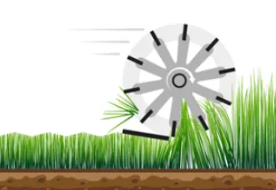


The Importance of Lawn Care

After six months of growth, grass blades may become covered by other grass, preventing photosynthesis and ultimately leading to wilting. Over time, these wilted blades may mold and decay, with part of it converting into organic fertilizer, while another part may foster fungal growth. In this situation, simply spraying chemicals will not address the root cause of the problem.

The Role of Lawn Aerators

Lawn aerators effectively expand the soil's surface area, increasing contact between the soil and the atmosphere, and promoting gas exchange. This equipment enhances the soil's aeration, water retention, and drainage capabilities, fostering the growth of microorganisms and reducing harmful substances in the soil. Additionally, aeration promotes root development, accelerates the decomposition of thatch and organic debris, improves soil properties, and enhances the soil's response to fertilizers, benefiting soil conservation.

Potential Adverse Effects

While aeration offers numerous benefits, there are also some drawbacks. For instance, aeration may temporarily disrupt the integrity of the lawn's surface, leading to exposed soil and dehydration. It can also exacerbate the damage caused by pests like grubs and, under suitable conditions, promote weed growth.

Working Principle of Vertical Aerators

The blades of the aerator move vertically up and down to create holes, ensuring that the aeration holes are perpendicular to the ground and avoiding soil displacement, which improves the quality of aeration. The device is powered by an engine that drives the front wheels, while a crank and link mechanism allows the blades to move vertically. To compensate for the blades not moving forward with the machine after penetrating the soil, a compensation device is installed at the blade mount. When the blades enter the soil, the compensation device pushes the blades in the opposite direction of the machine's forward motion, maintaining the blades' relative stillness to the ground. After the blades are pulled out, the compensation device quickly returns them to position for the next aeration.

This type of aerator is particularly suitable for high-quality aeration in green spaces, such as the putting greens of golf courses. Although its structure is complex and it is costly in terms of energy and production, it effectively enhances the overall health and growth condition of the lawn.

Contact Us

Whether you are a gardener, landscape designer, or lawn maintenance company, our aeration blades are your ideal choice. If you are interested in our products or have any questions, please feel free to reach out to us through the following:

· Websitehttps://www.dxlfgolf.com/

· Mobile: +86 13981920100

· Email2556034587@qq.com / lfgolf888@gmail.com

· Address: Bowang Town, Bowang District, Ma'anshan City, Anhui Province, China


Choose our aeration pins to safeguard your aerator and make your lawn management more efficient and effortless!

Tips & Precautions for Maintaining Your Golf Reel Mower Blade

A golf sharpener is an essential tool on the golf course✨, and its sharpness directly affects your clubs' performance and effectiveness. Therefore, regular maintenance of your sharpener is a must for every golf enthusiast and professional player! Here are some tips and precautions on how to properly maintain your sharpener📍.

1️⃣ Regular Inspection

Before using your sharpener, always check the blade to ensure there are no chips or dullness. If you find significant wear and tear, it’s time for maintenance⚒️.

2️⃣ Clean the Reel Mower Blade

Before sharpening, clean the blade thoroughly with water and a soft brush to remove any grass clippings and dirt. A clean blade is easier to inspect and maintain 🧼.

3️⃣ Use Professional Tools

When maintaining your sharpener, use professional sharpening tools like sharpening stones or machines🛠️. This will effectively retain the blade's sharpness and prevent damage.

4️⃣ Sharpening Technique

When sharpening, follow the original angle of the blade and maintain consistent pressure during the grind💪. If using a sharpening machine, ensure even speed and pressure to avoid blade distortion.

5️⃣ Test the Blade

After sharpening, use a piece of paper to test the sharpness✂️. If the blade cuts through paper easily, your maintenance was successful!

6️⃣ Blade Care

Once maintenance is complete, it's best to apply a layer of anti-rust oil on the blade to prevent rust and oxidation🌟. Also, store the tool carefully to avoid bumps and pressure.

7️⃣ Regular Maintenance

In addition to checking and maintaining before each use, you should also perform regular comprehensive maintenance on your sharpener to ensure it stays in optimal condition🗓️.

Our company offers high-quality and affordable sharpeners tailored to different models💰, meeting the needs of our customers. Whether you are a professional player or a hobbyist, you can find the right sharpener for you here!

Maintaining your sharpener not only extends its lifespan but also enhances your club's performance. We hope these tips help you better care for your golf tools⛳️!

We offer affordable and high-quality rolling blades --Reel Mower Replacement Blades, ensuring your mower operates efficiently and keeps your lawn well-maintained.

📞 Contact Information:

                         Website: https://www.dxlfgolf.com/

                         Mobile: +86 13981920100

                         Email: 2556034587@qq.com / lfgolf888@gmail.com

                         Address: Bowang Town, Bowang District, Ma'ansha City, Anhui Province, China


Understanding Lawn Mower Blade Design and Maintenance

Understanding Lawn Mower Blades Lawn mowers are essential tools for maintaining a neat and healthy lawn, and the blade is one of their core components. Understanding the design, types, and maintenance of lawn mower blades, including reel mower replacement blades and Standard Rotary Mower Blades, can help improve cutting efficiency and the aesthetics of your lawn. This article provides a detailed introduction to these aspects.


1. Design of the Blade Lawn mower blades are typically made from high-strength steel, offering excellent wear resistance and corrosion protection. This design ensures that the blades remain sharp in various environmental conditions, providing outstanding cutting performance. The shape and angle of the blades are carefully engineered to achieve efficient cutting while minimizing damage to the grass, helping the lawn stay healthy after trimming.


2. Types of Blades Depending on the type of lawn mower, blades can be categorized into the following types:


Straight Blades: This is the most common blade type, suitable for most household lawn mowers, delivering stable cutting results.

Rotary Blades: Some advanced lawn mowers utilize rotary blade designs, including Standard Rotary Mower Blades, that enhance cutting efficiency and ensure a more even cut across the lawn.

Self-Propelled Blades: In some self-propelled lawn mowers, the blades are integrated with the engine's power system, providing greater cutting power suitable for larger areas of grass.


3. Maintenance and Care Maintaining the blades is crucial for ensuring optimal cutting performance. It is recommended to regularly perform the following steps:


Cleaning: After each use, clean the blades of any grass clippings and dirt to prevent buildup that can affect performance.

Sharpening: Depending on usage frequency, regularly sharpen the blades to maintain their sharpness. Dull blades not only reduce cutting efficiency but can also damage the lawn.

Inspection and Replacement: At least once a year, inspect the blades and replace them if there is serious wear or damage to keep the mower running efficiently.


4. Our Advantage As a professional factory manufacturing lawn mower blade accessories, we strive to provide high-quality blades at competitive prices. Our products undergo strict quality testing to ensure each blade operates efficiently under various conditions. With extensive manufacturing experience, we can also customize blades to meet specific customer needs.


For more information, please visit our website or contact us directly! 

Website: https://www.dxlfgolf.com/

Mobile: +8613981920100

Email:2556034587@qq.com / lfgolf888@gmail.com

Address: Bowang Town, Bowang District, Ma'anshan City, Anhui Province, China


We look forward to collaborating with you and providing the best blade solutions for your lawn mower!

Understanding Reel Mowers Precision Cutting for Lawns

The Stainless Steel Reel Mower Blades, often referred to as a "clipper," functions similarly to scissors and is typically called a "trim." This type of mower is particularly suitable for finely managing lawns, which are commonly referred to as "turf." The mowing process relies on the collaboration between the reel blade and the bed knife: the bed knife remains stationary, acting as the fixed blade, while the reel blade is the moving component.

The reel rotates around a horizontal axis, and through the interaction of the Clean Cut Reel Mower Blade and the Quiet Cut Reel Mower Blade, it effectively trims the grass blades. Reel mowers place high demands on the quality of the turf as well as the specifications of the mower itself. The diameter of the reel and the number of blades directly influence the mowing performance. Common configurations of reel blades include 5, 7, or 10 blades. Mowers with fewer blades are better suited for cutting longer grass, while those with more blades are ideal for trimming shorter grass. For instance, a reel with 10 blades is particularly effective for low-cutting tasks on golf courses.


Contact Us

Whether you are a gardener, landscape designer, or lawn maintenance company, our aeration blades are your ideal choice. If you are interested in our products or have any questions, please feel free to reach out to us through the following:

· Website: https://www.dxlfgolf.com/

· Mobile: +86 13981920100

· Email: 2556034587@qq.com / lfgolf888@gmail.com

· Address: Bowang Town, Bowang District, Ma'anshan City, Anhui Province, China


Air-Cooled vs Water-Cooled vs Screw Chillers Industrial Cooling Guide 2024

Industrial chillers are critical components in temperature control systems across manufacturing, plastics, food processing, and HVAC industries. Understanding the differences between air-cooled, water-cooled, and screw chillers helps businesses optimize operations and reduce costs. This guide explores each chiller type’s unique advantages and ideal use cases.


1. Air-Cooled Chillers

Key Applications:

  • Small-to-medium manufacturing facilities

  • Plastic injection molding machines

  • Printing and laser cutting equipment

  • Temporary cooling setups (construction sites/events)

  • Regions with water scarcity

Advantages:
✔️ Lower Installation Costs: No cooling tower or condenser water pumps required.
✔️ Space Efficiency: Compact design ideal for limited-space environments.
✔️ Water Conservation: Eliminates water consumption in the cooling process.
✔️ Easy Maintenance: Simplified upkeep with no water treatment needs.

Keywords: air-cooled chiller benefits, compact industrial chillers, water-saving cooling systems


2. Water-Cooled Chillers

Key Applications:

  • Large-scale industrial plants (chemical, pharmaceutical)

  • High-heat-load processes (metal plating, semiconductor manufacturing)

  • Centralized HVAC systems for skyscrapers

  • Data center cooling

Advantages:
✔️ Higher Energy Efficiency: 15-20% more efficient than air-cooled models under peak loads.
✔️ Quiet Operation: Condensers located away from production areas.
✔️ Longer Lifespan: Stable temperatures reduce component stress.
✔️ Scalability: Easily integrated into existing water-loop systems.

Keywords: energy-efficient water chillers, industrial process cooling, large-scale cooling solutions


3. Screw Chillers (Rotary Screw Chillers)

Key Applications:

  • Heavy industries (automotive, petrochemical)

  • District cooling systems

  • Food/beverage processing (fermentation, pasteurization)

  • Ice rinks and large commercial refrigeration

Advantages:
✔️ High Capacity: Handles 100-800+ tons of cooling load efficiently.
✔️ Variable Speed Control: Adapts to partial loads, reducing energy waste.
✔️ Durability: Robust design for 24/7 operations in harsh environments.
✔️ Low Vibration: Smooth operation minimizes noise and structural impact.

Keywords: screw chiller advantages, heavy-duty cooling systems, variable speed chillers


How to Choose the Right Industrial Chiller

Consider these factors when selecting equipment:

  • Cooling Capacity Requirements

  • Available Utilities (water access, power supply)

  • Space Constraints

  • Climate Conditions

  • Maintenance Resources

Pro Tip: Hybrid chiller systems combining air/water cooling are gaining popularity for balanced efficiency and sustainability.


Whether prioritizing energy savings (water-cooled), space optimization (air-cooled), or heavy-load performance (screw chillers), modern industrial chillers deliver tailored temperature control. Partner with experienced suppliers to conduct a site-specific heat load analysis and maximize ROI.

Looking for reliable industrial cooling solutions? [Your Company Name] offers customized chiller systems with 24/7 technical support. Contact us today for a free consultation.

  •  
  • Meta Description: "Compare industrial chiller types: discover air-cooled, water-cooled, and screw chillers' applications, benefits, and how to choose the best system for your facility."

  • Header Tags: Include variations of "industrial chillers", "cooling solutions", and specific chiller types.

Choosing the Right Industrial Chiller A Step-by-Step Guide

In the dynamic landscape of industrial operations, the selection of an appropriate industrial chiller is a critical decision that can significantly impact the efficiency, productivity, and cost-effectiveness of your processes. With a diverse range of chiller types available, each offering unique features and capabilities, navigating the selection process can be challenging. This comprehensive guide will walk you through the essential steps to help you choose the right industrial chiller tailored to your specific requirements.

Step 1: Assess Your Cooling Requirements

The first and foremost step in choosing an industrial chiller is to accurately assess your cooling requirements. This involves determining the amount of heat that needs to be removed from your processes or equipment, as well as the temperature range and cooling capacity required to maintain optimal operating conditions. Consider factors such as the size and nature of your industrial facility, the number and type of processes or equipment that require cooling, and the ambient temperature and humidity levels in your location.


To calculate your cooling load, you can use a cooling load calculator or consult with a professional engineer. This will help you determine the size and capacity of the chiller needed to meet your cooling requirements. It's important to note that it's better to slightly oversize your chiller rather than undersize it, as an undersized chiller may struggle to maintain the desired temperature and could lead to equipment damage or reduced productivity.

Step 2: Evaluate Chiller Types

Once you have a clear understanding of your cooling requirements, the next step is to evaluate the different types of industrial chillers available. As discussed in our previous article, there are several types of chillers, including air-cooled chillers, water-cooled chillers, screw chillers, and shell and tube chillers, each with its own advantages and disadvantages.


Air-cooled chillers are a popular choice for small to medium-sized industrial facilities or for applications where access to a water source is limited. They are relatively easy to install and maintain, and they do not require a complex water cooling system. However, they are generally less energy-efficient than water-cooled chillers and can be noisy, particularly when operating at high capacities.


Water-cooled chillers, on the other hand, are designed for applications that require high cooling capacities and maximum energy efficiency. They use water as a cooling medium to transfer heat from the refrigerant to the environment, typically through a cooling tower or a closed-loop water system. Water-cooled chillers are more efficient than air-cooled chillers, but they require a more complex installation and maintenance setup, including a dedicated water supply and regular water treatment.


Screw chillers are known for their high efficiency, reliability, and ability to handle large cooling capacities. They utilize a screw compressor to compress the refrigerant and generate cooling, and they can adjust their capacity to match the cooling load requirements of the application. Screw chillers are relatively compact and operate quietly, making them suitable for a variety of industrial applications.


Shell and tube chillers are characterized by their high heat transfer efficiency and versatility. They consist of a cylindrical shell containing a bundle of tubes, and they can be used with a variety of refrigerants and cooling fluids. Shell and tube chillers are relatively easy to clean and maintain, but they can be more expensive than other types of chillers, particularly for smaller cooling capacities.


Consider your specific cooling requirements, installation constraints, budget, and maintenance preferences when evaluating chiller types. It may also be helpful to consult with a chiller manufacturer or supplier to get their expert advice and recommendations.

Step 3: Consider Energy Efficiency

Energy efficiency is an important consideration when choosing an industrial chiller, as it can have a significant impact on your operating costs over the long term. Look for chillers that are designed to be energy-efficient, with features such as variable speed drives, high-efficiency compressors, and advanced control systems. These features can help you reduce energy consumption and lower your utility bills.


You can also look for chillers that have been certified by energy efficiency organizations, such as the Energy Star program in the United States. Energy Star-certified chillers meet strict energy efficiency guidelines and can provide significant energy savings compared to non-certified models.

Step 4: Evaluate Maintenance Requirements

Regular maintenance is essential to ensure the optimal performance and longevity of your industrial chiller. When choosing a chiller, consider the maintenance requirements and costs associated with each type. Some chillers may require more frequent maintenance and servicing than others, and this can impact your operating costs and downtime.


Look for chillers that are designed to be easy to maintain, with features such as accessible components, modular designs, and self-diagnostic capabilities. These features can make it easier to perform routine maintenance tasks, such as lubricating the compressor, replacing the filters, and checking the refrigerant levels.


It's also important to consider the availability of spare parts and the quality of customer support provided by the chiller manufacturer or supplier. Choose a manufacturer or supplier that has a reputation for providing reliable products and excellent customer service, and that offers a comprehensive warranty and maintenance program.

Step 5: Compare Prices and Quotes

Once you have narrowed down your options to a few chiller models that meet your requirements, the next step is to compare prices and quotes from different manufacturers and suppliers. Be sure to compare the total cost of ownership, including the purchase price, installation costs, operating costs, and maintenance costs, rather than just the initial purchase price.


It's also important to consider the reputation and reliability of the manufacturer or supplier, as well as the quality of their products and services. Look for manufacturers and suppliers that have a proven track record of providing high-quality chillers and excellent customer support.


In conclusion, choosing the right industrial chiller requires careful consideration of your cooling requirements, chiller types, energy efficiency, maintenance requirements, and budget. By following these steps and doing your research, you can make an informed decision and select the chiller that best meets your needs and provides the most value for your investment. Remember to consult with a professional engineer or chiller manufacturer if you have any questions or need further assistance in the selection process.

Granules Vacuum Loader Propelling Injection Molding into the Era of Flexible, High-Purity Production

As the global injection molding industry navigates evolving consumer demands, stringent quality standards, and the rise of niche applications, the granules vacuum loader has emerged as a linchpin for modern manufacturing. This versatile equipment not only streamlines material handling but also addresses critical challenges in precision, flexibility, and sustainability—positioning manufacturers to thrive in a post-COVID landscape defined by customization and rapid innovation.

Industry Shifts Redefining Material Handling Requirements

The injection molding sector, projected to reach $520 billion by 2028 with a CAGR of 4.5%, is driven by three transformative trends that demand advanced material handling solutions:


  1. Mass Customization and Small-Batch Production
    The rise of e-commerce and personalized products (e.g., automotive interior components, medical device housings) requires machines that adapt to frequent material changes. Vacuum loaders with quick-release hoppers and anti-cross contamination designs (e.g., 316L stainless steel contact surfaces) enable seamless switching between polymers like ABS, PC, and recycled PET, reducing changeover time by 30%.
  2. High-Purity Requirements for Critical Applications
    In industries such as healthcare and electronics, even microamount contamination can render products defective. Vacuum loaders equipped with 0.1-micron filters and anti-static conveying hoses ensure materials like PEEK (for surgical implants) and LCP (for 5G connectors) remain free of particulates or moisture, meeting ISO 13485 (medical) and IPC-A-610 (electronics) standards.
  3. Energy Efficiency and Carbon Neutral Goals
    With energy costs accounting for 25% of manufacturing expenses, loaders integrated with regenerative drive systems (reducing energy use by 40%) and variable frequency drives (VFD) are becoming essential. For example, JUBAO’s energy-saving models achieve a COP of 5.5, surpassing EU ErP 2025 regulations.

Innovations: How Modern Vacuum Loaders Solve Industry Pain Points

Leading manufacturers are delivering solutions that blend cutting-edge technology with practical functionality:

1. Smart Integration for Real-Time Control

  • IoT-Enabled Monitoring: Systems like Yushine’s Cloud-Connected Vacuum Loader transmit data on material flow, filter status, and energy consumption to a centralized platform, enabling predictive maintenance and reducing unplanned downtime by 40%.
  • PLC Compatibility: Seamless integration with injection molding machines (e.g., Haitian、Demag) ensures synchronized operation, optimizing cycle times by 15%.

2. Flexibility for Diverse Material Types

  • Dual-Mode Conveying: Models such as the High-Capacity Autoloader for Mixed Granules handle both dense polymers (e.g., nylon) and lightweight recycled flakes, with adjustable suction pressure to prevent material degradation.
  • Modular Design: Quick-swap components (e.g., hoppers, filters) allow easy adaptation to different production lines, ideal for contract manufacturers servicing multiple industries.

3. Safety and Compliance at the Core

  • Explosion-Proof Solutions: ATEX-certified loaders for flammable materials (e.g., styrene in composite production) feature spark-resistant interiors and pressure-relief valves, ensuring operator safety in hazardous environments.
  • Food & Pharma Compliance: FDA-approved vacuum loaders with smooth-surface stainless steel construction meet strict hygiene standards for packaging baby bottles and pharmaceutical trays.

Case Study: Optimizing Production at MED-PLAST Innovations

MED-PLAST, a medical device manufacturer, faced challenges with moisture absorption in PEEK granules and cross-contamination during material changes. By adopting CE/FDA-Certified Vacuum Loaders with integrated dehumidification modules and magnetic separators, they achieved:


  • 100% reduction in particulate contamination, passing USP 87 biocompatibility tests.
  • 20% faster material changeovers via quick-release clamps and color-coded component kits.
  • 30% lower energy costs through VFD technology, aligning with their carbon neutral targets.

The Path to Future-Proof Manufacturing

As the industry moves toward zero-defect production and circular supply chains, granules vacuum loaders will evolve to meet three key demands:


  1. AI-Driven Optimization: Machine learning algorithms will analyze material characteristics (e.g., particle size, humidity) to auto-adjust conveying parameters, minimizing waste and improving part consistency.
  2. Sustainable Design: Loaders constructed with recycled materials (e.g., rPET housing) and energy recovery systems will become standard, supporting global ESG goals.
  3. Nano-Level Precision: For emerging applications like micro-molding (components <1mm), vacuum loaders with ultrasonic sensors and vibration-damping technology will enable unprecedented control over material flow.

Why Now is the Time to Upgrade

In an era where quality, speed, and sustainability are non-negotiable, investing in a future-ready granules vacuum loader is no longer optional. Solutions like Yushine’s multi-functional autoloaders and JUBAO’s explosion-proof series offer the adaptability and compliance needed to excel in high-stakes markets.

How to select an air-cooled water chiller suitable for a specific application?

Choosing an air-cooled chiller suitable for a specific application requires comprehensive consideration of core factors such as the cooling requirements, environmental conditions, and equipment characteristics of the scenario. Here is a detailed guide and key considerations:


1. Clarify Core Cooling Parameters


Cooling Capacity Matching

Calculate the required cooling capacity (in kW or HP) based on the heat dissipation needs of the equipment or process to avoid "overcapacity" or insufficient cooling.

For example: Small laser marking machines require 5-10HP units, while large injection molding machines may need 50HP or more.

Reference formula: Cooling capacity (kW) = Equipment power (kW) × Heat dissipation coefficient (usually 0.6-0.8, adjusted by equipment type).


Temperature Control Precision

High-precision scenarios (e.g., medical equipment, semiconductor crystal growth) require models with ±0.5℃ accuracy or better.

General industrial scenarios (e.g., plastic molding) can suffice with ±1-2℃ precision.


2. Adapt to Environmental Conditions


Ambient Temperature

For high-temperature environments (e.g., tropical regions, workshops with multiple heat sources), choose "high-temperature resistant" units that operate stably at 40-45℃.

For low-temperature environments (e.g., outdoor cold zones), select models with "low-temperature startup" or "anti-freeze protection" functions.


Installation Space and Ventilation

In confined spaces (e.g., laboratories, rooftops), prioritize compact, modular units. Ensure the cooling fan has sufficient ventilation space (at least 1.5 meters from obstacles).

Outdoor installations require rainproof and dustproof designs; coastal areas need stainless steel models resistant to salt spray corrosion.


Special Environmental Requirements

Explosive environments (e.g., chemical workshops, oil and gas industries) require explosion-proof units with ATEX or IECEx certification.

Clean environments (e.g., food processing, pharmaceuticals) need fully closed circulation and leak-proof designs to avoid material contamination.


3. Align with Application Scenario Characteristics


Industrial Manufacturing

Injection Molding/Extrusion: Choose units with "load fluctuation adaptation" (to handle transient heat changes during mold opening/closing). Screw compressors are recommended for durability.
 
Welding/Cutting Equipment: For short-term, high-frequency heat dissipation, select "rapid cooling" models with buffer tanks to prevent temperature fluctuations.


Precision Instruments

Laser Equipment: Lasers are temperature-sensitive; choose "low-vibration, low-noise" models (to avoid disrupting optical stability) with flow control precision ≤±2L/min.

Medical Equipment (e.g., MRI, CT): Requires medical certifications (e.g., ISO 13485), oil-free compressors (to prevent contamination), and 24/7 continuous operation capability.


Commercial and Special Scenarios

Small Ice Rinks/Cold Storage: Select low-temperature units (outlet temperature 0-5℃) with high-efficiency heat exchangers.

Data Centers: Need redundant design (N+1 backup), remote monitoring, and intelligent load adjustment (to match server heat fluctuations).

Introduction to Different Types of Crushers and Their Applications

In various fields such as industrial production and resource recycling, crushers play a crucial role. Different types of crushers are suitable for different materials and production requirements. Here are several common types of crushers introduced to you.

Shredder


Shredders are usually used to break down larger - sized materials into smaller pieces or blocks. Their blades are robust and durable, capable of handling hard and large - volume items such as waste wood, rubber tires, and plastic barrels. In the waste recycling industry, shredders can initially crush these waste materials for further processing and utilization.

Plastic Crusher


As the name implies, this type of crusher is specialized in handling various plastics. From discarded plastic bottles, plastic films to plastic product scraps, plastic crushers can grind them into small particles, which can be reused in plastic recycling production, providing support for the circular economy in the plastic industry.

Vertical Crusher


Vertical crushers have a unique vertical structure design. They are suitable for crushing brittle materials and are widely used in fields such as ore processing and chemical raw material crushing. Materials enter from the upper feed inlet, are impacted and ground by high - speed rotating components inside the machine, and finally, the crushed materials are discharged from the lower outlet.

Silent Crusher


For places with high requirements for noise control, silent crushers are an ideal choice. They adopt special noise - reduction designs, generating relatively low noise during the crushing process. They are often used in laboratories, small - scale factories, etc., which have high requirements for the working environment, and can handle materials such as electronic components and small plastic products.

Pipe Crusher


Designed specifically for pipe - like materials, whether it is PVC pipes, PE pipes or metal pipes, pipe crushers can effectively crush them. Through specific cutter configurations and crushing chamber designs, pipes can be quickly cut and crushed into appropriate sizes for subsequent recycling or reprocessing.

Low - speed Crusher


Low - speed crushers operate at a relatively low speed, generating less heat during the crushing process. They are suitable for processing materials that are sensitive to temperature, such as certain chemicals and food raw materials. At the same time, low - speed operation also reduces dust flying during the crushing of materials, which is beneficial for maintaining a clean working environment.


Understanding these different types of crushers can help various industries select appropriate equipment according to their own production needs and material characteristics, improving production efficiency and resource utilization rate.